

Engineers from the private space industry have set out to mass-produce cheap interceptor missiles. Their startup Furientis has secured new funding from venture capital firm Benchmark, which had never previously invested in a purely defense-focused company. The developers are not aiming to match the capabilities of the most advanced missiles. Instead, they are assembling theirs from readily available components because the U.S. armed forces face a severe shortage of interceptors.
The Interceptor Shortage
The U.S. Navy receives only 300 to 500 interceptor missiles each year, Furientis co-founder Brody Fransen told TechCrunch. For comparison, he pointed to China, which claims to produce 3,000 anti-ship cruise missiles every month, or roughly 36,000 per year.
The most advanced interceptors can cost around $3 million each, while the threats they are used to destroy can be significantly cheaper for an adversary to produce. According to the company, the U.S. Navy has already used more than 200 interceptor missiles while defending ships against attacks by Iran-backed groups.
Russia’s war against Ukraine and the war with Iran have depleted U.S. missile stockpiles. Startups capable of producing equipment quickly and inexpensively now have a real chance of securing Pentagon contracts on an accelerated timeline.
Engineers from Space Companies
Both co-founders have backgrounds in commercial spaceflight. Brody Fransen was a deputy chief engineer at suborbital space tourism company Virgin Galactic before moving to Castelion. The startup develops hypersonic missiles and is already valued at $13 billion.
The second co-founder, Aris Simsarian, led rocket engine testing at Virgin Orbit. The company launched small satellites using its LauncherOne rocket, which was dropped from a modified Boeing 747. Following an unsuccessful launch from the United Kingdom in January 2023, Virgin Orbit filed for bankruptcy three months later. Virgin Galactic, which spun Virgin Orbit off in 2017, has continued operating and resumed sales of tickets for suborbital flights in spring 2026.
TechCrunch identifies this experience in aerospace and defense engineering as one of the reasons behind the startup’s rapid pace of development. Traditional Pentagon contractors such as Raytheon and Lockheed Martin, by contrast, develop missiles slowly and expensively because of lengthy design cycles.
Simplicity Over Perfection
The startup is not trying to match the most advanced interceptors in terms of performance. Its ship-launched missiles are designed to be assembled quickly from commercially available components, allowing each system to cost only a fraction of the price of traditional systems. The company plans to produce 1,000 systems per year at each manufacturing facility.
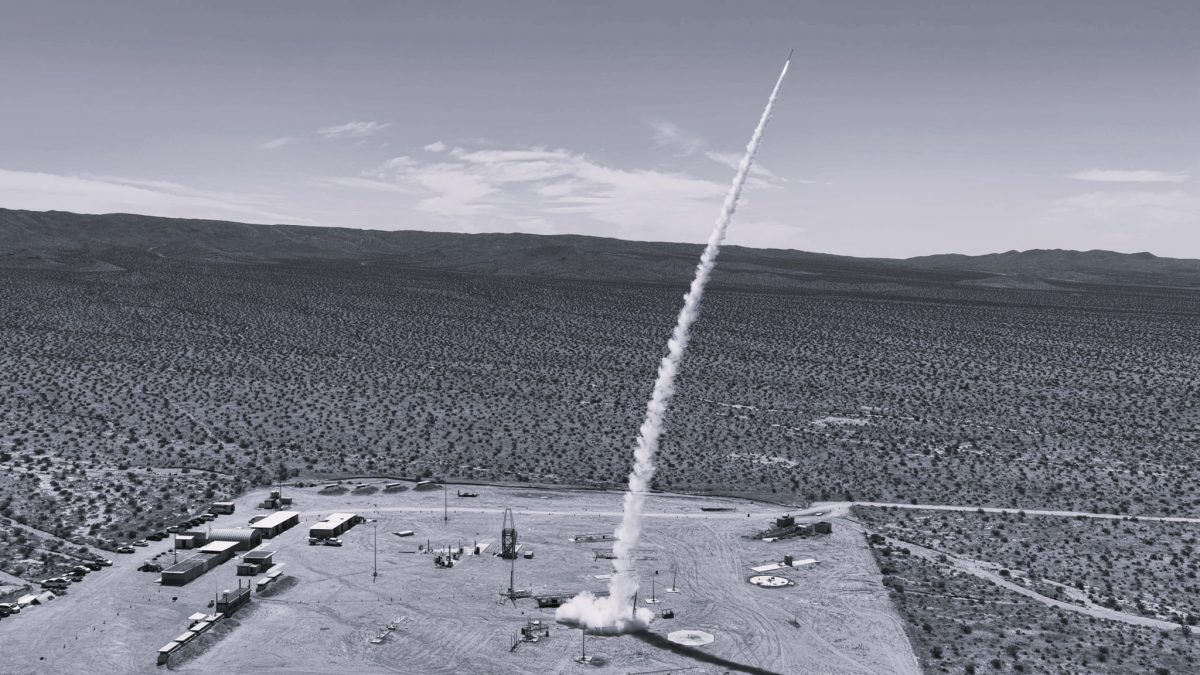
According to a Furientis press release, its manufacturing facility in Los Angeles covers approximately 840 square meters. Prototypes are regularly tested at the White Sands Missile Range in New Mexico. After World War II, the range was one of the sites where the United States conducted some of its earliest tests of both military rockets and scientific rocket experiments.
The Fund’s First Bet
Benchmark led a $25 million funding round, marking the firm’s first investment in a purely defense-focused startup. The company is only one year old, but according to a source familiar with the deal, it is valued at $125 million.
Benchmark partner Chetan Puttagunta said the decision was driven by the team’s ability to build prototypes and conduct around a dozen launches with the $5 million raised in its previous round in May. The startup already has a funded Pentagon contract for medium-range interceptors.
Larger defense startups, including Anduril and Castelion, are also working on mass-produced interceptors. Chetan Puttagunta believes there is room for many more companies in the segment.
