

Transmitting data from a satellite to Earth is expensive and slow, so a growing number of companies are looking for ways to process it in orbit. Startup Satlyt has secured investment in software that runs neural networks on satellites built by different manufacturers. The company does not build its own spacecraft. Its software has already been tested in flight, and a new version was sent into space alongside Google’s prototype for space-based computing.

An Expensive Communications Link
Onboard malfunctions are usually handled by operators on Earth, where raw sensor readings are also sent. This costs both money and time.
An onboard neural network shortens this process. According to Google DeepMind, the Satlyt team ran the Gemma model on a Momentus spacecraft this year. After processing by the model, an onboard software error report was reduced in size by more than 60%. Startup co-founder Rama Afullo estimates that this reduction could save hundreds of thousands of dollars per satellite each year.
Launching Alongside Google’s Prototype
In early October, a Falcon 9 rocket carried the payloads of the Transporter-18 rideshare mission into orbit. Among them was MOI-1A, a satellite built by the Indian company TakeMe2Space, which manufactures computing hardware for satellites. Satlyt’s software was due to run on this spacecraft.
The same flight carried the first prototype for Project Suncatcher, Google’s space-based data center. Google confirmed that contact had been established with the prototype and that it was operating normally. No official announcement has yet been made about MOI-1A beginning operations.
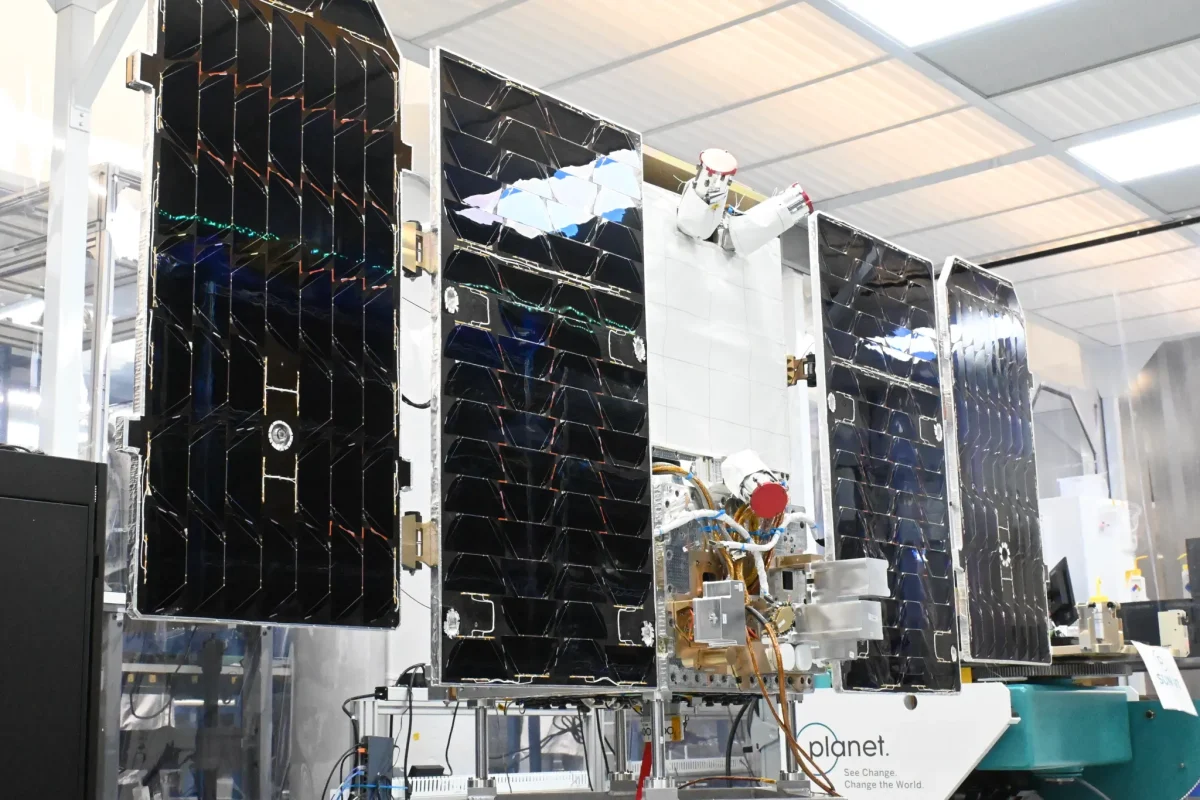
Customers for this test include NASA, which is paying to test cloud computing protocols in space. Stellerian, a company that tracks objects in orbit, wants to test image processing. TakeMe2Space itself must demonstrate that its satellite can run third-party software.
An Open Platform for Satellites
Rama Afullo previously worked in Google’s cloud division and briefly at SpaceX’s Starlink. He says he proposed the idea of orbital computing to both companies but was turned down. Now, SpaceX and Google are developing their own orbital data centers, with hardware and software belonging to a single manufacturer.
Rama Afullo compares these projects to the iPhone, while Satlyt aims to become the equivalent of Android, offering open-source software for satellites from many companies. The $8 million seed round reported by TechCrunch was led by Non Sibi Ventures. The fund’s partner, Kent Lucas, explained that the startup’s success does not depend on the emergence of large data centers in space, since growth in the number of satellites alone is enough.
A Cloud Made of Two Satellites
Next year, Satlyt plans to link two different satellites into a shared computing system. If the attempt succeeds, the company will be able to offer spacecraft manufacturers an orbital cloud.
By the end of the decade, Rama Afullo expects Satlyt’s software to be running on one-fifth of all satellites. By then, he anticipates that powerful graphics processing units will be installed on almost every new spacecraft. For now, there are few such processors in orbit.
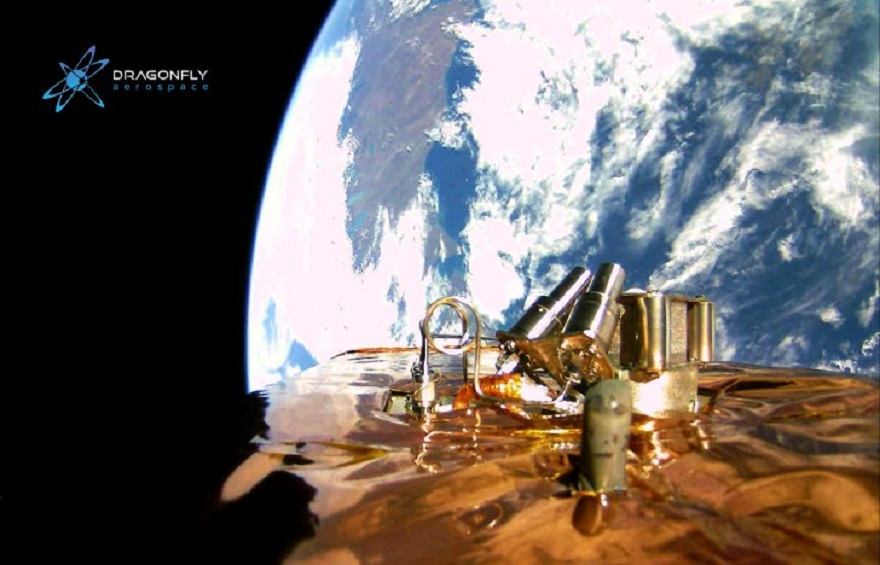
Earth observation satellites collect vast quantities of images, making onboard processing relevant to their operators as well. The U.S.-Ukrainian company EOS Data Analytics already has experience with such launches. Its EOS SAT-1 satellite was placed into orbit in early 2023 on a similar SpaceX Transporter rideshare mission. The spacecraft became the first in the company’s planned constellation.