

Theoretical physicists have plenty of grim end-of-the-world scenarios. One of the most frightening suggests that our reality exists in a “false vacuum” — a state that only appears to be stable. If the Universe were to suddenly transition to its “true” lowest-energy state, a bubble of destruction would form and expand at nearly the speed of light, instantly wiping out all known laws of physics.
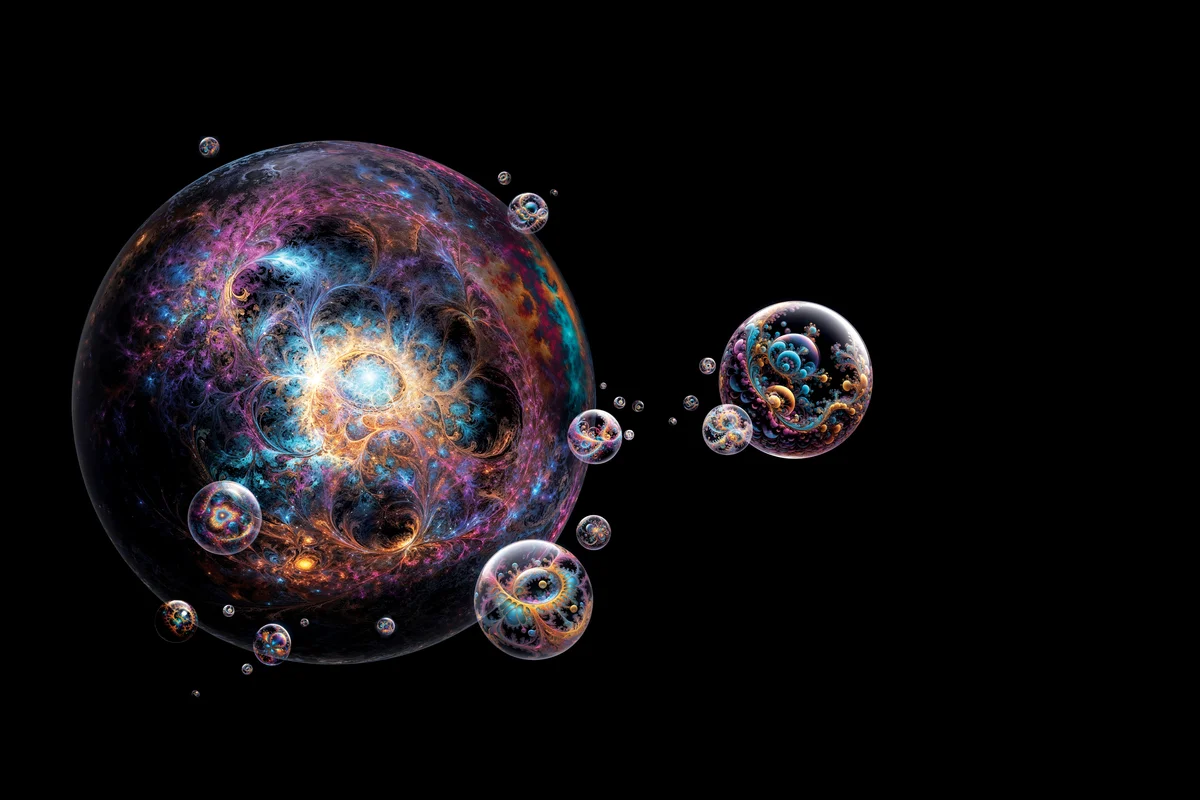
However, a new study by an international group of physicists, published in the Journal of Cosmology and Astroparticle Physics, offers some reassurance: this terrifying scenario is far less likely than scientists had feared.
The Role of the Higgs Field
It all begins with the Higgs field, which gives mass to elementary particles such as electrons. By studying its parameters, physicists realized that the Universe may not be occupying the lowest possible energy state.
Study co-author Gregory Kaplanek of Syracuse University offers a simple analogy: “You can imagine it as a ball rolling through a landscape of hills and valleys. The valley we are in is the false vacuum. The ball sits peacefully at the bottom and appears motionless, but nearby there is a deeper valley — the true vacuum. The laws of quantum mechanics allow the ball to ‘tunnel’ through the hill directly into the deeper valley.”


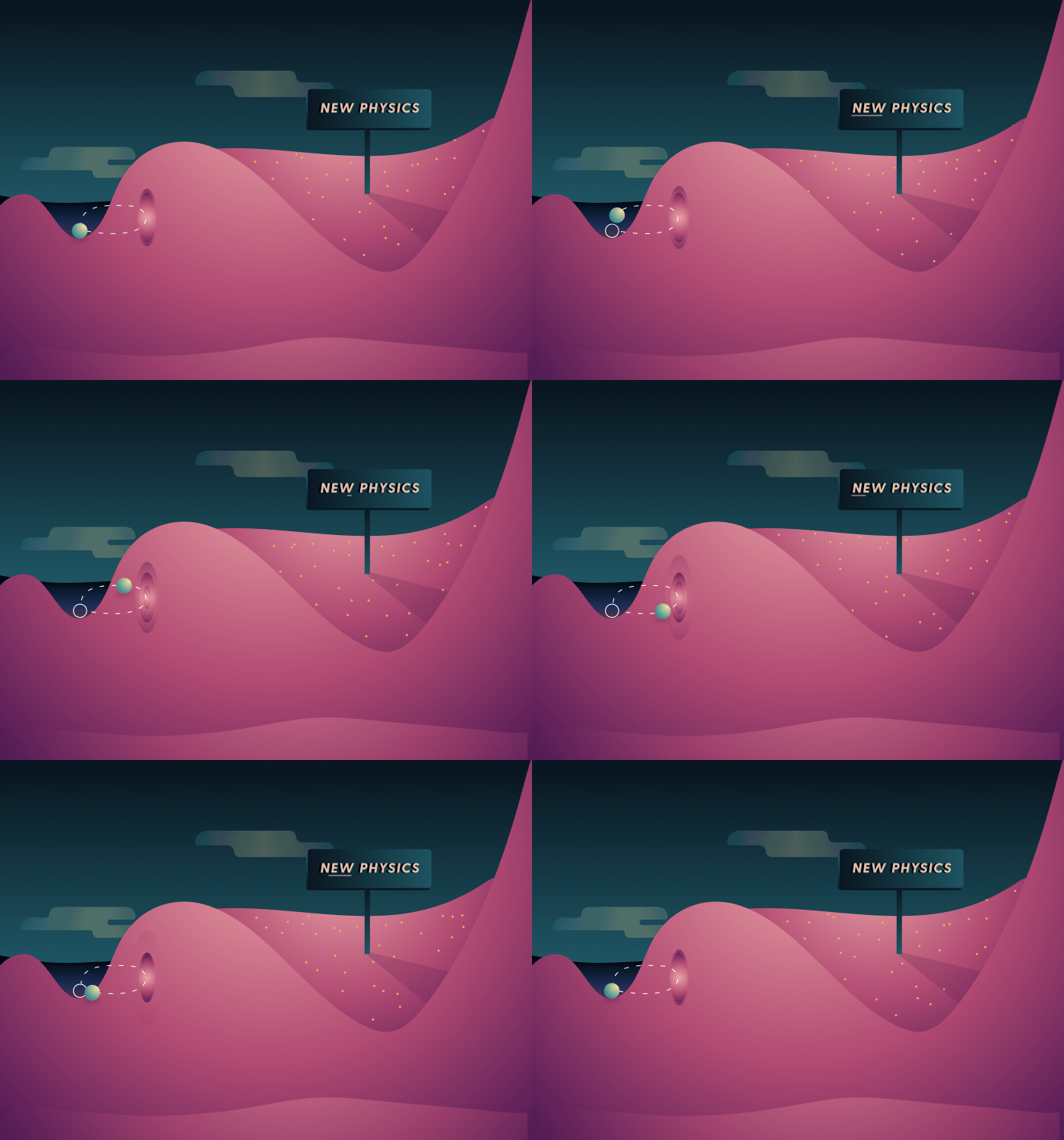
If such tunneling were to occur, the properties of particles and fundamental forces would change dramatically, completely rewriting the structure of the Cosmos.
The Quantum Zeno Effect
Scientists from the University of Portsmouth and Syracuse University examined how quantum fields evolved during the Universe’s initial period of rapid expansion, known as inflation. Their calculations showed that the field’s ability to tunnel is significantly constrained by decoherence — the process through which a quantum system loses its quantum properties under the influence of its environment and begins behaving classically.
This is where the so-called “quantum Zeno effect” comes into play: when a quantum system is continuously observed or constantly interacts with its environment, its transition from one state to another is drastically slowed or even prevented. The surrounding space acts as a constant “monitor,” effectively trapping the field in its current valley and creating an effect of “cosmic isolation.”
Can We Sleep Soundly?
Of course, the mathematical model developed by the physicists is still simplified. It does not yet account for every factor, such as changes in the rate of the Universe’s expansion over time or the field’s back-reaction on gravity.
The scientists emphasize that the study does not provide a 100% guarantee of the Universe’s eternal stability. However, it identifies a clear physical mechanism that explains how the early Cosmos may have protected itself from rapid quantum decay — and why our reality has remained intact for more than 13.8 billion years.
Previously, we reported on how NASA predicted the end of the Universe.
Based on Gizmodo
