

On Sunday, August 30, the Falcon Heavy launch vehicle successfully deployed the Nancy Grace Roman Telescope into space. This infrared observatory will now initiate its scientific study of the cosmos. It is anticipated to observe approximately 20 billion stars within the Milky Way galaxy alone and will possess the capability to acquire high-resolution images of exoplanetary disks.
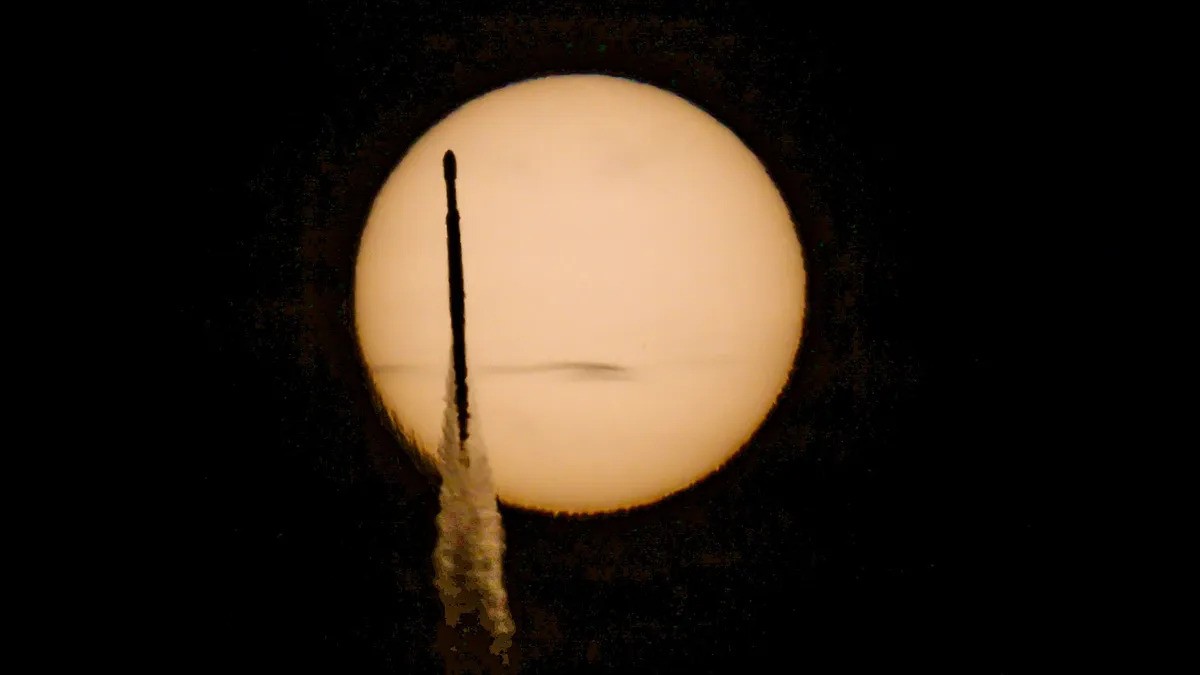
Launch of a New Space Telescope
According to the website Space.com, yesterday at 2:26 p.m. Kyiv time (which was still morning on the U.S. East Coast), SpaceX’s super-heavy Falcon Heavy rocket was launched from the Cape Canaveral Space Force Station. The launch successfully deployed the new Nancy Grace Roman telescope into orbit.
The launch was conducted from Launch Complex LC-39A and was reported to be entirely successful. After 2.5 minutes, the side boosters detached from the launch vehicle and commenced controlled descent utilizing their own rocket engines. Both boosters successfully landed at Launch Complex-40 and Landing Zone-2. The telescope itself ultimately deployed into orbit 31 minutes post-launch and separated from the upper stage.
In fact, the Nancy Grace Roman Space Telescope has not yet finalized its journey. Over the upcoming ninety days, it will travel to its designated operational location — the L2 Lagrange point, on the far side of the Moon. During this period, it will progressively activate and evaluate its systems.
What kind of telescope is this?
The Nancy Grace Roman Space Telescope represents the latest U.S. orbital observatory, designed to operate within the infrared spectrum. Consequently, it will be positioned on the far side of the Moon, in proximity to another instrument — the James Webb Space Telescope. This location provides the darkness and low temperatures necessary for these instruments to achieve their optimal sensitivity.
The new telescope has been named in honor of astronomer Nancy Roman. Throughout her extensive tenure at NASA, she was a prominent advocate for the placement of observatories in space and was among the principal contributors to the development of the Hubble Space Telescope, which continues to operate in Earth’s orbit. The esteemed scientist herself passed away in 2018.
The Nancy Grace Roman Space Telescope features a primary mirror diameter of 2.4 meters. This measurement is significantly smaller than that of the James Webb Space Telescope. The development of the telescope spanned over ten years, and in recent years, it has encountered substantial criticism from U.S. government officials who lacked a comprehensive understanding of its scientific significance. They were unable to comprehend the necessity of an additional orbital observatory.
Indeed, astronomers are anticipating the Nancy Grace Roman Space Telescope, as although its mirror possesses a smaller diameter compared to NASA’s flagship space telescope, it will feature a considerably broader field of view. In essence, this instrument will bridge the gap between the capabilities of the James Webb Space Telescope and the Gaia space telescope, thereby enabling it to undertake both astrophysical and astrometric research.
