

A private initiative to send a spacecraft to the nearest star system now has a concrete plan and budget. The launch is scheduled for late 2029. The flight will last tens of thousands of years. The developers have deliberately chosen not to seek a faster way to make this journey.
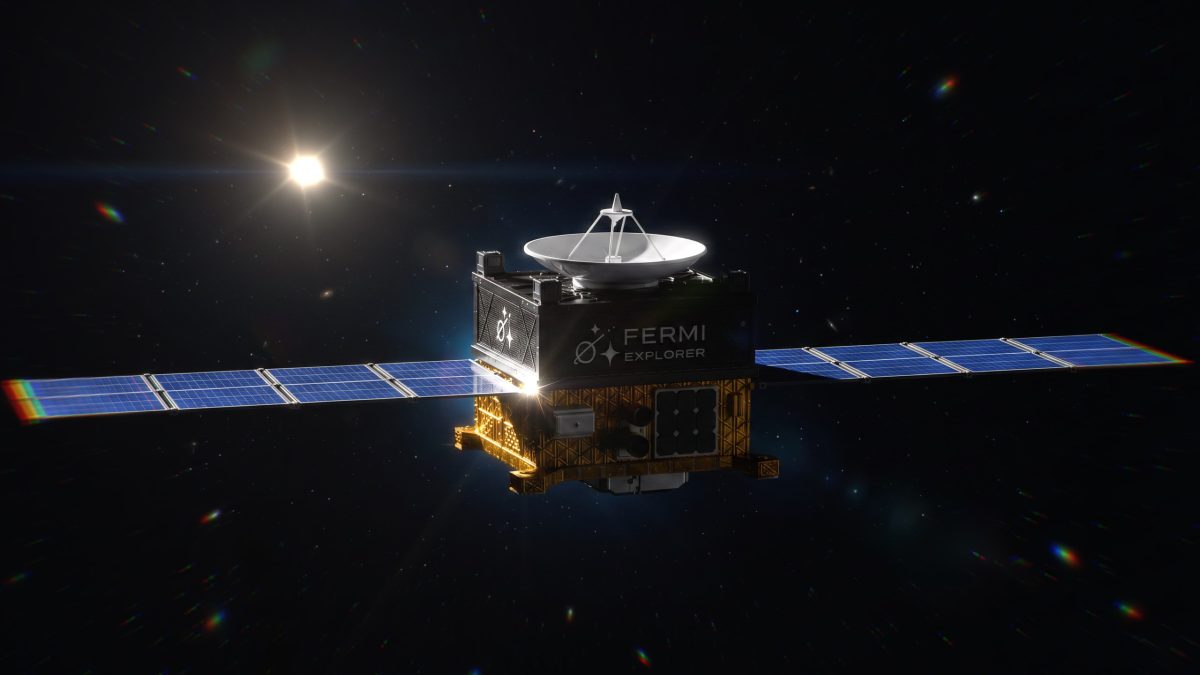
Credit: Fermi Explorer Mission
Concentrating on current technologies
The Fermi Explorer Mission project team has announced a plan to launch the inaugural spacecraft destined for another star. According to the developers’ proposal, it is anticipated to cover at least 99% of the distance to the Alpha Centauri system over a period of 80,000 years. The payload will have a mass of one kilogram and dimensions of ten centimeters on each side.
The total budget allocated for the entire program, encompassing design, development, and operational phases, shall not exceed $15 million. This allocation is deemed adequate due to the absence of requirements for developing new propulsion systems. The launch is projected for late 2029; subsequent to deployment, the spacecraft will enter orbit as a piggyback payload and will then utilize electric propulsion to incrementally adjust its orbit.
Enrico Fermi’s question
The title of the project alludes to a paradox articulated by physicist Enrico Fermi in 1950. Its core issue resides in the discrepancy between estimates and empirical observations. The Milky Way galaxy contains hundreds of billions of stars and has existed for billions of years; thus, under any reasonable assumptions, civilizations should have inhabited it well before the emergence of humanity. Nevertheless, no evidence of such civilizations has been discovered to date.
The founders state that they are undertaking this mission in the spirit of human exploration and aspire to make history. Five previous spacecraft have journeyed beyond the Solar System; however, none of them had this particular objective. Consequently, the Fermi Explorer will become the sixth such spacecraft and, concurrently, the first to be directed towards a specific star.
A wager on perseverance
Most concepts of interstellar flight rely fundamentally on the relationship between distance and velocity. The Voyager spacecraft was launched in 1977 and is presently approximately 26 billion kilometers from Earth. Meanwhile, Alpha Centauri is approximately 41 trillion kilometers distant — more than 1,500 times farther.

The team chose an alternative approach to address this challenge. Rather than endeavoring to reduce the length of the journey, they accepted it as an inherent factor. According to the organization’s president, Philip Johnston, other interstellar concepts endeavor to conform to the constraints of a human lifespan, which invariably necessitates engine development initiatives costing billions.
A period of eighty thousand years is twice as long as the elapsed time since the extinction of the Neanderthals. The entire written history of humanity is approximately sixteen times shorter than this duration. The proponents of the concept refer to this time span as the minimum viable period.
“Breakthrough Starshot” lesson
An earlier effort was undertaken by Breakthrough Starshot, an organization established in 2016 by Yuri Milner with the backing of Mark Zuckerberg. Its objective involved employing a laser propulsion system designed to dispatch miniature probes to neighboring stars within a span of twenty or thirty years. The project was discontinued in 2025.
“I became excited as well, but subsequently felt disappointed,” Philip Johnston told TechCrunch regarding the previous initiative. According to his statements, the team is committed to launching a tangible product within three years. The same team is responsible for Starcloud, a company that intends to deploy data centers in orbit.
What are the subsequent developments for the spacecraft?
The active phase is projected to extend for approximately twelve years, after which the structure will transition into a passive drift. It is not intended to activate the equipment at the conclusion of its operational lifespan. The prevailing assumption is that a future civilization will intercept the discovery.
The mission’s founder compared the structural integrity to that of dinosaur bones, which have survived for 200 million years, so the metal hull should be able to withstand the expected radiation environment. The organizers are already seeking contractors to assemble the spacecraft, securing funding to pay for their work, and planning for scientific and artistic cargo, such as the golden record aboard Voyager.