

The oldest meteorites still contain organic matter with oxygen that it acquired before asteroids had even formed. The source of the oxygen was most likely water in the young Solar System. In the most primitive samples, interaction with liquid inside these bodies over billions of years barely changed its isotopic composition. Geochemists at Harvard University reached this conclusion after measuring the ratio of the three oxygen isotopes in the organic material with high precision. The result helps determine where this material formed and also sheds light on the origin of the reference line scientists use to compare the composition of primitive minerals.
Seven Meteorites with the Same Signature
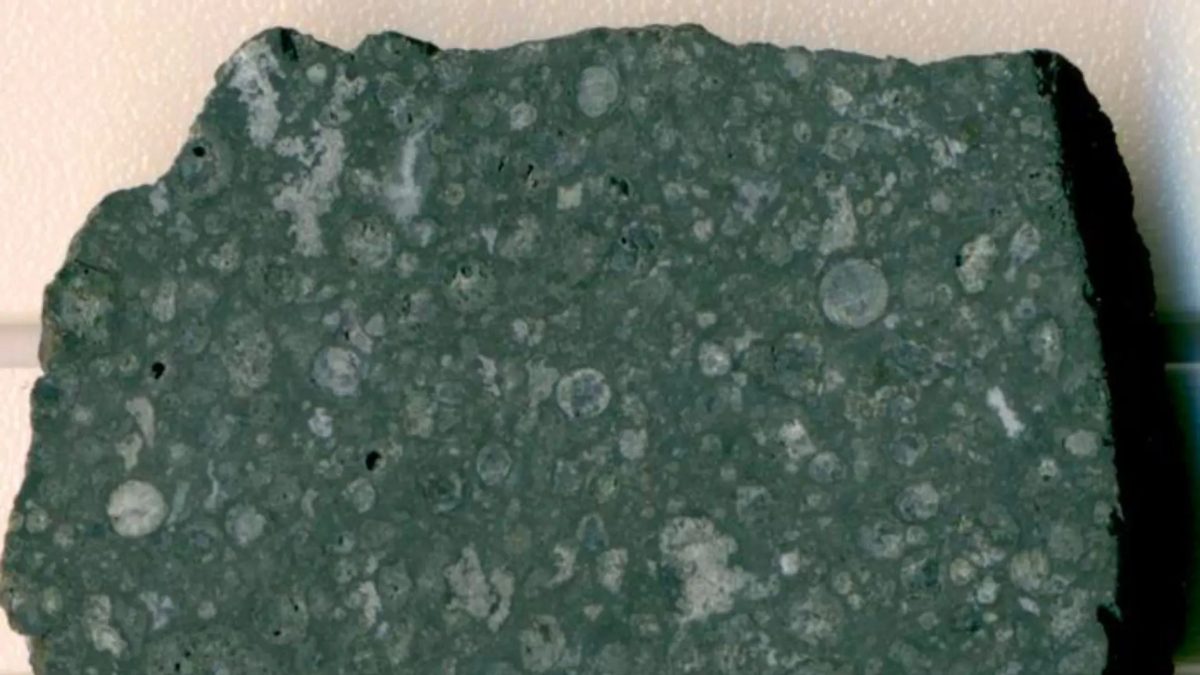
The isotopic composition of the organic matter turned out to be almost identical in seven carbonaceous chondrites from different chemical groups. These are stony meteorites that have not melted since the formation of the Solar System and contain up to 4% carbon by mass. The studied samples included members of the CI, CM, and CR classes, as well as the rare Bells and Tarda meteorites.
The deviation in the proportion of oxygen-18 from the terrestrial standard fell within a narrow range of 10.4 to 12.3 per mille. If the organic matter had exchanged atoms with water inside asteroids for a long time, the authors calculated that this value would have ranged from 27 to 58 per mille.
The results were published in the peer-reviewed journal Proceedings of the National Academy of Sciences. The first author, Daniel Crocker, and co-author David Johnston work in Harvard University’s Department of Earth and Planetary Sciences.
A Reference Line Called into Question
Oxygen atoms occur in three forms with masses of 16, 17, and 18, known as isotopes. On Earth, the ratios between them change according to a constant rule, so all terrestrial samples line up along a single line on a graph. The oldest minerals in meteorites fall along a different trend. This difference is explained by the mixing of two oxygen reservoirs with different proportions of the lightest isotope in the young Solar System.
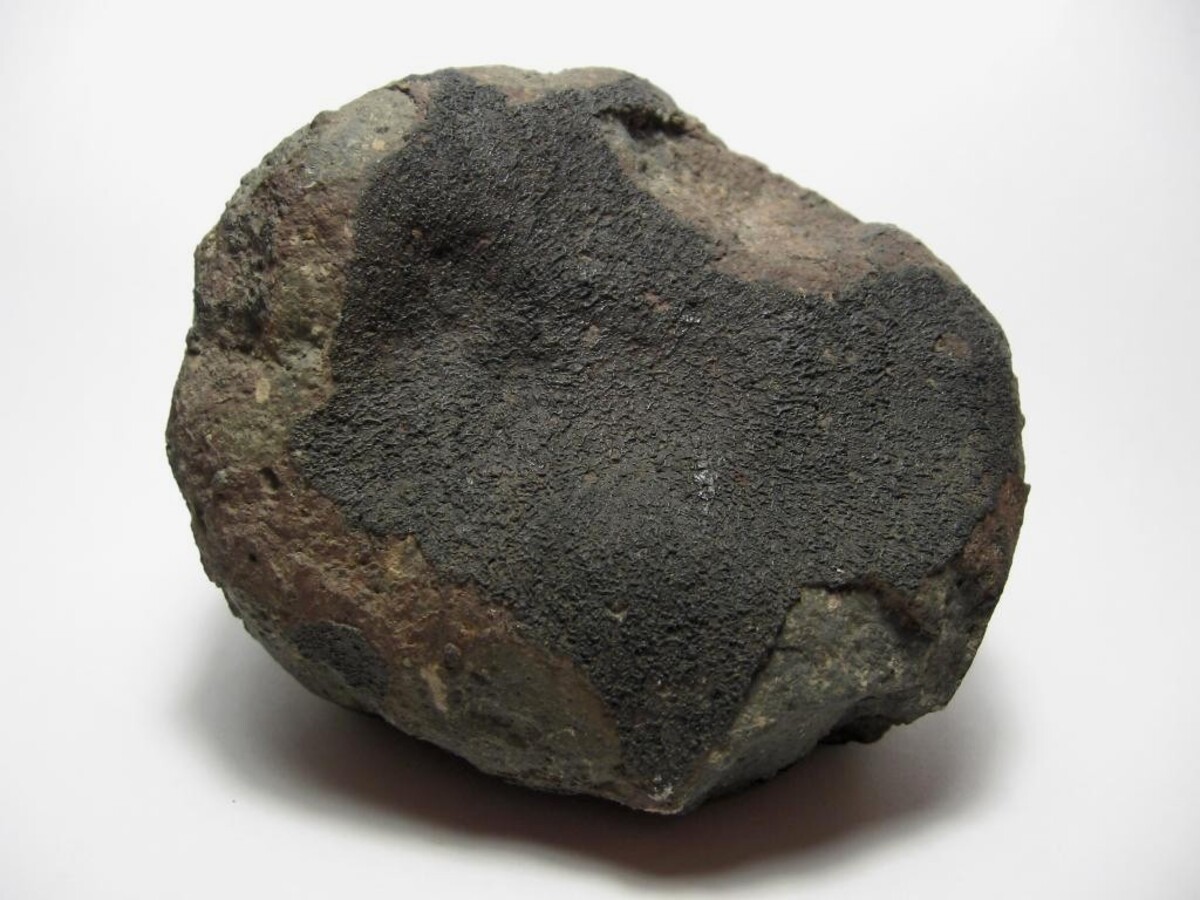
This pattern was first described in 1977 using samples from the Allende meteorite and was called the Carbonaceous Chondrite Anhydrous Mineral line, or CCAM. Other variants were proposed later. Some scientists considered CCAM merely a copy of the original line that had later been shifted by secondary processes, such as exchange with water. The organic matter from all seven samples studied fell on or near this line. If secondary processes had really shifted the line, the minerals and organic matter would have had to end up by chance in the same place on the graph, which the authors consider unlikely.
An Unexpected Effect of Heating
Organic matter from six meteorites that had experienced thermal effects inside their parent bodies or during impacts showed a different isotopic composition. The proportions of oxygen-17 and oxygen-18 decreased, even though the loss of volatile substances and exchange of atoms with the surrounding environment usually increase them.
To test this, organic matter from the Mighei meteorite was kept in a vacuum for one hour at 500 and 600°C. This chondrite fell in 1889 near the village of Migiia in what is now Mykolaiv Region. In the study, it served as a sample of primitive organic matter that had not previously undergone strong heating.
After the experiment, the composition of the sample shifted in the same way as in naturally heated chondrites. It is likely that before thermal alteration, the organic matter in all of the meteorites studied had the same heavy-oxygen content.
The Cold Outskirts of the Protoplanetary Disk
The authors concluded that the organic matter acquired its oxygen during its own synthesis, before it became incorporated into asteroids. The source was probably water depleted in the lightest isotope. Enrichment in nitrogen-15 and deuterium, or heavy hydrogen, points to a cold environment exposed to intense radiation. Such conditions, as Interesting Engineering writes, existed in the icy outskirts of the young Solar System.

The authors explain the identical composition of samples from different meteorites in two possible ways. Either a single reservoir of organic matter spread throughout the outer part of the disk, or the same chemical process occurred everywhere within it.
An Answer Through Models
If carbonaceous chondrites delivered most of Earth’s volatile substances, then this organic matter became a major source of carbon and nitrogen for the young planet, the authors argue. These elements later helped make Earth suitable for life.
The two possible origins of the organic matter will now be tested using models of protoplanetary-disk chemistry. Scientists will also need to explain why the oxygen in meteoritic material is compositionally close to terrestrial oxygen, while our star, according to solar-wind measurements, is enriched in oxygen-16.