

Scientists meticulously examined the chemical composition of the nanodiamonds discovered in samples of the Allende meteorite, which impacted Earth in 1969. The analysis revealed that these nanodiamonds originated well before the other constituent materials, having formed within the meteorite itself. Consequently, it is entirely plausible that the initial solid bodies within the Solar System commenced crystallization in the vicinity of these nanodiamonds.
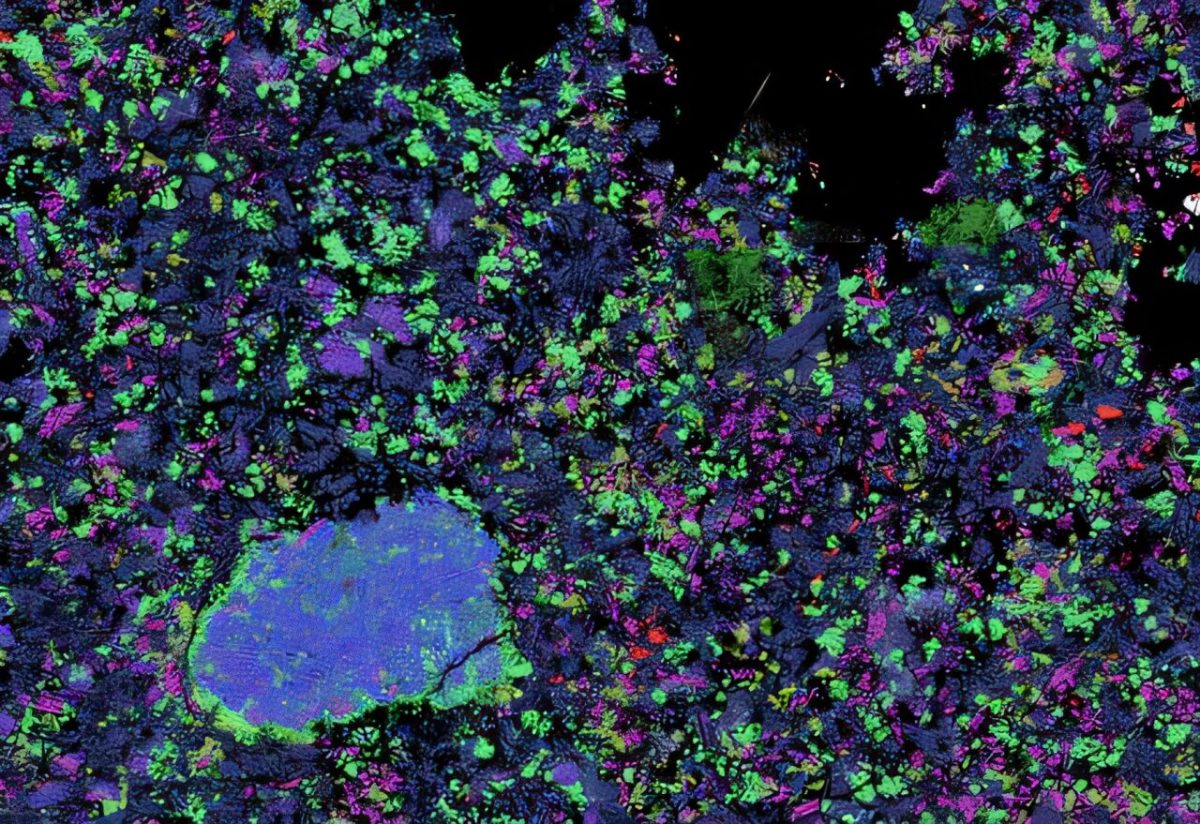
Results of the meteorite study
According to contemporary scientific understanding, at the inception of the Solar System, a substantial cloud of gas encircled the nascent star, within which the initial solid objects rapidly commenced crystallization and subsequently began to increase in size. However, what mechanisms initiated this process? The website phys.org reports that a team of scientists from the California Institute of Technology has successfully provided an explanation for this phenomenon.
An article published in the journal Science Advances examines the findings of a chemical analysis conducted on samples retrieved from the Allende meteorite, which disintegrated over Mexico in 1969. Currently, only small fragments are extant; however, at the time of its atmospheric entry, the meteorite possessed a substantial mass of 1.8 metric tons.
What renders this space rock particularly intriguing is its classification among the so-called primitive meteorites, of which it is, in fact, the largest. These rocks have never been part of any planet, moon, or even a substantial asteroid. Consequently, they have maintained the chemical composition and structural characteristics of the primordial material that initially coalesced from gas and dust.
Diamond nanocrystals
It was within these specific samples that scientists discovered diamond nanocrystals. Their chemical composition was entirely different from any previously observed in samples from other meteorites or planets. While these are indeed elements listed in the periodic table, the researchers’ conclusion remains unequivocal: these grains predate the formation of the Solar System. They are fragments originating from stars that had ceased to exist even prior to that time.
The particles were discovered within the carbon-rich regions of the Allende meteorite samples. Independently, these regions resemble typical meteoritic rocks. Consequently, scientists hypothesize that the subsequent sequence of events occurred: these particles, originating from ancient stars, along with dust and gas, were attracted towards the proximity of the young Sun. Subsequently, they commenced to orbit the star together with the remaining material.
Subsequently, these entities evolved into nuclei of crystallization, around which primitive bodies — planetesimals — formed. Some of these eventually developed into the planets of the Solar System and their moons. The remainder, however, persisted as debris, which occasionally descends upon us in the form of meteorites.
