
During recent tests in the Southern California desert, NASA’s new four-wheeled rover prototype covered 25 km in just over a day and a half. The rover autonomously navigated obstacles on uneven terrain thanks to its latest decision-making system and unique suspension design.
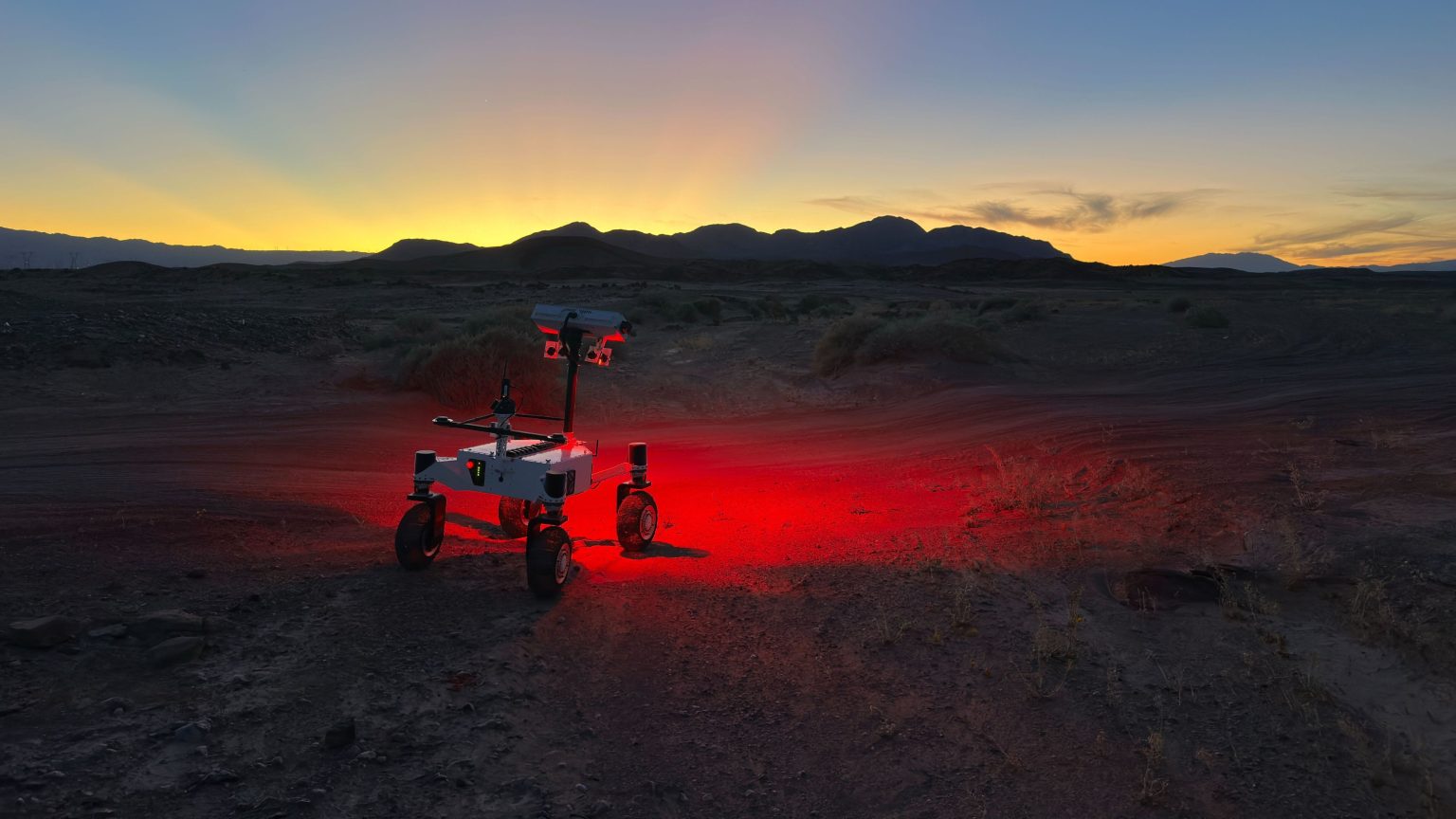
This prototype has been named ERNEST (Exploration Rover for Navigating Extreme Sloped Terrain). It was developed by NASA’s Jet Propulsion Laboratory (JPL) specifically to navigate challenging terrain quickly and efficiently during future missions that will require longer ranges and higher speeds.
A worthy successor to the legends
Since 1997, NASA has sent five autonomous robotic explorers to Mars. The most famous of these are Curiosity and Perseverance, which landed in 2012 and 2021, respectively. They continue to explore the Red Planet to this day. However, for future ambitious missions to the Moon and Mars, the agency needs rovers with even better off-road capabilities and the ability to navigate the terrain independently without guidance from Earth.
ERNEST is designed to fill this very niche. During field tests, it traveled at speeds of up to 1 km/h for seven days, with intermittent breaks. According to the developers, this is an order of magnitude faster than the maximum speeds of Curiosity and Perseverance. JPL planetary scientist James Keane is convinced that this rover can serve as the basis for a full-fledged scientific platform for exploring other planets.
Innovative design
ERNEST’s chief engineer, Hari Nayar, notes that the engineers decided to move away from the traditional rocker-bogie suspension system, which has been used successfully for the past 30 years. The new rover is equipped with a system that allows for dynamic weight redistribution among its four steerable wheels. Thanks to two front hinges, the rover is capable not only of driving but also of “crawling,” stepping with its wheels, and moving sideways.
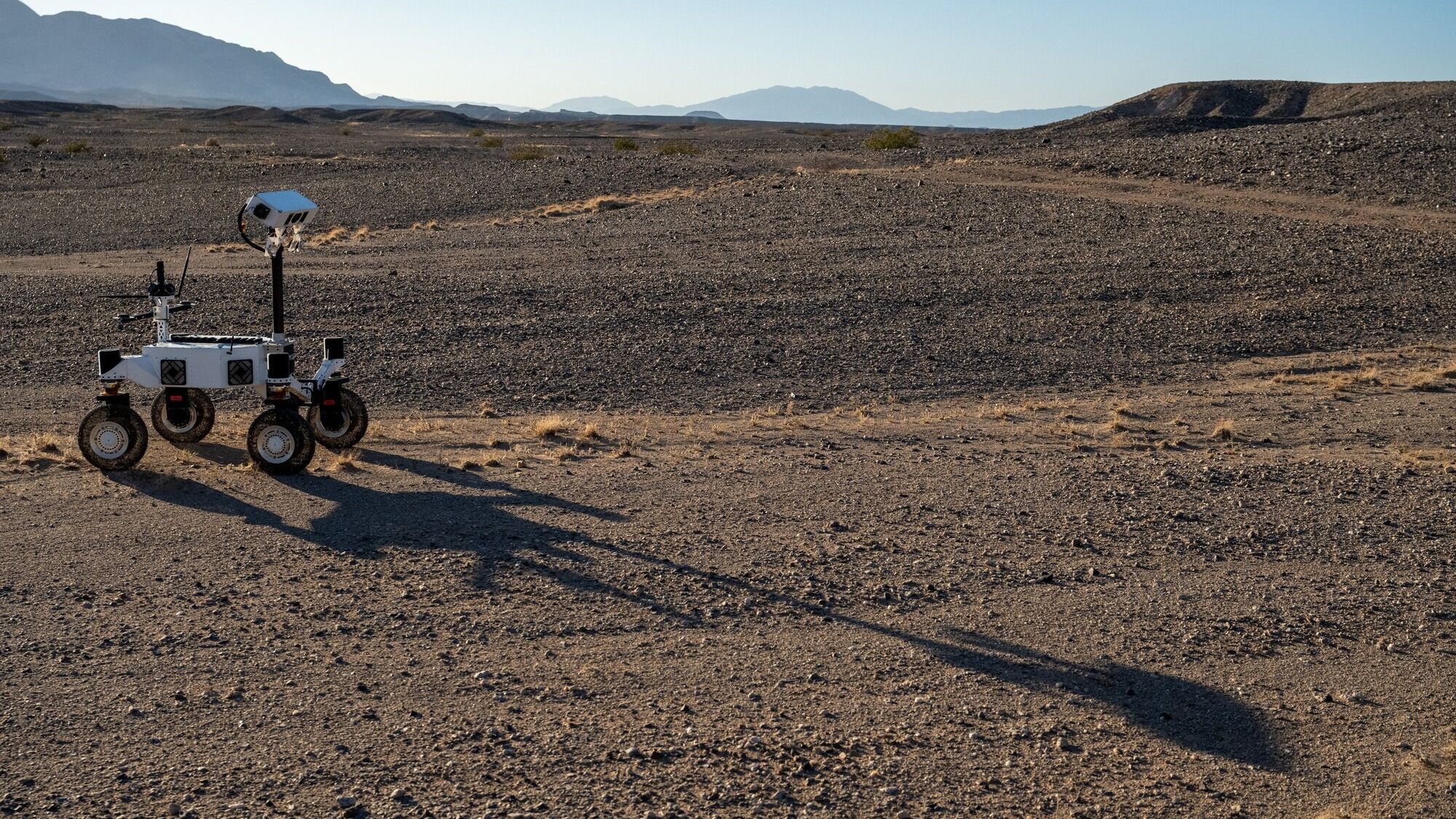
Despite its impressive capabilities, the current version of ERNEST is quite compact—it is only 1.2 m long, whereas modern Mars rovers are about the size of a car. This prototype was preceded by even smaller 60-centimeter models, which were tested in a lunar soil simulator.
Artificial Intelligence at the wheel
To enable the rover to navigate independently, the development team implemented spatial orientation algorithms based on trained artificial intelligence models. The rover learns to navigate on its own by directly interacting with its environment and analyzing its own mistakes.
Before heading out into the desert, the algorithms were tested on a special Martian test site at JPL featuring artificial obstacles: sand dunes, rocks, and steep slopes. The final test was a 37-hour autonomous drive through an actual desert, part of which took place in complete darkness.
As JPL Chief Technologist Issa Nesnas explains, such extreme conditions allow researchers to test how the rover will handle long shadows during lunar dawns and dusks. A larger and more powerful version of ERNEST is expected to embark on its first mission to the Moon in the future.
We previously reported on how Perseverance and Curiosity both faced severe challenges at the same time.
According to NASA
