

NASA Administrator Jared Isaacman has expressed concern about possible actions by Beijing on the Moon. According to him, if China reaches the most valuable areas of the Moon’s South Pole first, it could restrict other countries’ access to these strategic territories.
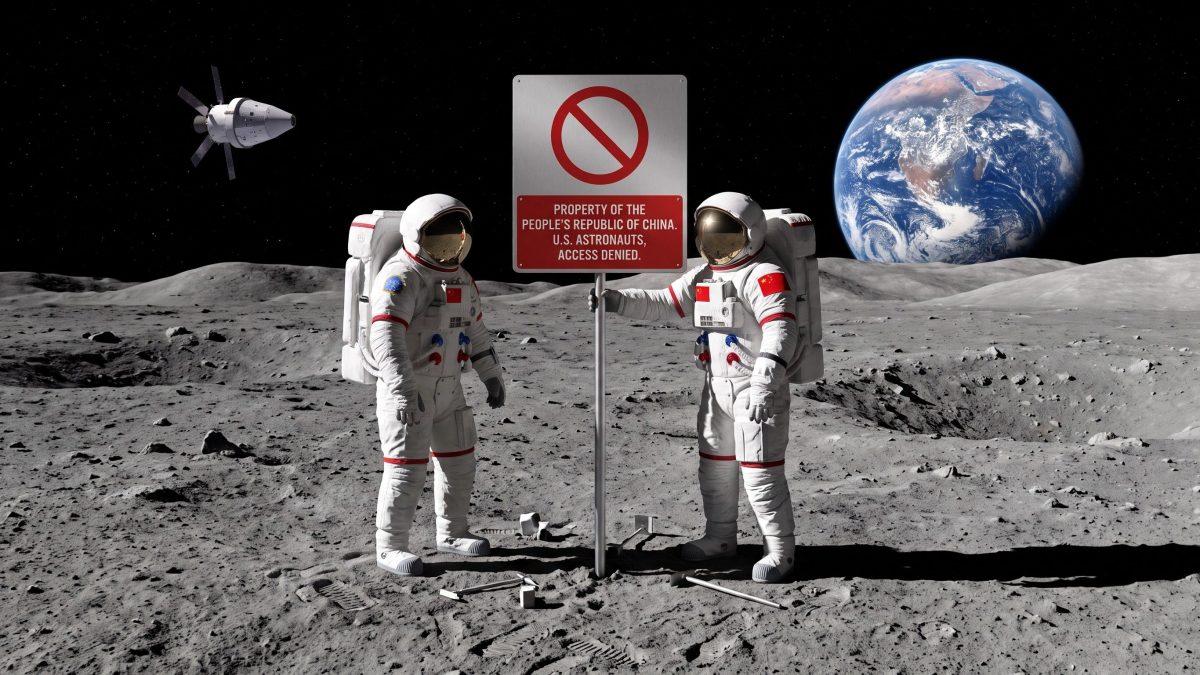
The statement comes amid news that last month China postponed the launch of its robotic Chang’e-7 mission until the beginning of next year. Although Beijing did not provide detailed explanations for the schedule change, NASA viewed the delay as a positive signal. The United States and China are targeting the same location — Shackleton crater.
Valuable “Lunar Real Estate”
The surface of the Moon is a barren desert. However, the South Pole, and Shackleton crater in particular, is one of the most valuable areas of the Moon. The high rims of the crater create permanently shadowed regions, known as “cold traps.” It is believed that water ice and other valuable materials have accumulated there over billions of years.

In the long-term plans of the United States and China to establish a permanent space colony, only a few square kilometers at the South Pole are of critical importance. It is there that both countries seek to establish a permanent presence in order to test technologies for further expansion into the Solar System.
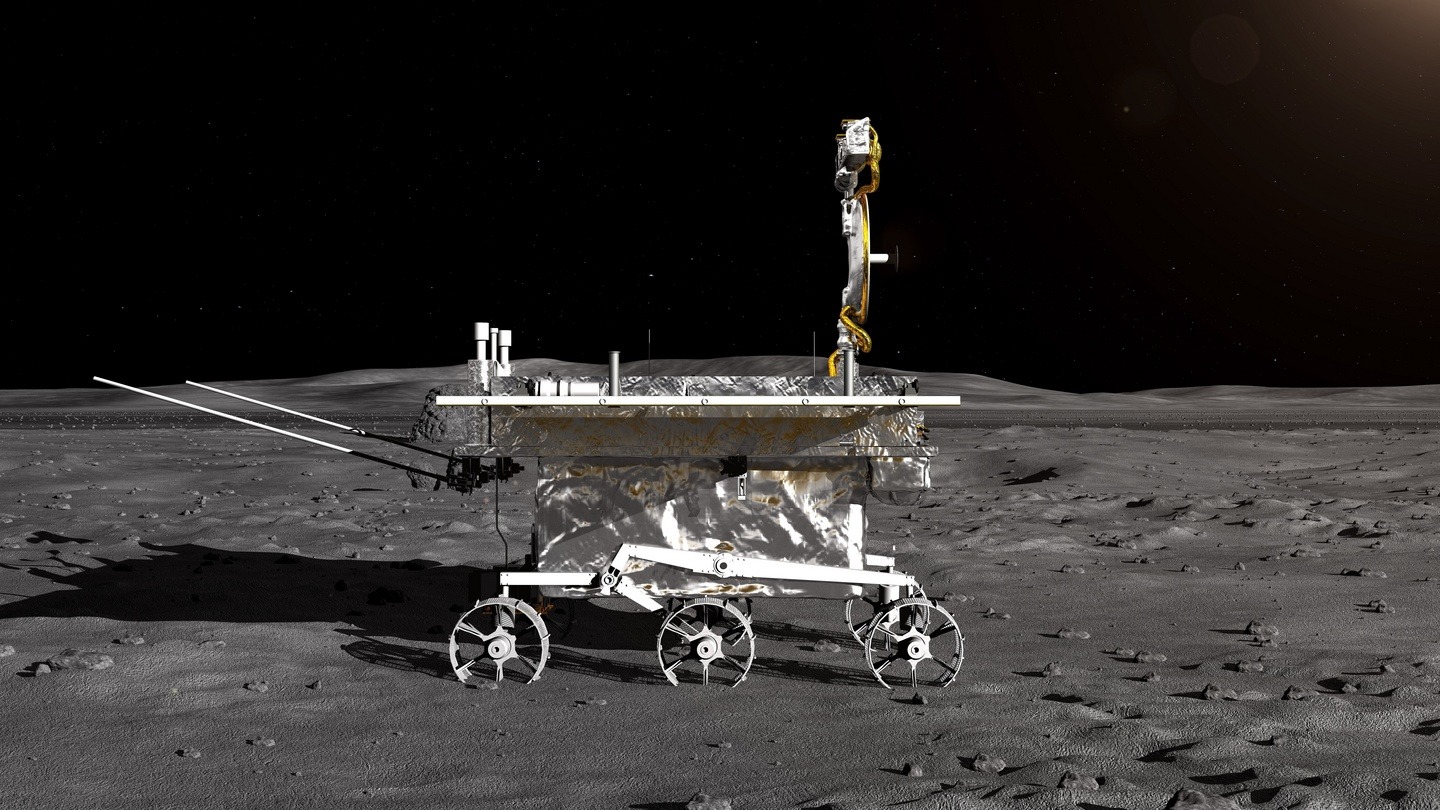
China’s Chang’e-7 mission is designed for high mobility. It includes lunar rovers and hopping drones. NASA is concerned that with the help of such vehicles, China could establish its own control over the craters and block access to water ice. Beijing needs these resources to prepare for the next stage of space exploration, which is expected to take place on Mars.
A New Opportunity for the United States
No country has yet carried out a soft landing of spacecraft in the Moon’s polar regions, because reaching them is significantly more difficult than reaching equatorial areas. The postponement of Chang’e-7 gives NASA an opportunity to reach these regions first.
The United States plans to do this with the first launch of the Blue Moon Mark 1 lunar lander developed by Blue Origin. This large spacecraft is expected to deliver two NASA probes to the Moon’s South Pole, potentially as early as spring 2027.
At the same time, China aims to land its astronauts on the Moon by 2030 and is demonstrating significant progress in the development of a crewed spacecraft, rocket, and lander.
Geopolitical Stakes
Debate continues in the United States over whether it is truly important to return American astronauts to the Moon before China gets there. After all, if Beijing succeeds, it would only repeat the achievement of the United States in 1969 during the Apollo mission. However, NASA leadership is convinced that the outcome of this race will change the world order.
If China lands people on the Moon first, it could cause other countries to question U.S. global leadership. Countries around the world may begin to consider whose security guarantees they should trust, whose weapons and technologies they should purchase, which standards they should follow, and whose views they should listen to in the field of artificial intelligence.
The NASA chief acknowledges that this confrontation should not have become a race at all if not for systemic mistakes in U.S. space policy over the past several decades. According to his estimates, the United States has spent more than $100 billion under several presidential administrations on programs that ultimately failed to produce results.
Meanwhile, China, having carried out its first crewed spaceflight only in 2003, has developed its own technologies to a level that today directly competes with the United States.
Earlier, China had already unveiled a spacesuit for landing on the Moon.
Based on materials from Ars Technica
