

NASA’s renowned probe is presently approximately 9.7 billion kilometers from Earth. The New Horizons spacecraft continues to transmit invaluable data from the outermost regions of the Solar System. It is anticipated to become the third human-made object in history to traverse the boundary into interstellar space. Nevertheless, this significant scientific milestone may be achieved “blindly.”
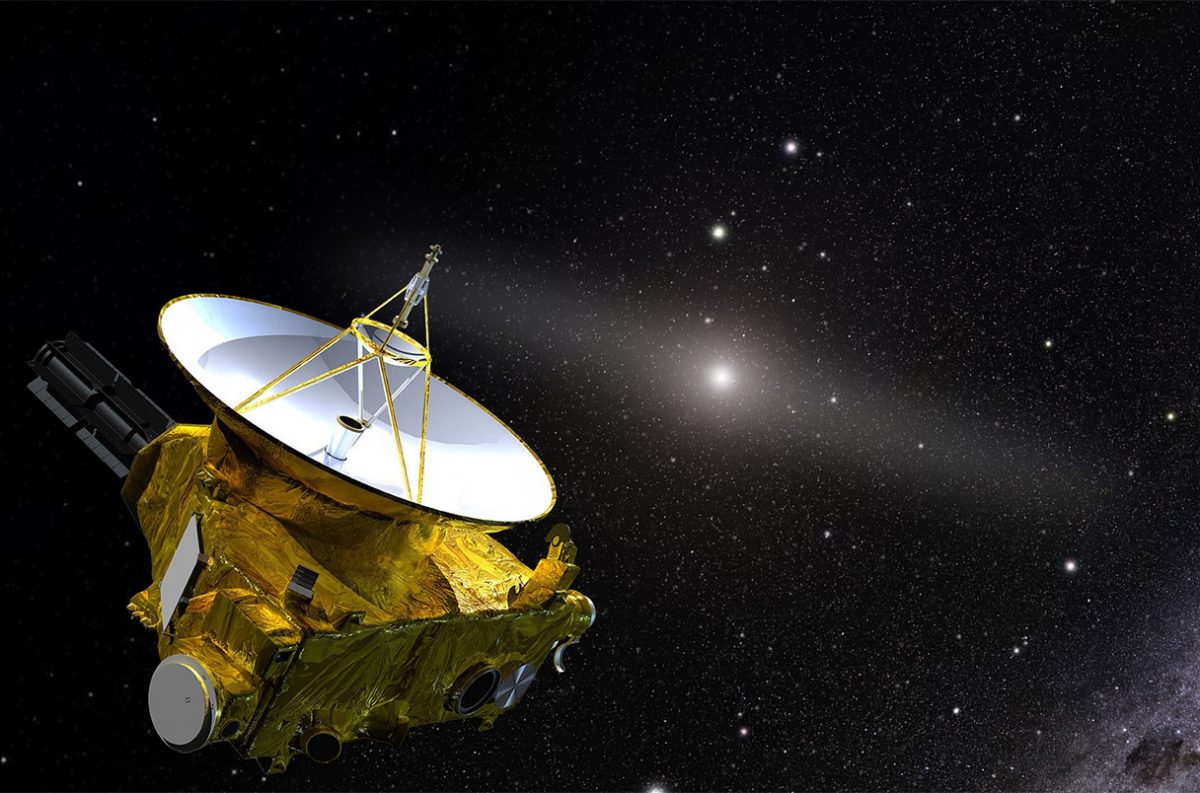
According to Science magazine, the mission team has been compelled to deactivate two particle detectors as a result of funding reductions, thereby risking the complete execution of the scientific program.
From Pluto to the outer reaches of the Kuiper Belt
New Horizons was launched on January 19, 2006, and traversed an extensive distance, reaching a position approximately 50 times farther from the Sun than Earth. In July 2015, the spacecraft achieved a historic milestone by conducting the first-ever close flyby of Pluto.
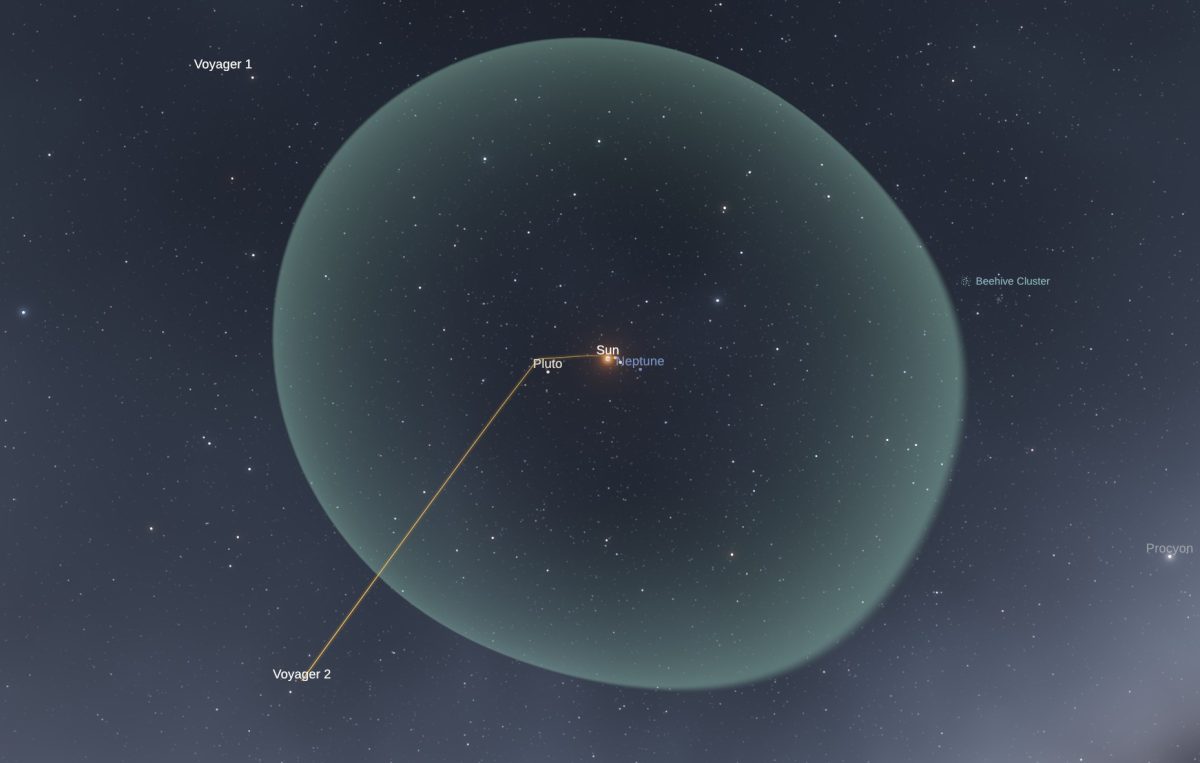
In 2019, the probe conducted an exploration of Arrokoth, the most remote and primordial celestial body that a human-made spacecraft has ever approached. Since that time, the spacecraft has been traversing the Kuiper Belt — an icy ring located beyond Neptune’s orbit — and is currently preparing for its departure from the heliosphere. It is anticipated that New Horizons will enter interstellar space between 2029 and 2040, following in the distinguished footsteps of the renowned Voyager 1 and Voyager 2 spacecraft.
Causes and consequences of turning off devices
Two vital detectors — PEPSSI and SWAP — are currently at risk. The SWAP instrument is responsible for detecting low-energy particles and plasma, whereas PEPSSI specializes in measuring high-energy ions and electrons.
Over the past two years, NASA’s Heliophysics Division has suspended the annual funding of $2 million for these two instruments. Simultaneously, the agency’s Planetary Science Division continues to allocate a core operating budget of approximately $10 million per year. As a result of the $2 million shortfall, the mission team is compelled to decommission the detectors as early as October 2026.
Alan Stern, the principal investigator of the mission, confirmed that the team does not possess sufficient funds to sustain the heliospheric instruments. Concurrently, NASA Administrator Jared Isaacman remarked that the agency is currently examining the issue, given the substantial resources already committed to the project. NASA’s objective remains to optimize scientific outcomes while effectively managing costs.
We have heard from a few members of the community on this and indicated we are looking into it. The big dollars were already invested in New Horizons, so generally supportive of generating high-quality scientific returns for low-dollar spend. This mission aside, at NASA, we do…
— NASA Administrator Jared Isaacman (@NASAAdmin) September 1, 2026
A setback for space science
The Sun persistently emits a flow of charged particles known as the solar wind, which creates a substantial protective shield surrounding our solar system — referred to as the heliosphere. Researchers anticipated data from New Horizons during its traversal of the so-called terminal shock and the heliopause, regions where the solar wind diminishes upon contact with interstellar matter.
Former NASA Chief Scientist James Green emphasized in his statement that New Horizons is the only spacecraft in the outer heliosphere, and its measurements are crucial for understanding the physical processes at this boundary. Although the spacecraft itself is in perfect technical condition and capable of operating until 2050, shutting down its instruments would deprive humanity of a unique opportunity to explore the edge of the Solar System.
We previously reported on some of the notable phenomena encountered by New Horizons during its voyage to Pluto.
