

The age of distant galaxies can be ascertained based on a metal that is prevalent in the Earth’s crust. Astronomers have calculated how its ions emit light within the interstellar medium. The quantity of this metal in the universe exhibits an increasing trend over time. Its abundance provides insight into the temporal distance of the observations.
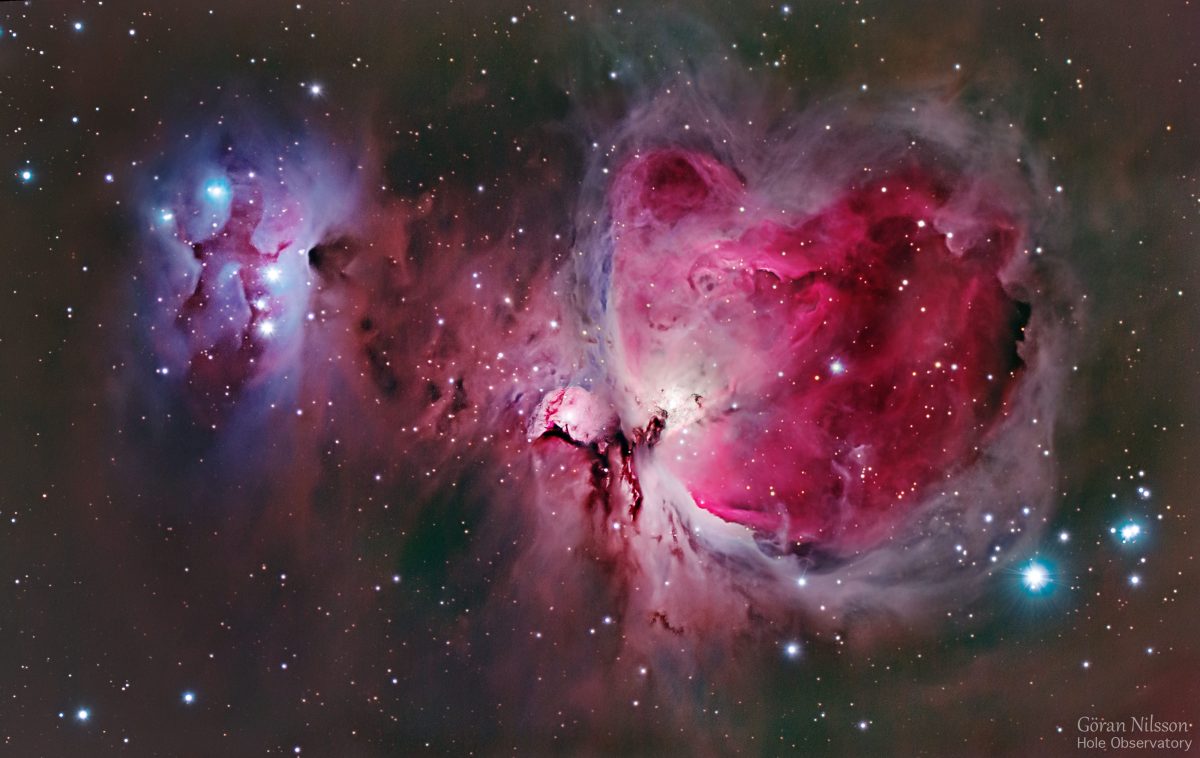
Source: Wikimedia Commons
Accumulated metal
Manganese is classified within the iron group and is synthesized in the universe through two distinct types of supernovae. Massive stars undergo explosive events merely millions of years after their formation, resulting in Type II supernovae. Conversely, more stable stars explode after significantly longer periods, spanning billions of years, leading to the occurrence of Type Ia supernovae.
The difference between Type I and Type II supernovae. Source: Fraser Cain
In the second instance, manganese accumulates at a significantly faster rate; consequently, its ratio to iron in interstellar gas undergoes a gradual alteration. The greater the concentration of this metal, the later the epoch in the universe’s history that the measurement signifies.
The complexity of the observations
The concentration of manganese in the universe is approximately one-hundredth that of iron. Its most notable spectral lines are situated in the ultraviolet spectrum, which has limited penetration through Earth’s atmosphere. Consequently, as noted by Universe Today, this element has seldom been employed in the investigation of supernova remnants and ionized hydrogen clouds.
Astronomers have historically utilized manganese abundance as an indicator of the contribution of Type Ia supernovae to the chemical makeup of our Galaxy. However, this method involves analyzing the spectra of individual stars, which is feasible only for relatively close objects. At greater distances, resolving the galaxy into individual stars becomes impractical.
Supercomputer calculations
We successfully surmounted this obstacle without generating any new observations. Utilizing advanced computing systems, we simulated 1,421 energy levels of manganese ions and evaluated the results against the atomic data repositories of the National Institute of Standards and Technology.
Subsequently, they conducted simulations of 703 electron-ion collision scenarios and analyzed the radiation emitted subsequent to each event. The resulting dataset delineates the specific emission lines to observe at varying gas temperatures and densities. Certain lines demonstrated a high degree of sensitivity to these parameters, rendering them valuable for evaluating the physical state of supernova remnants and other extensive gaseous clouds, as reported in a press release from Ohio State University.
Verification using telescopes
Certain predicted spectral lines lie within the infrared wavelength range observable by the James Webb Space Telescope. The team intends to verify these predictions through actual observations utilizing both the telescope and ground-based observatories.
The findings have already been published in the peer-reviewed journal Monthly Notices of the Royal Astronomical Society, although the calculations themselves have not yet been validated by observational data. The primary author of the paper, Zer Samak, is affiliated with Al-Aqsa University in Gaza, whereas co-authors Sultan Nahar and Anil Pradhan are affiliated with Ohio State University.
According to Anil Pradhan, integrating data on manganese with information on oxygen and sulfur could potentially enable the observation of the earliest eras that are feasible for study. The compiled tables have been made publicly accessible to facilitate comparison with measurements conducted by other research groups.
