

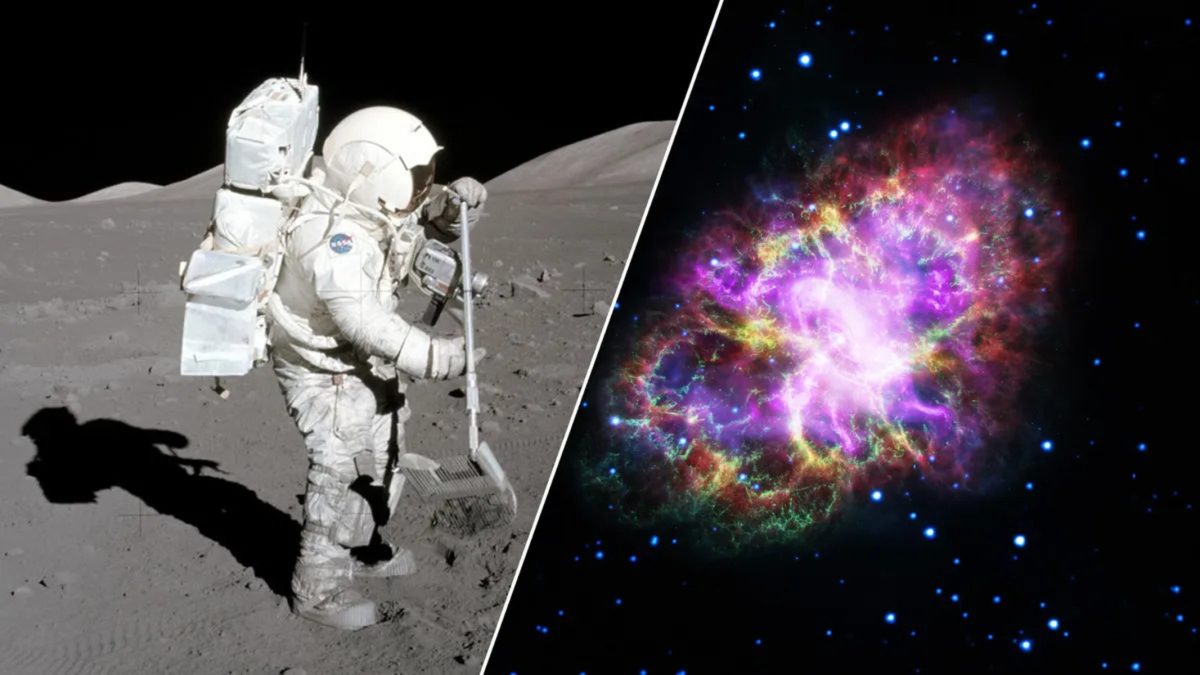
The lunar surface retains radioactive dust originating from supernova explosions in proximity to the Solar System. Access to this repository has been obstructed by the ongoing agitation of the upper layer induced by meteorite impacts. Utilizing an innovative mathematical model, researchers have succeeded in describing the distribution of particles across various depths. Consequently, regolith samples can now be interpreted as a historical record of planetary events.
Reasons why Earth is unsuitable
When a supernova explodes, debris — including radioactive isotopes — is propelled into space at high velocities. Some of this debris subsequently enters the Solar System and deposits onto the planets and their moons.
The Earth’s deposits of this material have been predominantly depleted. Erosion and the movement of lithospheric plates eliminate the traces; consequently, Earth’s sediments retain evidence of such phenomena solely from the last ten million years. An examination of deep-sea sediments, in conjunction with Apollo lunar samples, has identified two peaks of such activity, approximately 2.3 and 7.3 million years ago.
Archive free from erosion
The Moon lacks both an atmosphere and plate tectonics. Consequently, the regolith may retain evidence of explosions that transpired within the last 80 to 100 million years, and potentially even earlier.
Another process, known as ‘impact gardening’ by planetary scientists, disrupts this phenomenon. Impacts varying from micrometeorites to substantial asteroids disturb the surface layer along with radioactive dust, as reported by Space.com. Consequently, the depth at which these particles are located no longer accurately reflects the duration they took to settle.
The solar system resides within the Local Bubble, a cavity in interstellar gas approximately a thousand light-years in diameter. The boundaries of this cavity were established by supernova explosions that have taken place near the Sun over the past 14 million years.
A model rather than conjectures
To ascertain the depth to which each isotope had descended, Emily Costello’s team at the University of Hawaii at Manoa characterized this mixing process as a competition between two forces. Certain impacts contribute to burying the material more deeply, whereas others resurface it; concurrently, radioactive decay and cosmic weathering processes are also operative.
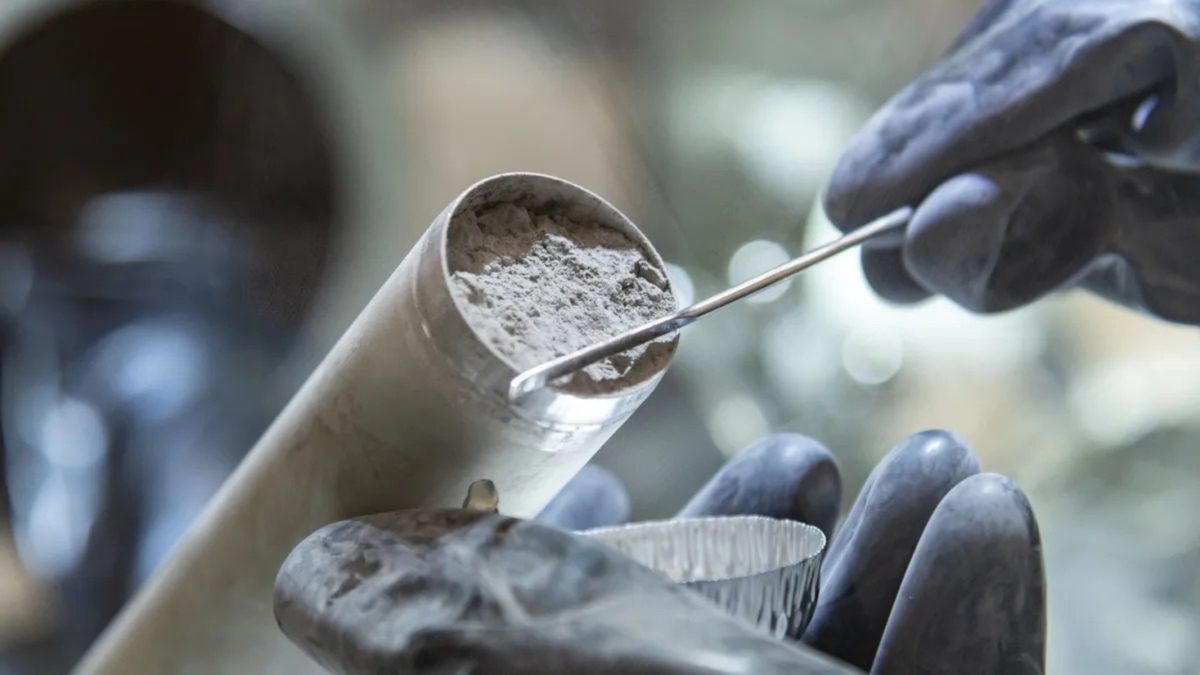
We successfully reconstructed the extent of alteration in the Apollo soil columns attributable to impacts and space weathering over a period spanning from 14 to 450 million years, as well as examined the distribution of iron-60 with depth. The findings were published in the peer-reviewed journal Physical Review Letters. “When I first presented the results, my colleagues were surprised at how well the model matched the measurements,” stated Emily Costello.
Focus on new models
Calculations indicate that additional material remains embedded within the regolith. These isotopes comprise plutonium-244, iodine-129, hafnium-182, and curium-247. Furthermore, the ratio of plutonium-244 to iron-60 at various depths may elucidate the provenance of this heavy element — distinguishing whether it originated from supernovae or from neutron star mergers.
This necessitates obtaining core samples from a depth of approximately one meter. Astronauts participating in the Artemis program will have the capability to retrieve such samples during forthcoming landings.