

Over the upcoming two decades, NASA intends to deploy the Gateway orbital station. This hub is designed to systematically transport astronauts, scientific instruments, and cargo to the first permanent lunar base. The dependable operation of this complex structure will rely heavily on highly accurate gravitational and mathematical calculations, which are not typically employed in terrestrial aviation.
Characteristics of a halo orbit
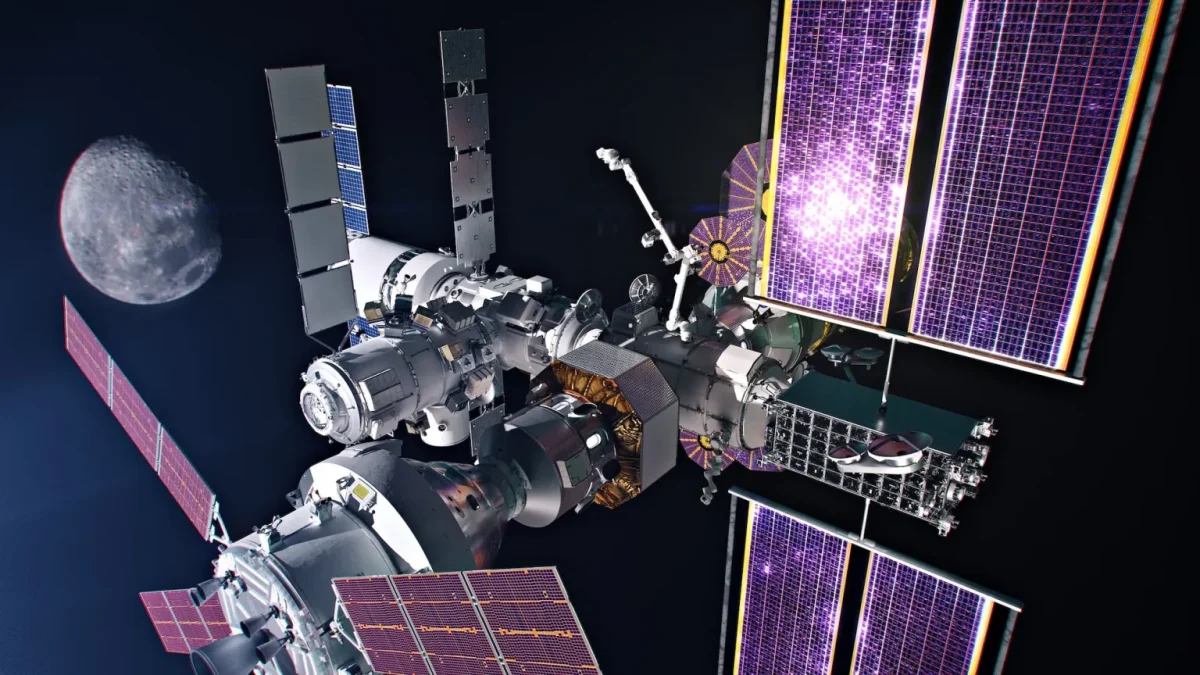
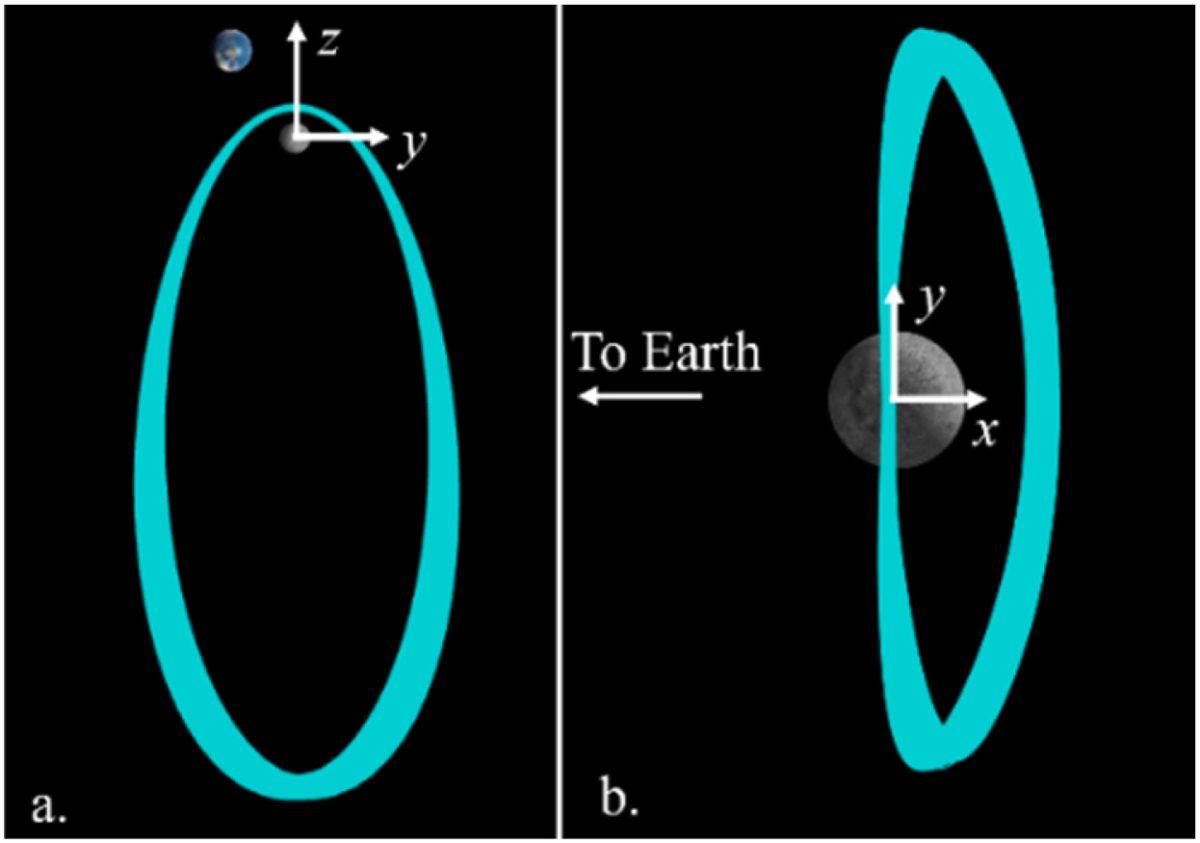
In a study published in the journal Acta Astronautica, researchers elucidate that the station’s critical systems will be designed around the utilization of a nearly rectilinear halo orbit (NRHO). This trajectory is regarded as the most economical “space highway,” offering uninterrupted, direct communication between spacecraft and terrestrial experts.
Simultaneously, the utilization of the Near Rectilinear Halo Orbit (NRHO) entails several intricate challenges. The orbit is characterized by a highly elongated elliptical shape, passing approximately 1,600 km from the Moon’s northern pole and extending roughly 64,000 km above its southern pole. In accordance with the principles of physics, the Gateway station, as well as crews and cargo ships, will invariably experience the gravitational competition between Earth and the Moon.
Orbital parking
Planning a flight for a single spacecraft is a relatively straightforward task; however, the situation becomes more complex when multiple crews are concurrently traveling to the Moon. Similar to traffic congestion on Earth or taxiing on a runway, the resolution to this issue fundamentally relies on the concept of “hovering in space.”
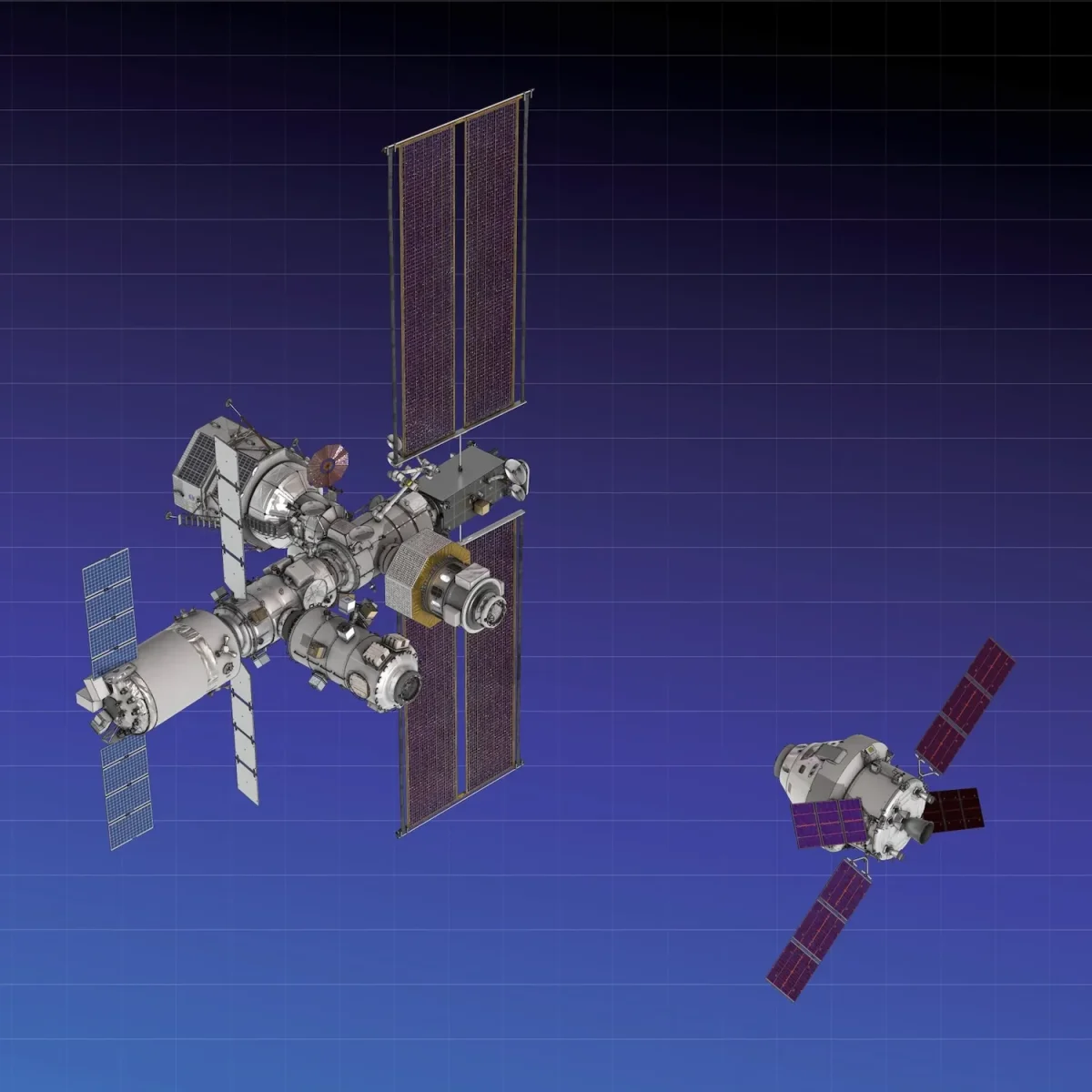
“Loitering in space means maintaining a spacecraft in a specific orbit or trajectory without performing an immediate maneuver,” states Diane Davis, a co-author of the study and an aerospace engineer at Texas A&M University.
On Earth, a vehicle at rest remains stationary. However, in space, “parking” entails a continuous effort to counteract the forces of orbital physics over extended periods, such as days or weeks. Each spacecraft is in constant motion; therefore, scientists are required to ascertain a distance that ensures sufficient separation for safety, while remaining sufficiently proximate to their destination to optimize fuel efficiency.
The mathematics of security
Researchers from NASA, Texas A&M University, and Purdue University conducted numerous computer simulations to identify algorithms for securely maintaining multiple spacecraft in standby mode near the Gateway. The simulations incorporated potential engine malfunctions and navigation errors.
Scientists have determined that novel maneuvers must be devised and integrated to guarantee the efficient functioning of a spacecraft queue. According to Davis, the calculations resemble stringing pearls onto a necklace, with spacecraft naturally aligning along the lunar orbit relative to the station. Precise motion control is increasingly regarded as a critical factor in future lunar missions, on par with rocket engineering itself.
We previously reported on the withdrawal of support by NASA contractors for the Gateway space station.
Provided by Popular Science
