

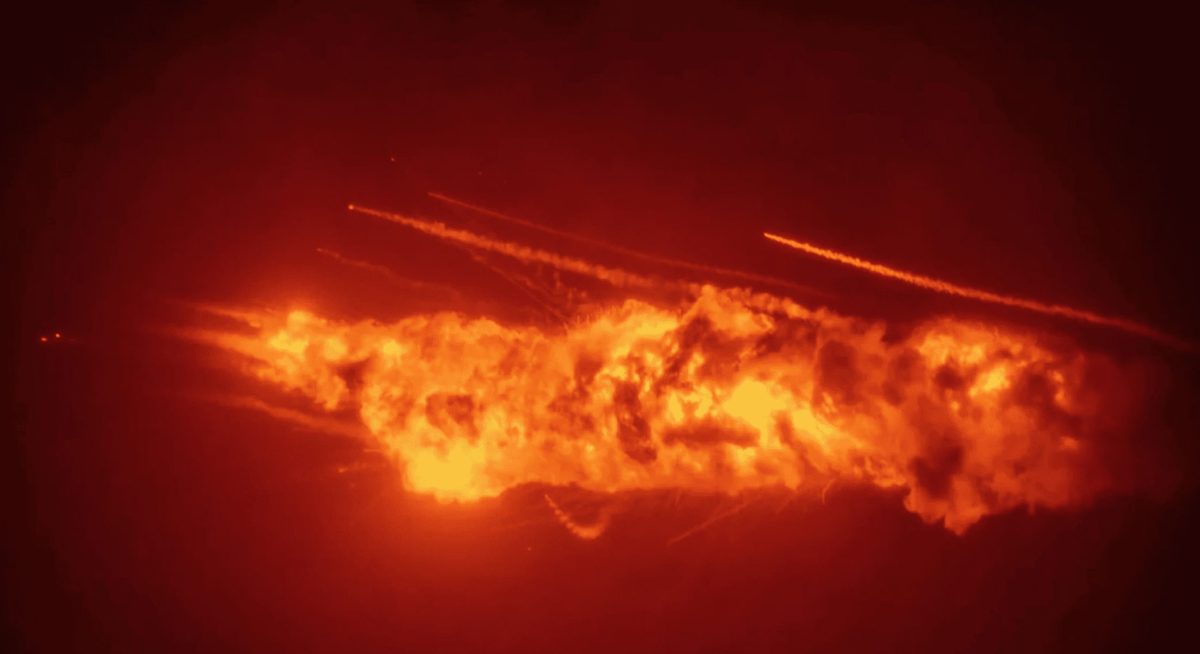
The launch of a Chinese rocket ended in an explosion less than a minute and a half after liftoff. The communications satellite that was supposed to reach a high orbit was destroyed together with the launch vehicle. The cause of the failure has not yet been announced. The incident was mentioned in a joint statement by dozens of countries, including Ukraine, calling for advance notification of similar launches.
Accident over Hainan
The Long March 7A launch vehicle lifted off from the Wenchang Space Launch Site on Hainan Island late in the evening of August 10 local time. At approximately the 85th second of flight, the rocket exploded in the atmosphere, producing a large fireball and a cloud of smoke and debris, Space.com reports.
The moment of the breakup was captured on video by eyewitnesses and quickly spread across social media. Judging from the footage, the mission will almost certainly be classified as a complete failure.
The launch vehicle was lost together with its payload. Debris fell within areas that are traditionally closed during launches from Wenchang.
The Destroyed Spacecraft
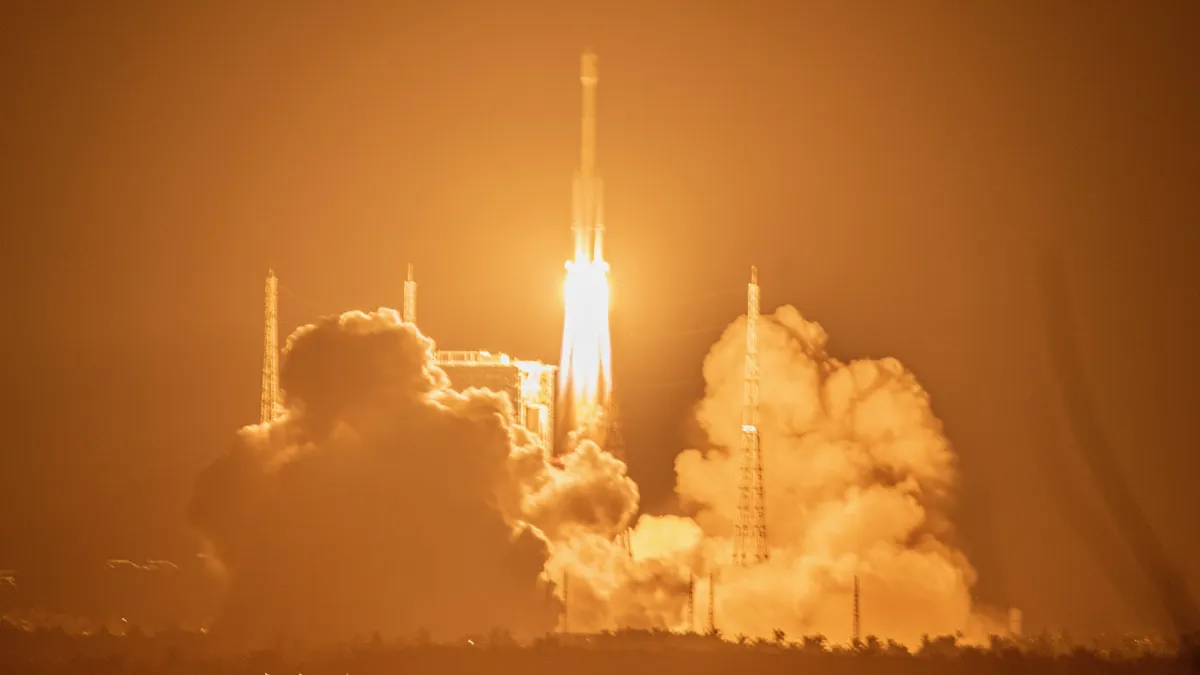
On board was the ChinaSat 4B telecommunications satellite, which was intended for a geostationary transfer orbit. Spacecraft of this series support Chinese communications and broadband Internet services and, according to available assessments, also operate in support of military needs.
The launch was conducted by the state-owned China Aerospace Science and Technology Corporation (CASC). The company has not released an official explanation, while state media limited their coverage to mentioning an anomaly during the flight and stating that the circumstances are under investigation.
A Repeat of an Old Scenario
The failed flight was the eighteenth launch of this variant since its debut in 2020. Its first launch also ended in an explosion, which was attributed to an engine failure shortly after separation of the first stage.
This time, the rocket did not reach that phase. The four side boosters and the central core separate together as a single package slightly less than three minutes into flight, meaning that the main propulsion system was still operating when the explosion occurred.
International Repercussions
The accident also attracted attention beyond the space industry. Two days later, Ukraine and forty other countries signed a joint statement calling for at least 24 hours’ advance notice of launches of long-range ballistic missiles and space launch vehicles.
The statement was prompted primarily by Chinese ballistic-missile tests conducted over the Pacific Ocean in July. The explosion over Hainan was mentioned separately in the document as a recent example of why neighboring countries need advance information about such launches.
The signatories are asking states to disclose the class of missile or rocket, the launch area and direction, and the expected impact zones of spent stages. The goal is to prevent radar systems in other countries from mistaking such a launch for a nuclear attack.
Risk to Cargo Missions
The same central core is used by the basic version of the launch vehicle that delivers supplies to the Tiangong orbital station approximately once every eight months. The most recent such mission took place in May, while the next is expected closer to January 2027.
Until the cause of the failure is determined, flights of this variant will most likely be suspended. An investigation commission will have to analyze telemetry and optical tracking data, and its conclusions will determine how much the schedule of upcoming launches may be delayed.