

The second test flight of the third Starship modification, Starship V3, has taken place. Overall, the mission was successful: the spacecraft demonstrated key technological capabilities, including the first deployment of next-generation Starlink satellites in orbit. However, despite the overall triumph, industry experts warn that a serious technical obstacle still stands in the way of achieving the project’s main goal.
According to former NASA engineer Dan Rasky, who spent nearly four decades researching heat-shield materials at the Ames Research Center, Starship’s current thermal protection system is a dead-end approach for missions requiring rapid and full reusability. Together with former astronaut Charles Camarda and former head of NASA’s transition team Charles Miller, he conducted a detailed analysis of photographs and video footage of the vehicle after its soft splashdown in the Indian Ocean. The experts’ conclusions were more restrained than the official reports.
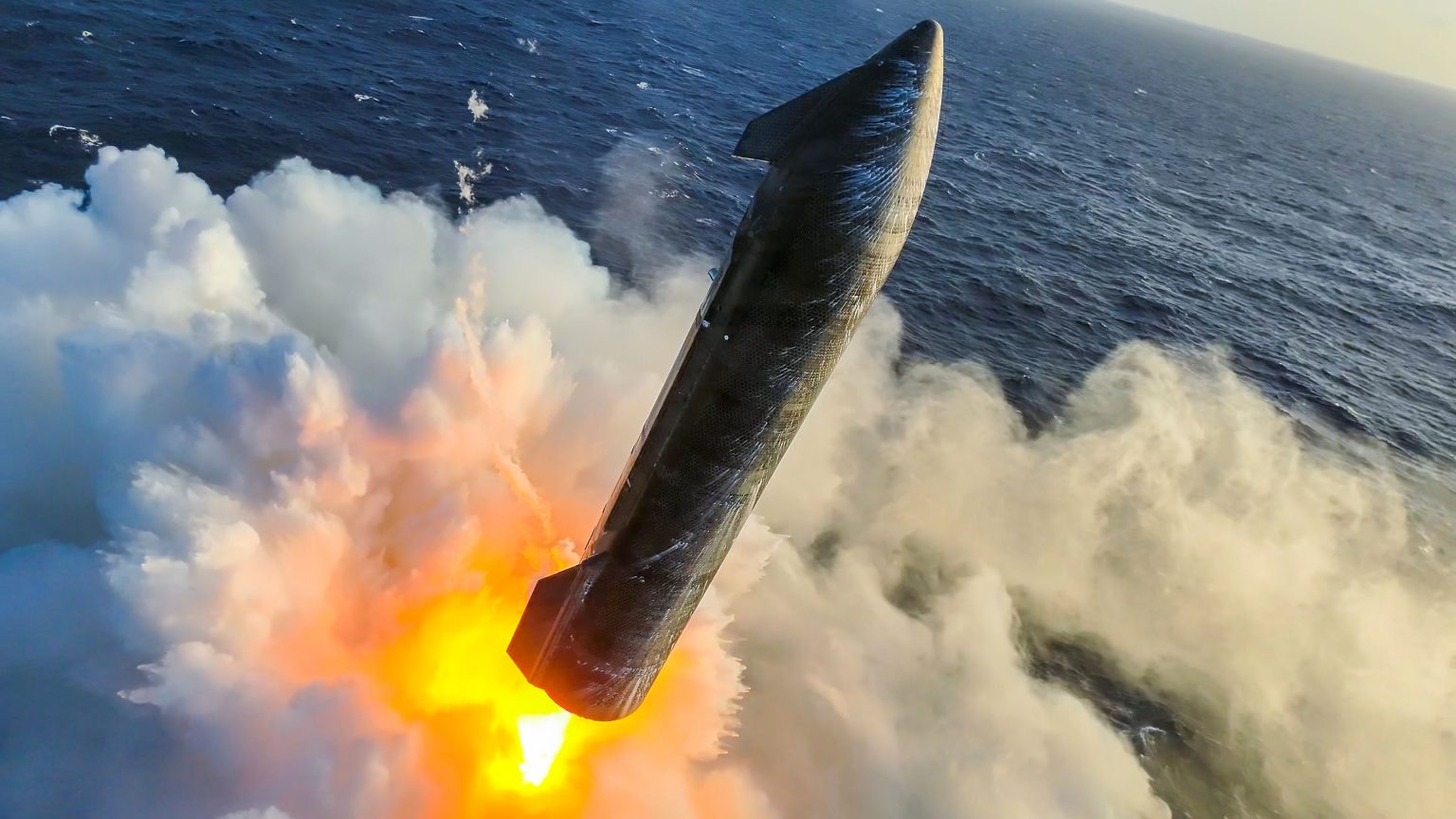
View from above as Starship launched from Pad 2 at Starbase pic.twitter.com/LIXq9EFCpI
— SpaceX (@SpaceX) July 25, 2026
Landing burn and splashdown of Starship on Flight 13 pic.twitter.com/I1BWnGKpPo
— SpaceX (@SpaceX) July 28, 2026
Progress in Tile Geometry
Nevertheless, SpaceX engineers deserve credit: during the 13th test flight overall, the heat shield did perform its primary function. The Starship vehicle successfully passed through the dense layers of the atmosphere, and according to the company, the protective coating remained intact after contact with the water.
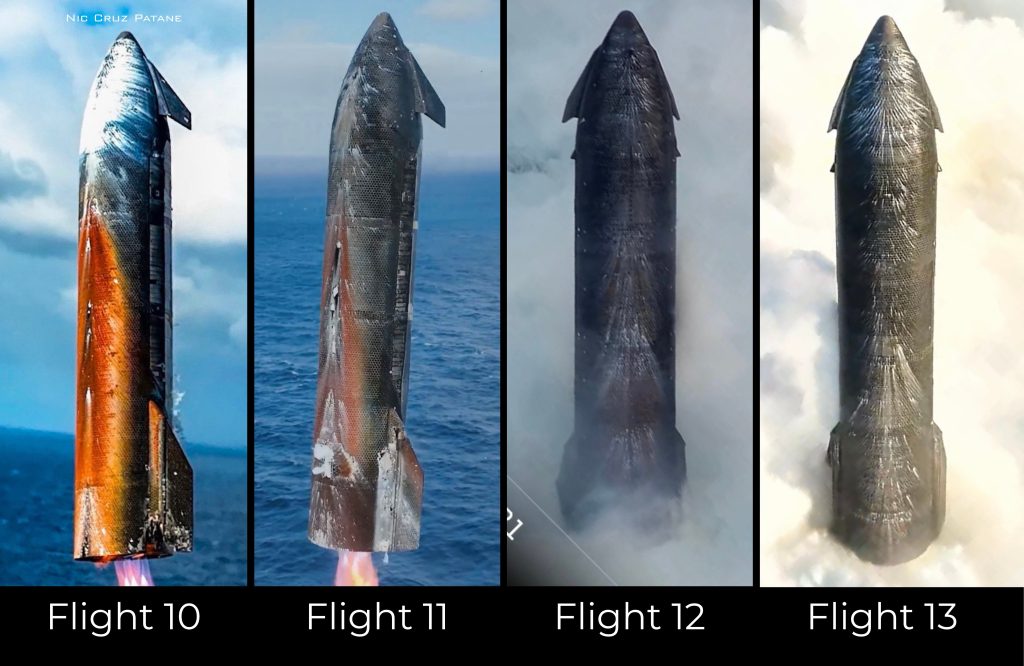
Compared with previous launches, the shield’s effectiveness has improved noticeably. In images taken after the 12th and 13th tests, the tile array appears significantly more uniform, while the number of missing or seriously damaged elements was minimal. The greatest improvement occurred with the transition to the Starship V3 design, which introduced an updated tile geometry and improved attachment clips compared with Starship V2.
SpaceX clearly understands the critical importance of developing reliable thermal protection. That is why the company is actively experimenting with the placement of shield components and subjecting them to maximum loads. During the 13th flight, the Starlink satellites deployed into orbit even conducted additional imaging of the spacecraft’s shield immediately before it entered the dense layers of the atmosphere.
Warning Signs
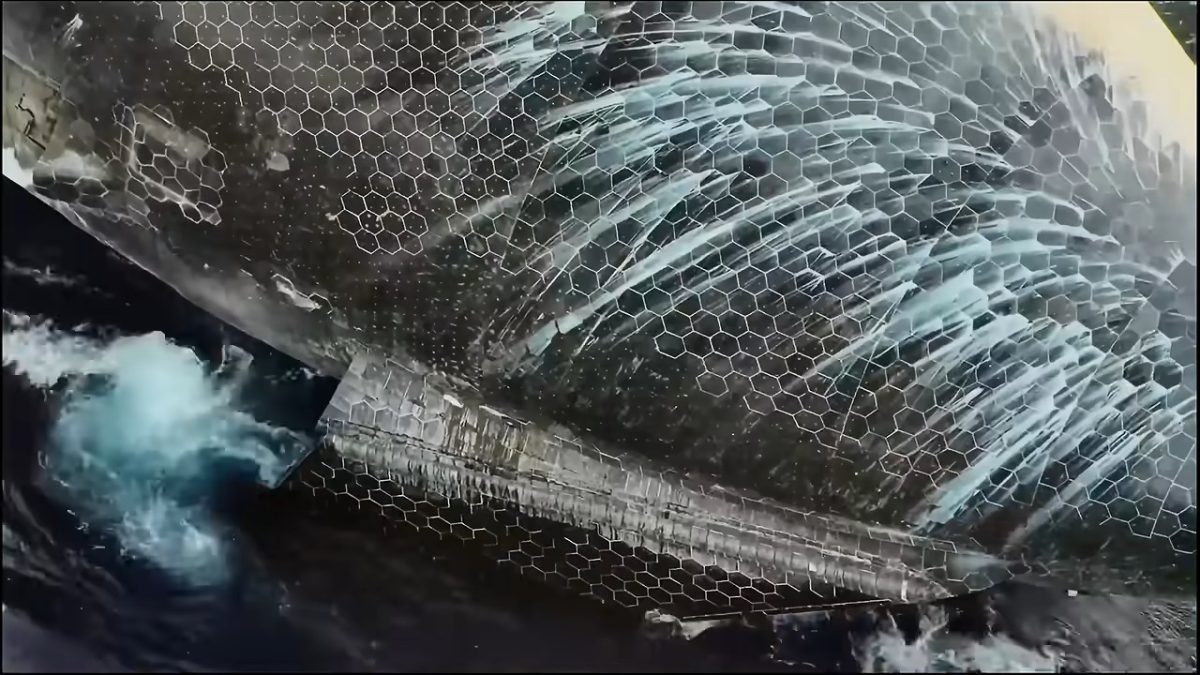
Despite the evident progress, an analysis of detailed drone footage taken after Starship’s splashdown revealed troubling details. White streaks can be seen originating from the joints between individual tiles. Experts believe this indicates that superheated plasma gas penetrated the gaps between the protective elements during deceleration. Similar marks were also observed during the 12th flight. In addition, experts identified signs of cracking in the tiles themselves and damage to their edges.
Such defects do not mean catastrophic destruction of the shield, but they make immediate reuse impossible. After each return from space, the vehicle would require lengthy inspections, repairs, and replacement of damaged sections. This contradicts SpaceX’s vision of relaunching the same Starship only a few hours after landing. At present, preparing the spacecraft for a new launch still takes weeks.
Searching for New Solutions for Full Reusability
Experts believe that SpaceX’s current solution is only an evolutionary improvement of the approaches used during the Space Shuttle program and is based on the same fundamental principles. Charles Miller previously proposed that NASA launch a new national program to develop conceptually new thermal-protection systems, but the initiative has so far received neither publicity nor funding.
At the current stage of development, SpaceX itself has shown no intention of abandoning the tiled system or seeking radically new approaches. Whether the company can perfect the existing technology and achieve its exceptionally ambitious goals for turnaround between flights will become clear during future tests.
Earlier, we reported on how Starship’s 13th flight nearly ended in disaster.
According to arstechnica.com