

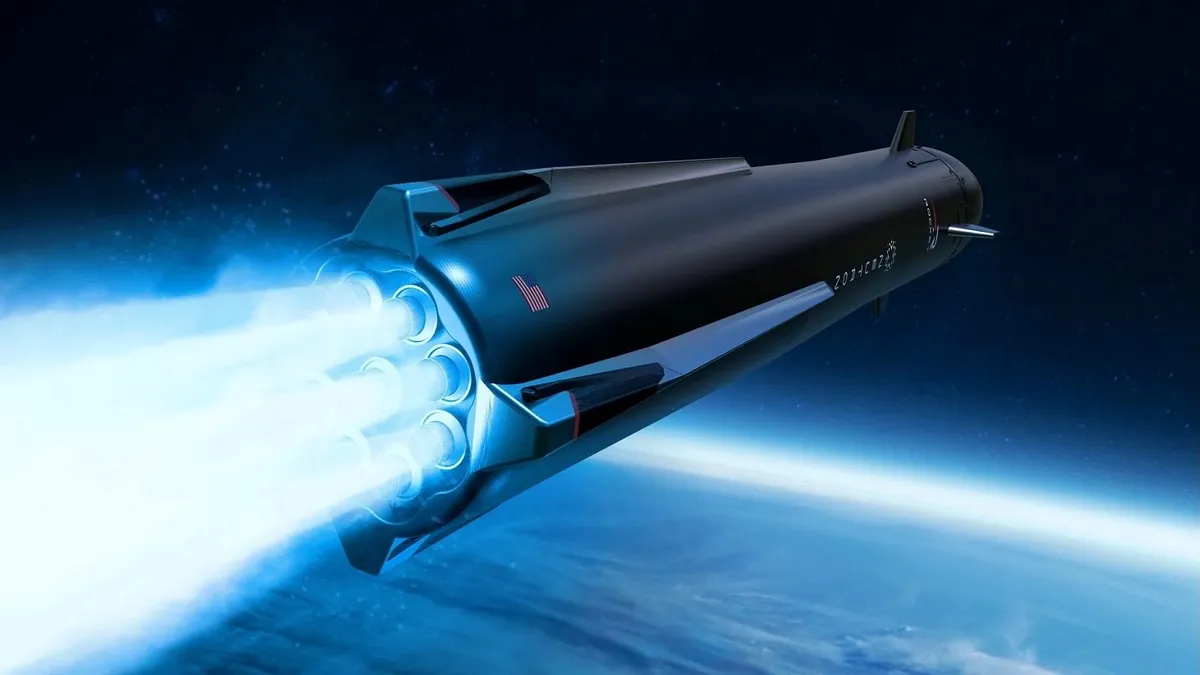
Neutron has yet to undergo flight testing, but the price of a launch has already risen by more than a quarter. Rocket Lab has raised the base price because of a worldwide shortage of available medium-lift launch vehicles. Customers have not been deterred. The first missions are already sold out, and new contracts are being signed for the 2030s.
Price and Demand
The company announced the price increase on 9 November alongside its third-quarter results. A Neutron launch now costs $70 million, up from $55 million. During that quarter alone, contracts were signed for eight launches worth more than $515 million in total, some already at the new rate, according to a Rocket Lab press release. The customers have not been disclosed. All that is known is that they operate satellite constellations.
Chief financial officer Adam Spice explained that the company deliberately chose fewer sales at higher prices and declined to offer discounts to some customers. Founder and chief executive Peter Beck attributes the price increase to a shortage that Rocket Lab had anticipated. “Launch availability is extremely limited, and this is exactly the situation we predicted,” he says.
What Is Behind the Shortage?
SpaceX’s Falcon 9 remains the main competitor in this class. Last year, it completed 165 launches, all successfully. However, as Space.com reports, SpaceX plans to retire Falcon 9 and Falcon Heavy around 2028 in favour of the much larger Starship, whose early flights will reportedly be devoted mainly to deploying the company’s own satellites.

For satellite operators, this means the most popular medium-lift launch vehicle will disappear from the market, while available slots on other rockets are already scarce. Rocket Lab can therefore raise its price before Neutron has flown even once.
Launching a kilogram of payload on Neutron will cost more than on Falcon 9. For $74 million, Falcon 9 can deliver a maximum of 22.7 tonnes to low Earth orbit, equivalent to at least $3,300 per kilogram. Neutron is designed to carry 13 tonnes for $70 million, putting the price per kilogram at $5,400 or more. The exact ratio depends on the flight configuration, but Neutron’s cost is approximately one and a half times higher. Customers are paying for a place in the queue rather than a favourable rate.
Revenue and Order Backlog
The new price was announced against a backdrop of sharply rising revenue. Rocket Lab’s revenue from July to September totalled $268 million, compared with $155 million a year earlier—an increase of 73%.
The order backlog reached $3.57 billion, up 52% from the end of the previous quarter. It includes 117 launches, 16 of them on Neutron.
The Rocket Is Still on the Ground
Neutron, which features a reusable first stage, was announced in 2021, with its maiden launch initially planned for 2024. In October, that launch was postponed from late 2026 to 2027. During manufacturing, voids were found in the composite upper dome of the first-stage fuel tank. Such defects weaken a structure that must withstand fuel pressure and cryogenic temperatures.
A replacement dome has already been manufactured, and inspections found no defects. Next, the tank will undergo hydrostatic testing at the factory, followed by cryogenic testing at Launch Complex LC-3 on Wallops Island, Virginia. Peter Beck declined to provide a new date for the maiden launch until these stages are complete.
