

NASA says it is looking for new private initiatives that could help bring samples of Martian soil back to Earth. The Perseverance rover is carefully collecting them on the Red Planet, but all previous plans to transport them to a laboratory have fallen through before they even got started.
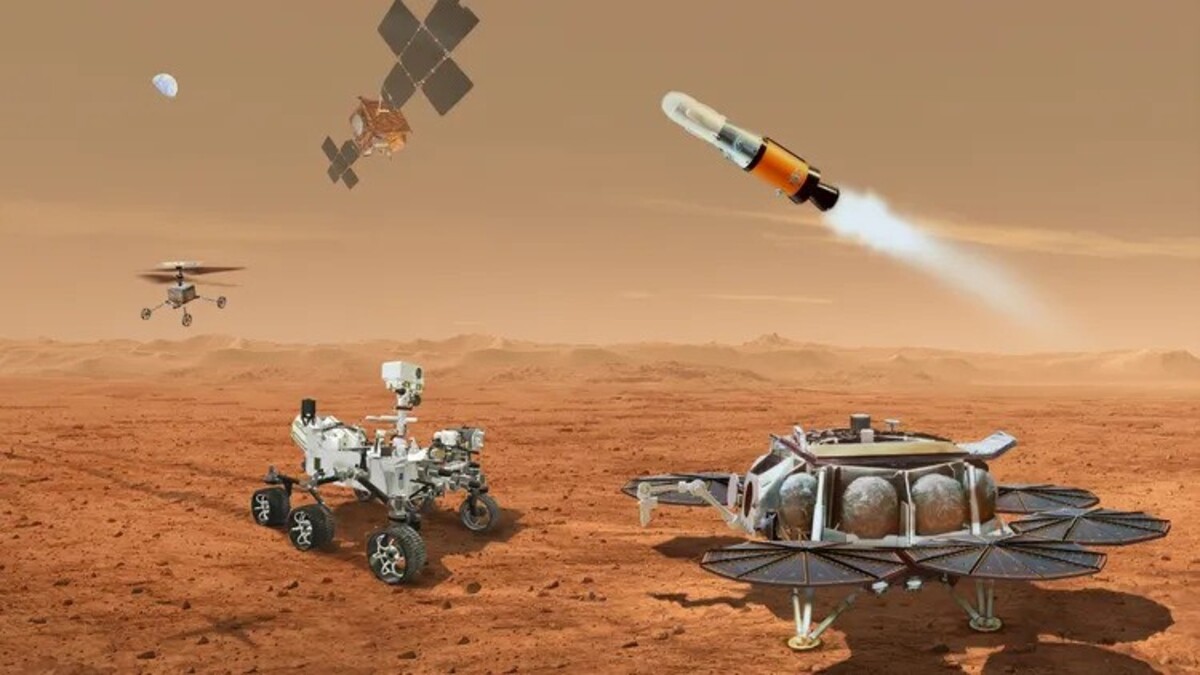
Strategy for returning Martian samples
On November 9, the director of NASA’s Mars Exploration Program developed a new strategy for finding ways to return samples of Martian rocks to Earth. Her team is expected to begin selecting private-sector projects capable of tackling this task in January next year, with at least some results to be announced by the summer. This was reported by Space.com.
All of this sounds rather uncertain, especially considering that China has already confirmed significant progress with its “Tianwen-3” project, which also aims to bring samples of Martian soil back to Earth. This increases the chances that the Americans will not be the first to accomplish this.
Why did this situation arise?
When the Perseverance rover landed on Mars in the Jezero Crater region in 2021, NASA believed it had a very good, although ambitious, plan. The rover itself was supposed to collect as many samples as possible, including those highly likely to contain traces of organic matter and living organisms. It was supposed to carry them with it until another mission, Mars Sample Return, landed in the same area.
This mission would not collect anything itself. The containers would simply be transferred onto it, and it would launch back toward Earth. The only problem was that this mission would have to be even more complex than Perseverance itself, and it was not ready even at the blueprint stage. Years passed, the rover continued collecting samples in Jezero Crater, and there was no news about the spacecraft supposed to bring them back to Earth, apart from reports that it had turned out to be more expensive than expected.
Eventually, a couple of years ago, NASA acknowledged that the Mars Sample Return project had exceeded all reasonable cost limits even before engineers had finished designing it, making its implementation pointless. For some time, it was unclear what to do next. Now, everyone is waiting for private companies to come up with some kind of viable plan.
