

The launch of the most powerful rocket in history was aborted during the final second of the countdown. The automated system stopped the Starship launch at the moment the first-stage engines ignited. The cause has already been identified, so another attempt may take place within a few days.
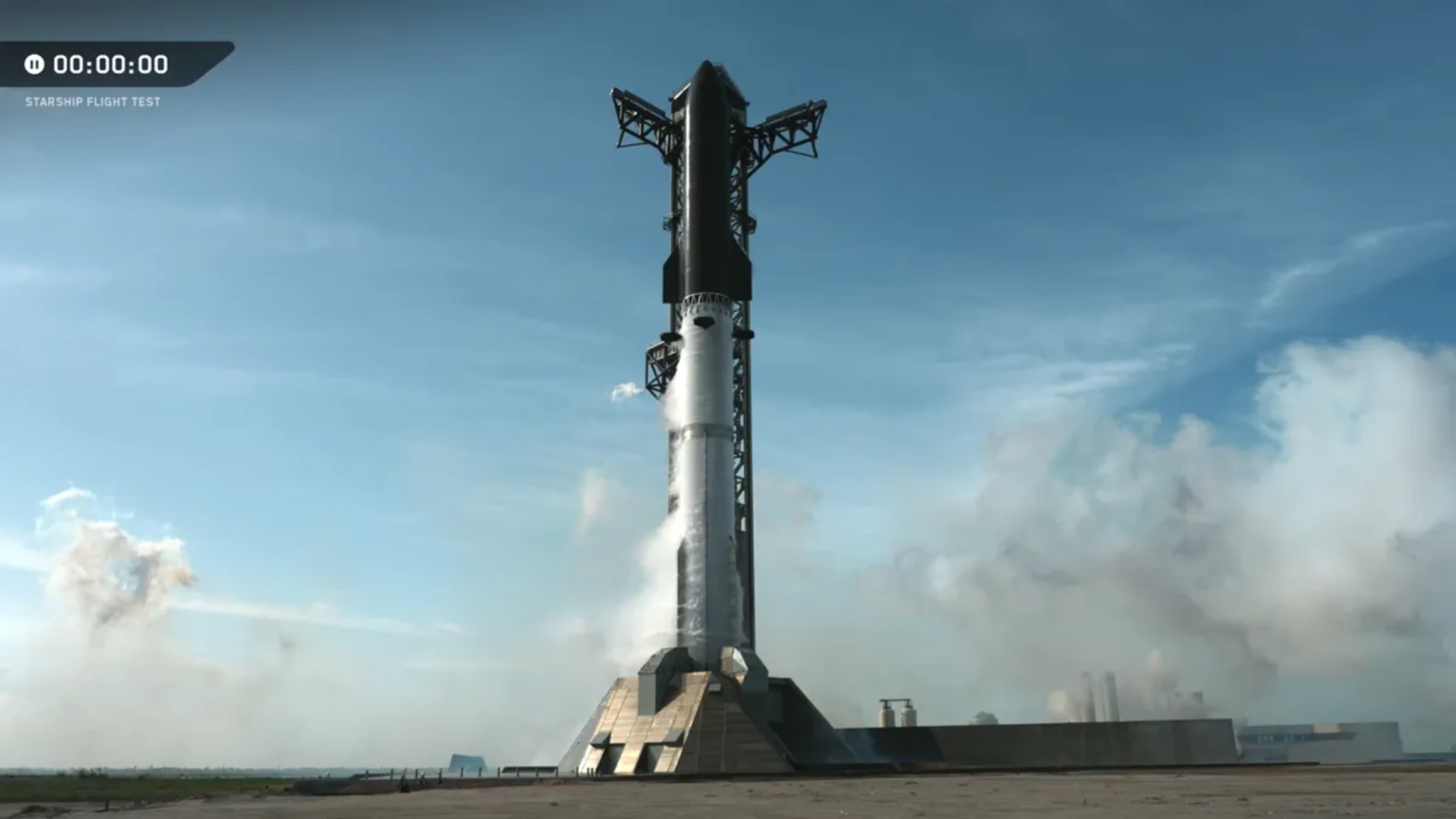
Emergency Shutdown
The launch window opened on the evening of July 16 at the Starbase spaceport in South Texas, when it was already the night of July 17 in Ukraine. The countdown reached zero, and the 33 Raptor engines of the Super Heavy first stage began to ignite.
Telemetry from the broadcast showed that four of them failed to operate properly, Spaceflight Now reports. The onboard computer immediately aborted the procedure, leaving the rocket undamaged on the launchpad. After the launch was canceled, the teams began draining propellant from the vehicle.
The moment Starship’s launch was automatically aborted on July 16, 2026. Video: SciNews / SpaceX
The Company’s Response
The cause was identified within a few hours. SpaceX founder Elon Musk announced on the social network X that two Raptor engines would be removed and replaced to ensure confidence in a successful flight.
According to him, the most likely time for the next launch is early next week. If the schedule is confirmed, the interval between attempts will be very short.
A Repeat Test of the V3 Version
The current mission was intended to become the second test of the upgraded Starship V3. The previous launch was successfully carried out in late May, but shortly afterward it resulted in a temporary launch suspension imposed by the U.S. aviation regulator.
The reason was the hard impact of the Super Heavy booster, which failed to perform its braking maneuvers over the Gulf of Mexico. One of the upper-stage engines also failed, so the planned Raptor relight in space was never tested.
The objectives of the new flight have remained almost unchanged. This time, the first stage is expected to make a soft splashdown in the same area, while the Ship upper stage is to travel around most of the planet before making a controlled descent into the ocean off the coast of Western Australia.
Unusual Payload on Board
A distinctive feature of the mission was the planned first deployment of third-generation Starlink satellites into space. According to Space.com, 20 such spacecraft are expected to separate from the upper stage along a suborbital trajectory and burn up in the atmosphere approximately 20 minutes later.
They will not remain in orbit because the primary objective is to test the deployment mechanism. Six of them have additionally been equipped with cameras to record the spacecraft’s heat shield during reentry.
The Cost of Every Delay
Every Starship delay has consequences extending far beyond a single mission. By the end of 2026, SpaceX plans to begin launching operational Starlink V3 satellites, while a modified version of the spacecraft is expected to conduct a docking test with Orion next year as part of the Artemis III lunar program. Even a one-week delay compresses the schedules of both major projects.
There is reason for optimism. The Falcon 9 flight suspension in February lasted only four days, while replacing two engines appears to be a simpler task than conducting a full-scale investigation.
