

The American company Reflect Orbital plans to bring to life in the future an old idea of illuminating Earth at night using giant mirrors placed in orbit. However, scientists modeled how this effect would be experienced on the surface and are now not sure that people will like it.
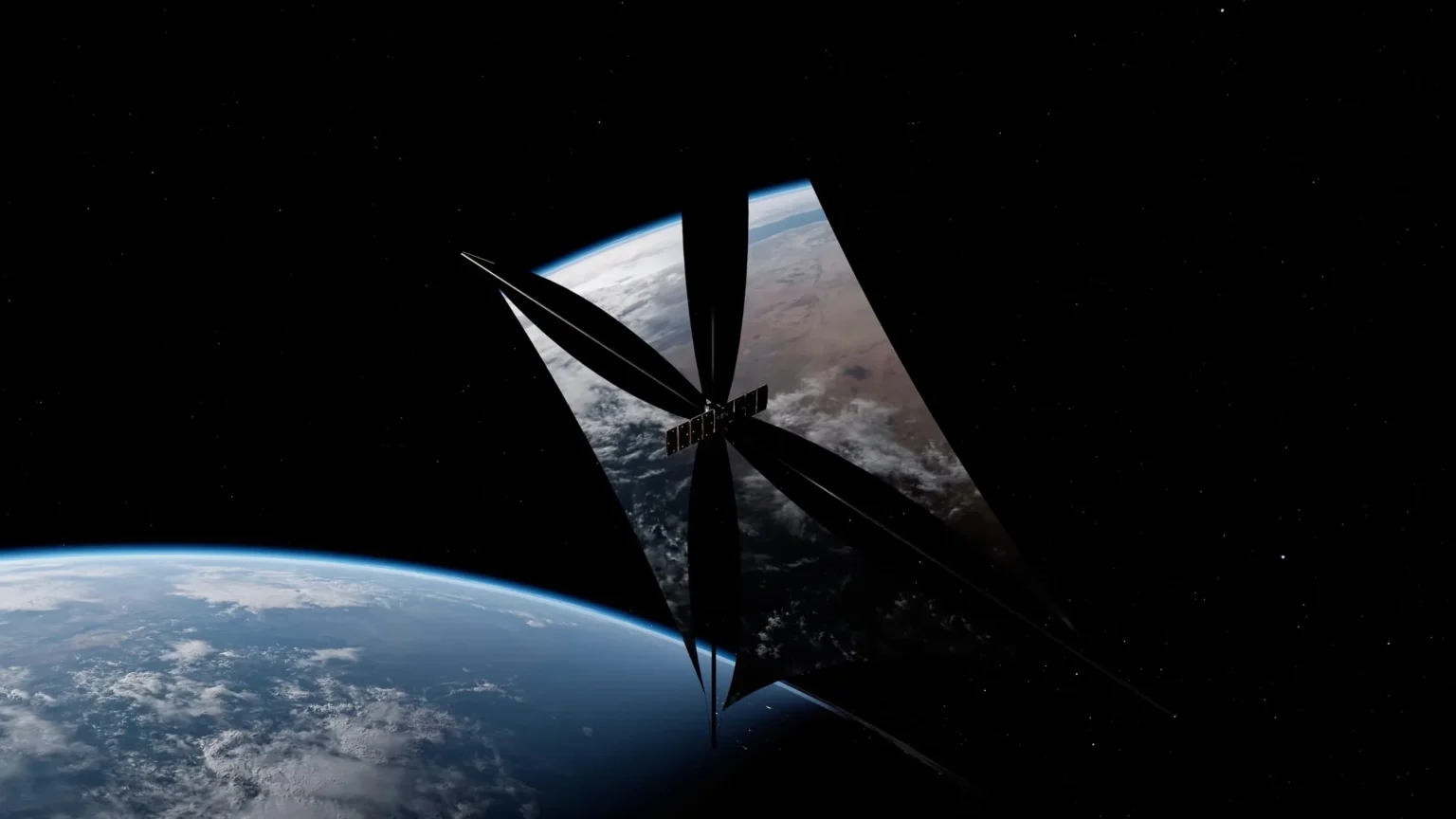
Mirrors from Reflect Orbital
The website Phys.org reports that a group of scientists is preparing to publish a paper in The Astrophysical Journal Letters devoted to how the appearance of Earth’s night side would change due to illumination by orbital mirrors. The researchers concluded that not everyone would like this effect.
The idea itself has been known for many decades, but now the American company Reflect Orbital plans to put it into practice. It has already received permission to launch the first satellite equipped with a giant 18 × 18 meter mirror. The Eärendil-1 spacecraft will operate at an altitude of about 600 km and will be able to illuminate an area of Earth with a radius of 2.5 km.
And this is only an experimental spacecraft. After it, the company plans to launch another 50,000 much larger mirrors measuring 54 × 54 m into space. In theory, this should create well-controlled zones of round-the-clock illumination that require no energy expenditure at all and exist exactly where needed.
Scientists Point to the Drawbacks
However, the authors of the new study noted that in reality everything is not so simple. Most of them specialize in atmospheric physics and emphasize an obvious fact: as light passes through layers of gases, it scatters. Therefore, orbital mirrors would not create clearly defined rectangles of illumination on Earth, but much larger areas of scattered light.
Scientists also predicted what the illumination from the proposed 54-meter mirrors would look like. Directly beneath the beam, the mirror would appear as a point source of light with a brightness of −16.7 magnitude — about four magnitudes brighter than the full Moon, although still considerably dimmer than the Sun. Even at a distance of 14 km from the center of the beam, the satellite would still flood the sky with light slightly brighter than the full Moon. And even at a distance of 34 km, it would be brighter than during a moonlit night in the middle of the lunar cycle.
But that is not all. Reflect Orbital proposes focusing as many as 400 orbital mirrors on a single point. According to scientists’ calculations, however, this would flood everything within an 80 km radius with light. And that is far from ideal. Even setting aside the fact that astronomical observations would become impossible throughout this entire area, the idea still does not look particularly good.
In reality, even humans are not very well adapted to continuous light. Our circadian rhythms become disrupted, disturbing the balance between wakefulness and sleepiness and potentially even leading to psychological problems. And that is without even considering the survival of animals and plants in such a zone. In short, the idea is quite controversial.
