

NASA Administrator Jared Isaacman believes American astronauts will set foot on the Moon before their Chinese counterparts. At the same time, he acknowledges that China has almost caught up with the United States technologically. He described the current race as real, but very different from the rivalry with the Soviet Union.

A One-Year Lead
In an exclusive interview with Space.com, Jared Isaacman outlined both countries’ targets. NASA plans to land in late 2028. China is aiming for late 2029, and he believes it will succeed. He attributes his confidence in a U.S. victory to the agency’s proven experience and regular heavy-lift rocket launches. A one-year margin is relatively modest. If Artemis IV is delayed by twelve months, that advantage will disappear, while China’s schedule already includes three uncrewed rehearsals before the landing.
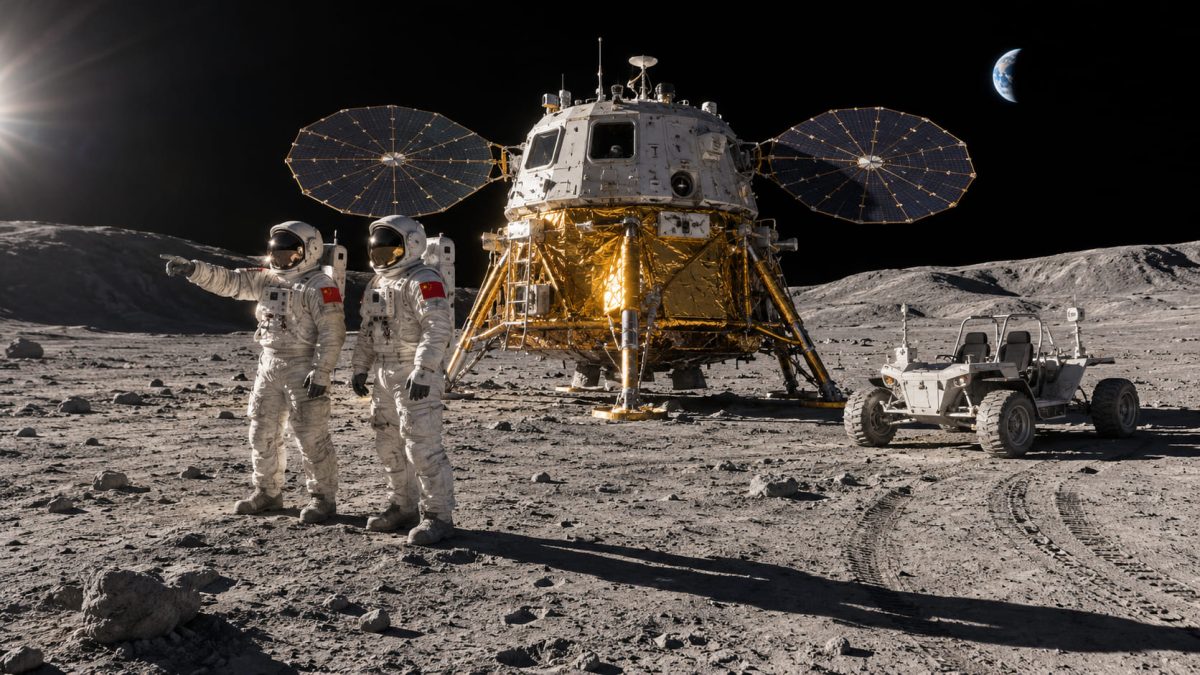
In Isaacman’s view, China is technologically very close to the United States, something that could not be said of the Soviet Union. China has already unveiled landers, rovers, spacesuits and a two-launch architecture incorporating reusable elements. Two Long March 10 rockets will separately launch the Lanyue lander and the Mengzhou crewed spacecraft. The vehicles will dock in lunar orbit, and only then will the crew transfer to Lanyue for the descent. China released a detailed schedule for the programme in late October.
Isaacman considers the consequences of defeat to be very serious. Losing, he says, would call everything into question. He asks which country the world would trust more when it comes to artificial intelligence systems, computers, transport and security guarantees: the United States or China.
A Rehearsal in Orbit
Following the successful lunar flyby in April 2026, NASA has scheduled its next launch for 2027. However, Artemis III will not land on the Moon. In low Earth orbit, the Orion crew will dock with a test version of the Blue Moon lander for approximately two days, followed by a docking with Starship lasting up to two hours. This will test docking procedures and system compatibility before the first landing.

The Apollo 9 crew conducted a similar test in Earth orbit in 1969, although Isaacman stresses that today’s missions differ greatly from those of the Apollo era. The test Starship has no life-support systems, so the astronauts will not enter it. NASA will decide which company’s lander carries people to the surface on Artemis IV based on which is ready first.
Both companies have a great deal riding on that decision. SpaceX received a $2.89 billion contract in 2021, followed by another $1.15 billion for a second landing. Blue Origin won a $3.4 billion contract in 2023.
A Rocket Every Year
Isaacman considers launch cadence more important than the readiness of the landers. Heavy-lift rockets, he says, must launch at least once a year, although four flights annually, as in the shuttle era, should not be expected. This is essential because a permanent lunar base will require many SLS launches. “I think we will prevail,” the NASA administrator said in a video on YouTube.
NASA Administrator Jared Isaacman discusses the Artemis programme and whether the United States can land astronauts on the Moon in 2028 in an interview with Space.com. Source: VideoFromSpace / YouTube
In 2027, the same year the Artemis III crew is due to dock with the American landers, China plans to launch an uncrewed Mengzhou into orbit for the first time. This will mark the new spacecraft’s first orbital flight in China’s programme.
