

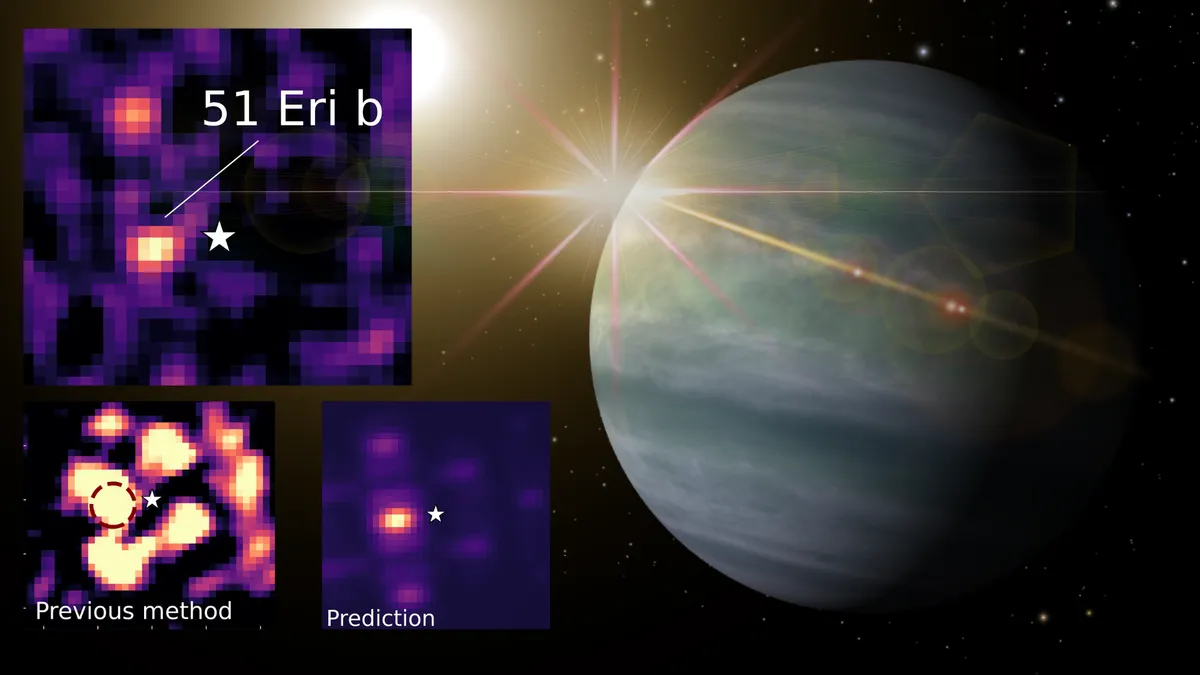
A gas giant orbiting a distant star has been detected for the first time in James Webb images at wavelengths within a carbon dioxide absorption band. Standard processing of the same data had failed to reveal the planet in this band. The new method uses a computer model of the telescope’s own optics, allowing starlight to be removed more accurately than with conventional techniques and making fainter planets visible in the images.
Why the Planet Is Invisible
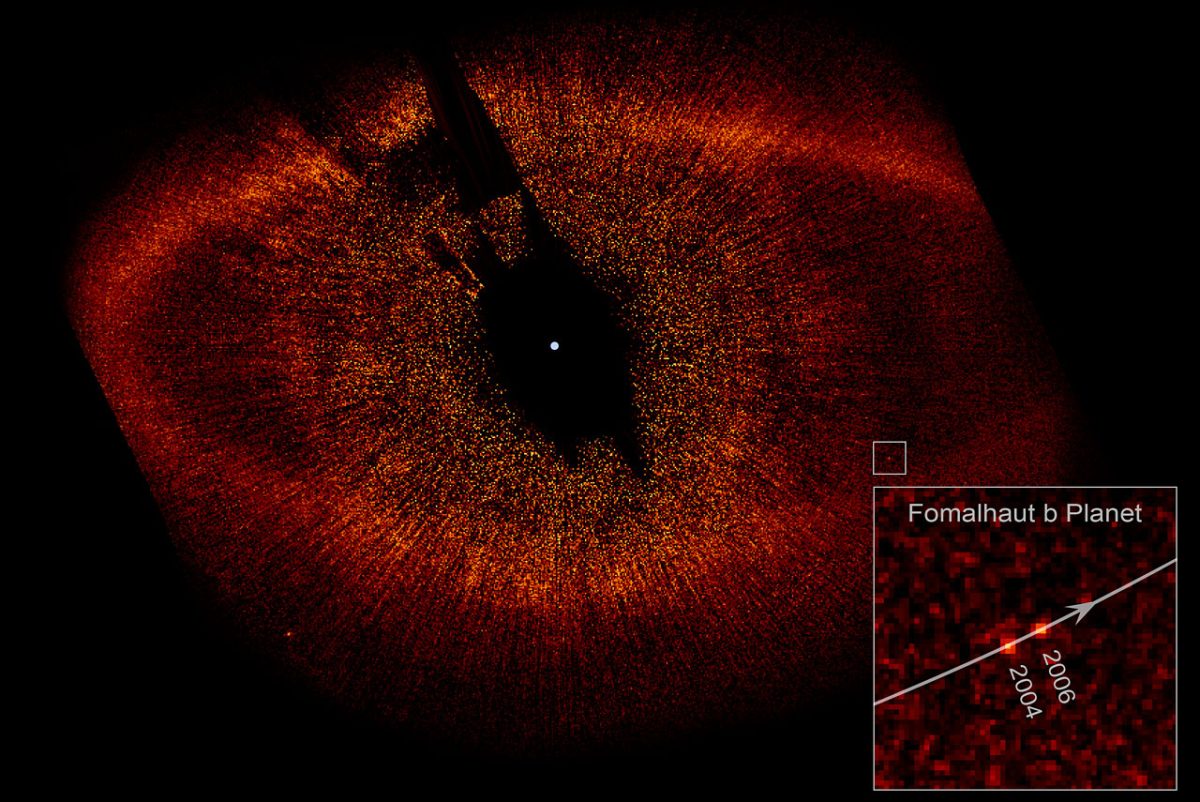
Even the brightest young giant planets are approximately 100,000 times fainter than their host stars in infrared light. A coronagraph—a mask that blocks the star’s disc—removes only some of the glare, while the rest must be subtracted during processing. The accuracy of this step determines which planets can be imaged at all.
For around twenty years, astronomers have done this by imaging a similar star without planets and subtracting that image from the target image, explains Jason Wang of Northwestern University. However, the telescope’s condition changes between the two observations. Its pointing drifts, its mirrors deform as temperatures fluctuate, and motors in the camera’s cooling system cause vibrations. As a result, the glare differs between the two images, leaving residual patterns after subtraction that obscure the planet.
A Digital Twin of the Telescope
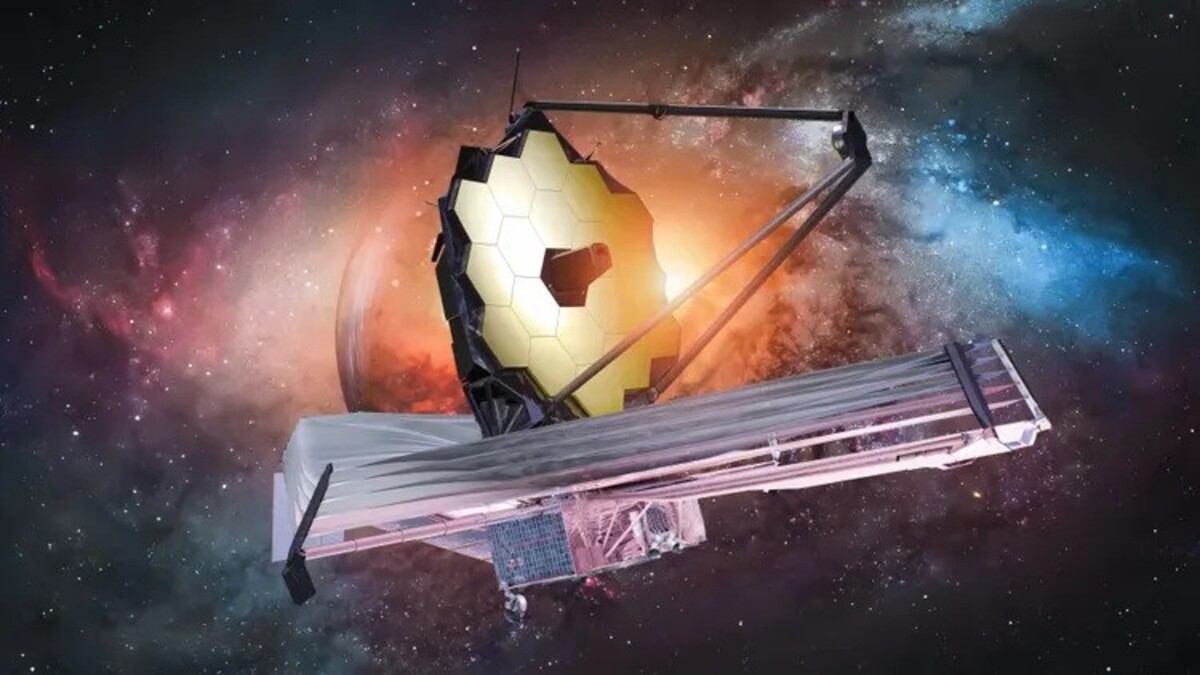
Rodrigo Ferrer-Chávez of Northwestern University and his colleagues developed FLIP, a method using physics-based learning for planet imaging. Instead of using an image of another star, they build a computer model of James Webb’s optics with approximately one million parameters. These parameters are adjusted until the simulated glare matches the real observations.
The model is first calibrated using a reference star that is unlikely to have planets. It is then fine-tuned using the image containing the planet, accounting for changes in the telescope’s condition between the two observations. To prevent the real signal from disappearing during processing, artificial planets are added to the image, and the calculation is stopped when their signal stops increasing.
Compared with standard processing, FLIP is 2–15 times more sensitive to faint planets. This improvement made it possible to detect 51 Eridani b at a wavelength of 4.3 micrometres for the first time. “We have shown that we can see a planet that we previously could not see,” says Jason Wang. The results were published in the peer-reviewed journal Nature.
Carbon Dioxide in a Young Giant
According to Space.com, 51 Eridani b is approximately 11 times more massive than Jupiter and lies 97 light-years away. It was discovered in 2015 using ground-based telescopes, while the James Webb data reprocessed by the team were collected two years ago.
The 4.3-micrometre band cannot be observed from the ground because of Earth’s atmosphere. Carbon dioxide abundance can be used to estimate the proportion of heavy elements in the giant planet’s atmosphere. Previous measurements suggest that these elements are approximately five times more abundant there than in the host star, and the new image will allow that estimate to be tested.
A Hundred Observations in the Archive
The greatest improvement was achieved for the star TYC 5899, whose reference images were taken four months before the main observation. Sensitivity close to the star increased by approximately a factor of 15, and James Webb’s observing programmes include more than a hundred similar observations.
These data are available in a public archive, so any team of astronomers can reprocess them using the new method. They will not have to wait for new observing time on the telescope, which receives thousands of applications each year.

This approach is even more important for NASA’s proposed Habitable Worlds Observatory, which is intended to image Earth-like planets around Sun-like stars. Its optics will need to be 100–1,000 times more stable than James Webb’s. If modelling can compensate for some of the fluctuations, the engineering requirements could be relaxed. The authors propose testing this approach on the Nancy Grace Roman telescope.
