

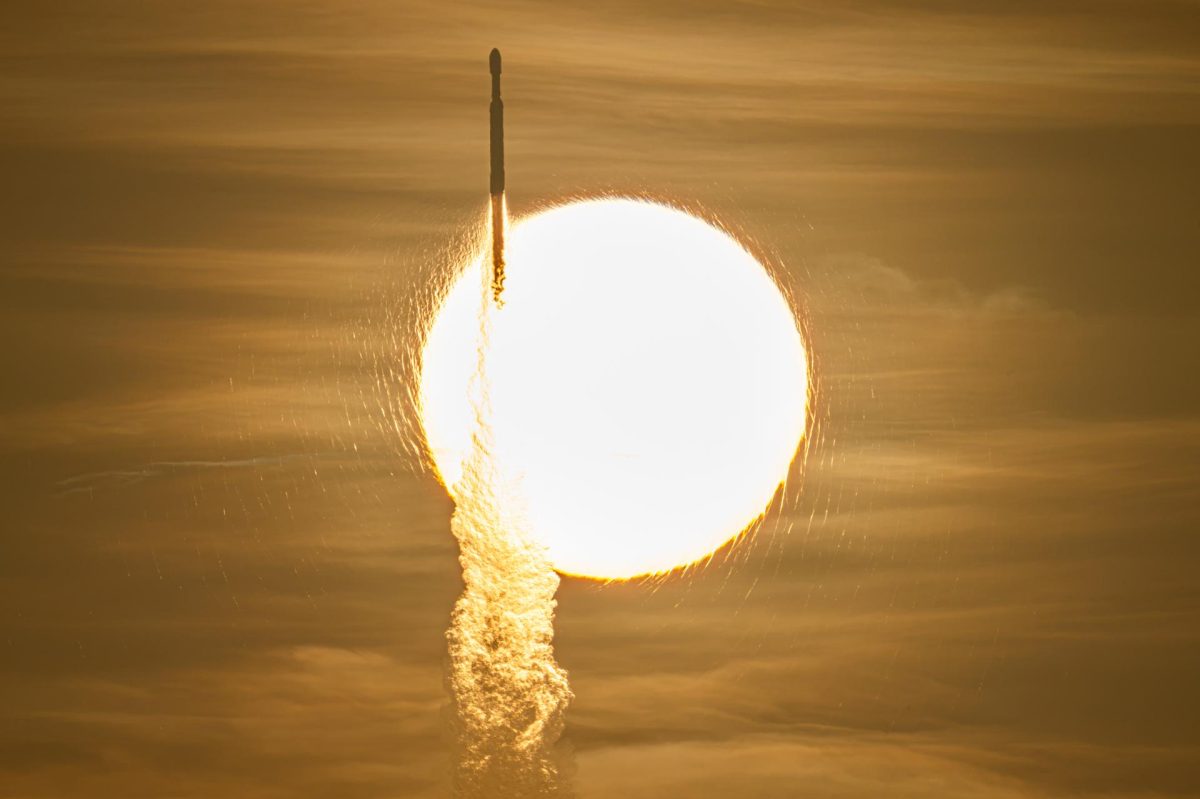
On August 30, 2026, a SpaceX Falcon Heavy rocket launched the Roman telescope — named after NASA’s first female chief astronomer, Nancy Grace Roman — from Launch Pad 39A at the Kennedy Space Center. The spacecraft embarked on a three-month journey covering approximately one and a half million kilometers to the Lagrange point L2, where the James Webb Space Telescope has been operational for several years. Beyond this point, the similarities between the two telescopes cease. A comparison of the Roman telescope with the James Webb Space Telescope reveals two contrasting engineering approaches; these differences are apparent from the size of the mirrors to the very shape of the structures.
Two mirrors of different sizes
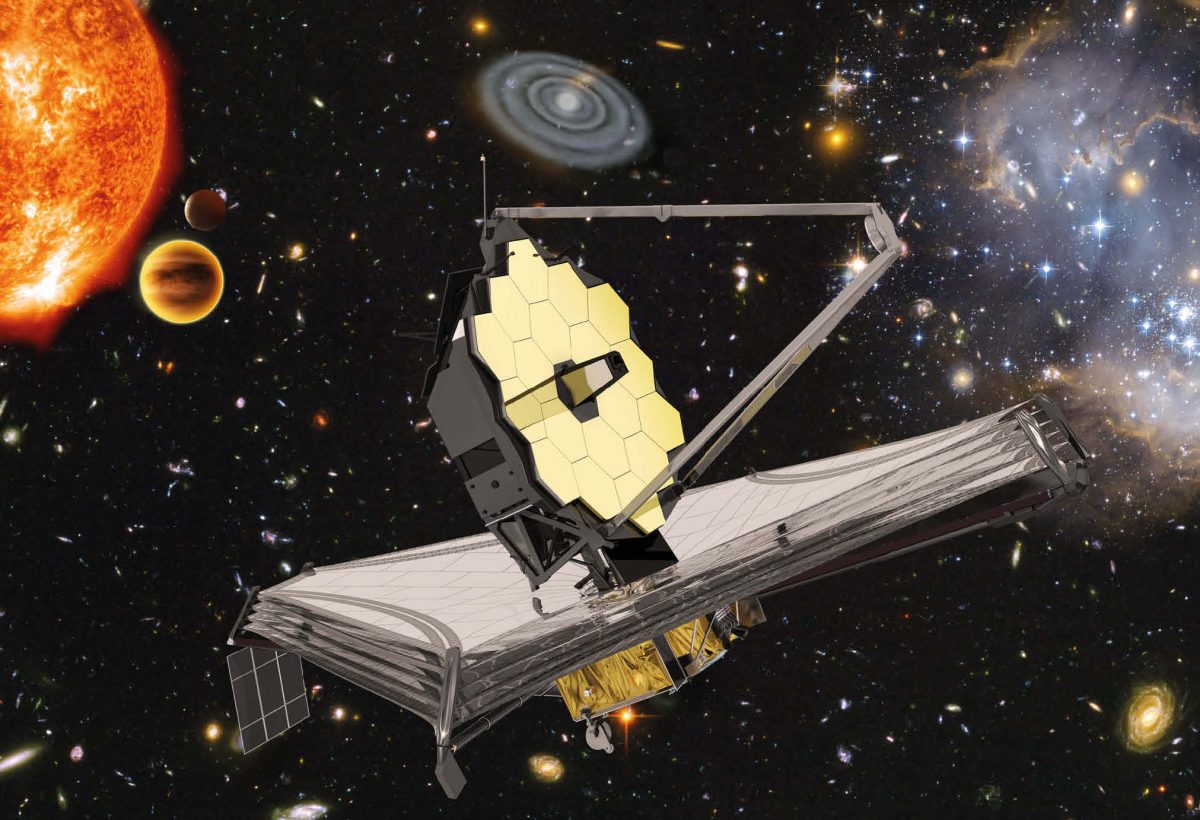
The primary mirror of the Roman telescope is a single, solid piece coated with silver, measuring 2.4 meters in diameter — identical to that of the Hubble Space Telescope. The Webb Telescope features a considerably larger mirror, 6.5 meters across, composed of 18 hexagonal beryllium segments with a thin gold coating. This surface gathers approximately six times more light than Hubble’s mirror. The size of the mirror directly influences both the sensitivity and resolution: the larger the mirror, the fainter the signals the telescope can detect and the finer the angular details it can resolve. Consequently, Webb is capable of observing faint and distant objects and resolving finer details that the Roman Telescope cannot achieve. The Roman Telescope was constructed with a smaller mirror because its observational targets are closer and do not require such an extensive field of view.
Width vs. depths
The most straightforward method to conceptualize the distinction between the two spacecraft is to liken them to camera lenses. Webb operates akin to a potent telephoto lens: it concentrates on a minute segment of the sky, capturing intricate details. Conversely, Roman functions as a wide-angle lens, encompassing expansive regions within a single frame. Its field of view exceeds Hubble’s by at least one hundredfold. Central to the spacecraft is the 300-megapixel Wide Field Instrument, a wide-format camera equipped with eighteen detectors, each approximately the size of a cracker. Over a span of five years, Roman is projected to survey an area of the sky roughly fifty times greater than the coverage achieved by Hubble in thirty years of operation. Nevertheless, the Webb telescope’s field of view remains relatively narrow — less than ten square arcminutes — and it is not intended for extensive wide-field sky surveys.
Different regions of the infrared spectrum
Both telescopes detect infrared light, each within its respective spectral range. Roman covers a spectrum from approximately 0.5 to 2.3 micrometers, which encompasses visible light and the near-infrared region. Webb extends its observational capabilities significantly further, spanning from 0.6 to 28.5 micrometers, reaching into the mid-infrared range. This distinction is due to the expansion of the universe, whereby light from the most ancient galaxies has been stretched and shifted toward the red end of the spectrum over billions of years. The earliest stars are detectable only in long infrared wavelengths. Webb is specifically tasked with observing this light. Conversely, Roman’s observation targets are comparatively closer in both time and space; their emitted light experiences less redshift, allowing the telescope to operate effectively at shorter wavelengths.
Why does Webb appear so unusual?
Operating within the long-wavelength infrared spectrum necessitates maintaining the telescope at a low temperature, as the instrument’s own thermal emission could obscure the faint signals it aims to detect. The Webb telescope is safeguarded by a five-layer sunshield, comparable in size to a tennis court — approximately 21 by 14 meters. This shield continually sustains the mirror and instruments in shadow, thereby cooling them to approximately –233°C. To accommodate this structure within the rocket’s fairing, engineers ingeniously folded the telescope akin to origami, and it subsequently unfolded over several days post-launch. Roman features a more straightforward design: its smaller mirror and shorter infrared wavelength enable the use of a compact thermal protection system, and the spacecraft itself is roughly the size of a tour bus, eliminating the need for a large sunshield.
The pursuit of knowledge in telescopic observations
Roman was primarily developed to investigate dark energy and dark matter — two elements that influence the universe’s expansion and structure, yet remain largely enigmatic to science. Wide-field surveys can theoretically yield statistical data on billions of galaxies, enabling astronomers to observe how the universe’s expansion has evolved over time. The second principal objective is to identify exoplanets outside our Solar System, utilizing various detection methods. The initiative will be anchored by a comprehensive survey of the central regions of the Milky Way, employing two principal techniques. The transit method involves observing periodic dimming of a star as a planet transits in front of it; according to NASA estimates, this method could identify approximately 100,000 exoplanets. This projection is based on models contingent upon the actual prevalence of planets, the observation schedule, and data processing quality. Gravitational microlensing detects brief luminous flashes when a star with an orbiting planet passes in front of a more distant star; the gravity of the intervening star acts as a lens, magnifying the background star’s light. This method is expected to discover over a thousand additional planets, particularly those residing in distant orbits.
Separately, a coronagraph — a device that obstructs the star’s light to enable direct imaging of faint planets and protoplanetary disks around stars — will be tested onboard. For the Roman mission, this primarily constitutes a technological experiment aimed at refining the methodology for subsequent missions.
Webb emphasizes the exploration of cosmic history. It examines the earliest galaxies formed shortly after the Big Bang, monitors the emergence of stars and planetary systems within dust clouds, and analyzes the light from exoplanet atmospheres into spectra, seeking indications of diverse molecules.
Orbit, data rate, and operating time
Both observatories will be positioned in orbit around the L2 point, approximately 1.5 million kilometers from Earth. At this location, the combined gravitational forces of the Sun and Earth balance the centripetal force necessary for the spacecraft to orbit the Sun at the same velocity as Earth and maintain alignment with it. This point is inherently marginally stable; therefore, the telescope sustains its proximity through minor periodic engine adjustments that necessitate only a minimal expenditure of fuel.
Roman will transmit approximately 1.4 terabytes of data daily, representing the highest data transmission rate among NASA’s astrophysics missions. The initial images are anticipated to be released in early 2027, subsequent to a three-month instrument calibration period. The primary mission is planned to span five years, with fuel reserves expected to last at least twice that duration. The Roman telescope possesses a distinctive history: its mirror and structure were initially designed for a reconnaissance satellite for the U.S. National Reconnaissance Office, and the equipment was subsequently transferred to NASA.
The manner in which the two telescopes will operate collaboratively
From the outset, NASA envisioned Roman and Webb as an integrated observational team. Roman conducts extensive sky surveys to identify rare and anomalous objects, precisely where statistical analysis suggests a potential for further investigation. Webb then allocates its substantial mirror to examine the most compelling findings in greater detail, surpassing the scope of broad survey techniques. Additionally, Roman possesses the capability to provide contextual information surrounding regions already examined by Webb, thereby facilitating a comprehensive understanding. In conjunction with the Hubble Space Telescope and the Chandra X-ray Observatory, these instruments offer astronomers both panoramic views and detailed observations, ranging from proximal planets to galaxies at the farthest reaches of the observable universe.
