

In one of the most active star-forming regions in a satellite galaxy of the Milky Way, astronomers have found an explanation for the discrepancy between the predicted and observed X-ray brightness. Models predicted much more hot gas that should have emitted intensely in the X-ray range than telescopes actually detected. A new study shows that the energy is lost in several different ways at once.
Where Stars Are Born
The Tarantula Nebula, also known as 30 Doradus, is located in the Large Magellanic Cloud at a distance of about 160,000 light-years from Earth. This star-forming region contains thousands of young stars, including massive ones.
Powerful stellar winds from these stars heat the surrounding gas through shock waves to millions of degrees. Such hot gas should emit intensely in the X-ray range, but much less of it was detected than models predicted.
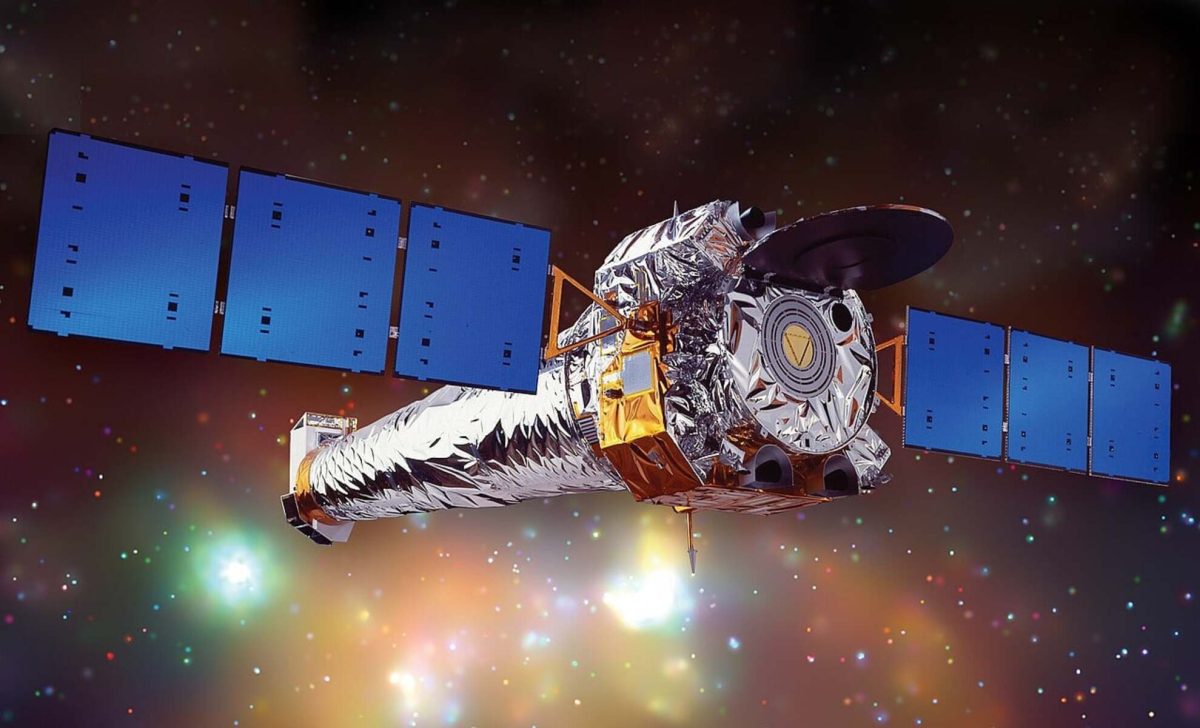
A team led by Jennifer Rodriguez of Ohio State University combined X-ray data from the Chandra Observatory, optical Hubble observations, infrared James Webb data, and archival observations from the Spitzer telescope. The results were published in The Astrophysical Journal.
Three Channels of Energy Loss
The first mechanism is associated with the escape of hot gas. According to the team’s estimates, up to half of the hot gaseous component may leak through the walls of gas-and-dust shells and leave the nebula.
The second mechanism is turbulent mixing. Cold gas near the walls of the shells mixes with hot gas, causing the hot component to cool and emit less strongly in the X-ray range.
The third mechanism is thermal conduction. Comparison with computer simulations indicates that hot gas can transfer heat to colder gas through direct contact, especially in dense regions of the shells. This process does not necessarily involve mixing of the gas.
None of these mechanisms alone explains the entire discrepancy between the models and observations. Together, however, they likely explain why the Tarantula Nebula contains much less hot, X-ray-emitting gas than expected. This was reported by Universe Today.
Four Layers of the Image
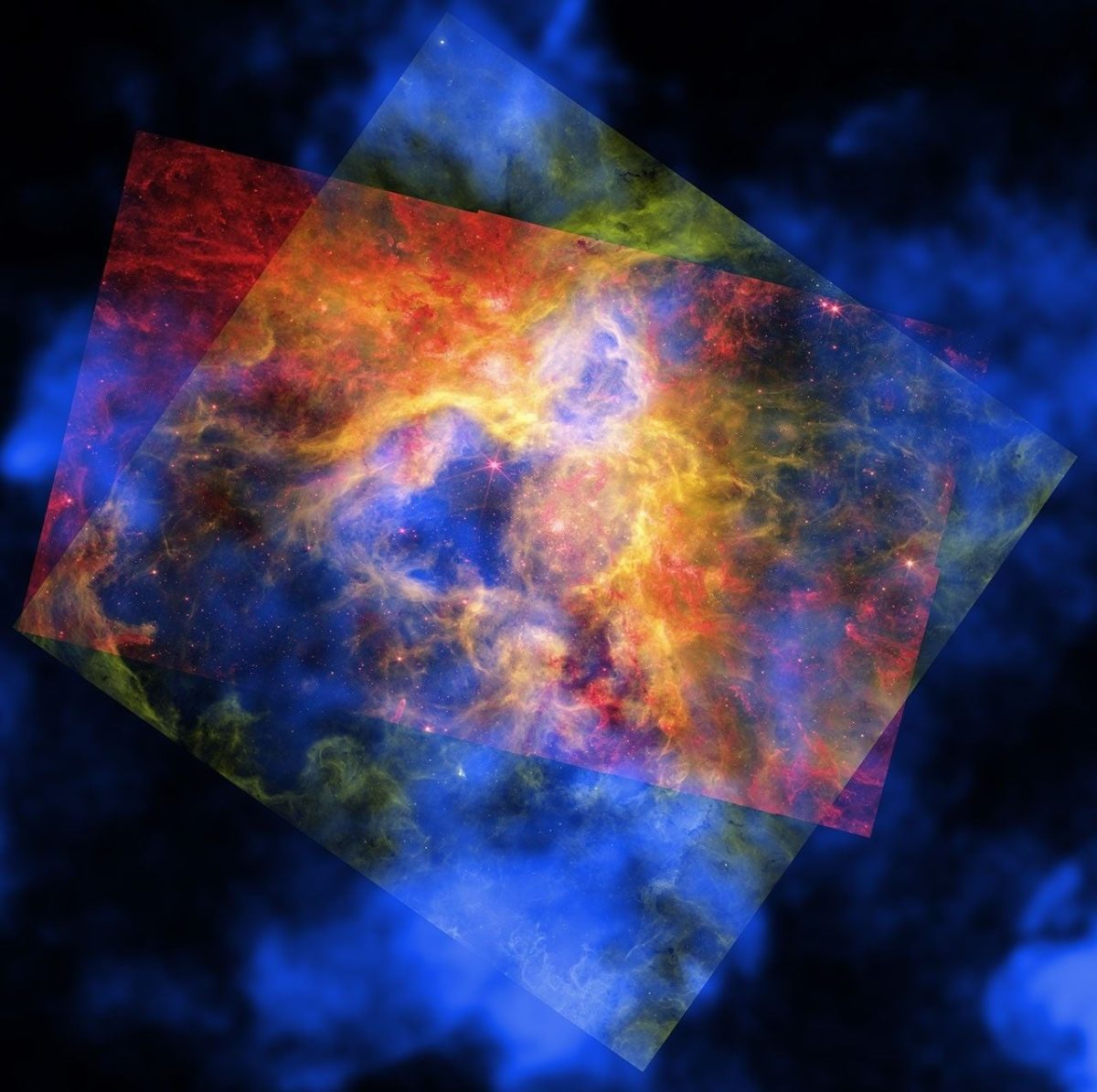
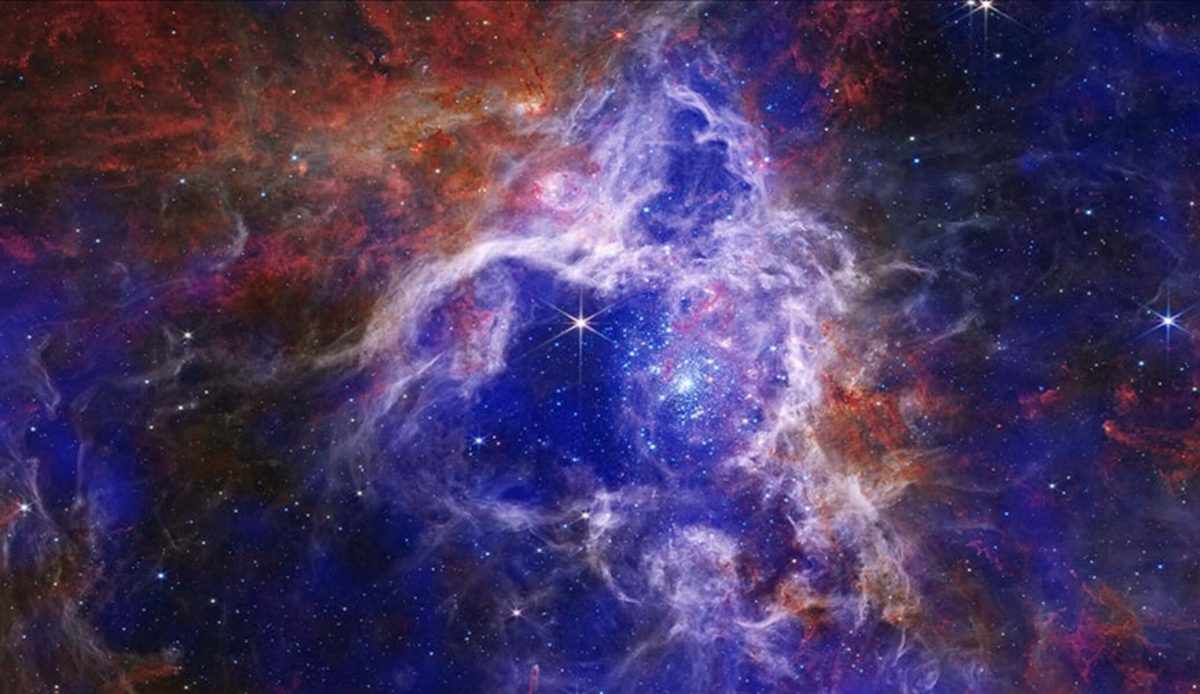
The new composite image of the nebula resembles a collage of semi-transparent colored layers. Chandra X-ray data are shown in blue. They trace hot gas heated by shock waves from stellar winds.
James Webb infrared data are shown in red. They reveal thousands of young stars and large regions of cool dust that may serve as raw material for the formation of new stars and planets.
The green optical layer from Hubble shows hydrogen that is warmer than the material detected by Webb, as well as individual stars visible through the nebula. In the central part of the image, all three layers overlap, creating regions of orange, gold, and yellow. The region shown spans about 470 light-years.
Energy Balance
The Tarantula Nebula is one of the best-studied star-forming regions outside the Milky Way. The new analysis shows that the energy of stellar winds is not concentrated entirely in the hot gas that emits in the X-ray range.
Some of the gas escapes the nebula through the shells, some cools through turbulent mixing, and another part transfers heat to colder gas through thermal conduction. The combined action of these processes explains why the observed amount of X-ray-emitting gas in the nebula is lower than predicted.
