

Researchers at the California Institute of Technology, Caltech, are preparing to make a true breakthrough in astronomy. They are beginning construction of the Deep Synoptic Array, DSA, a system that has every chance of becoming the fastest and most sensitive network of radio telescopes in human history.
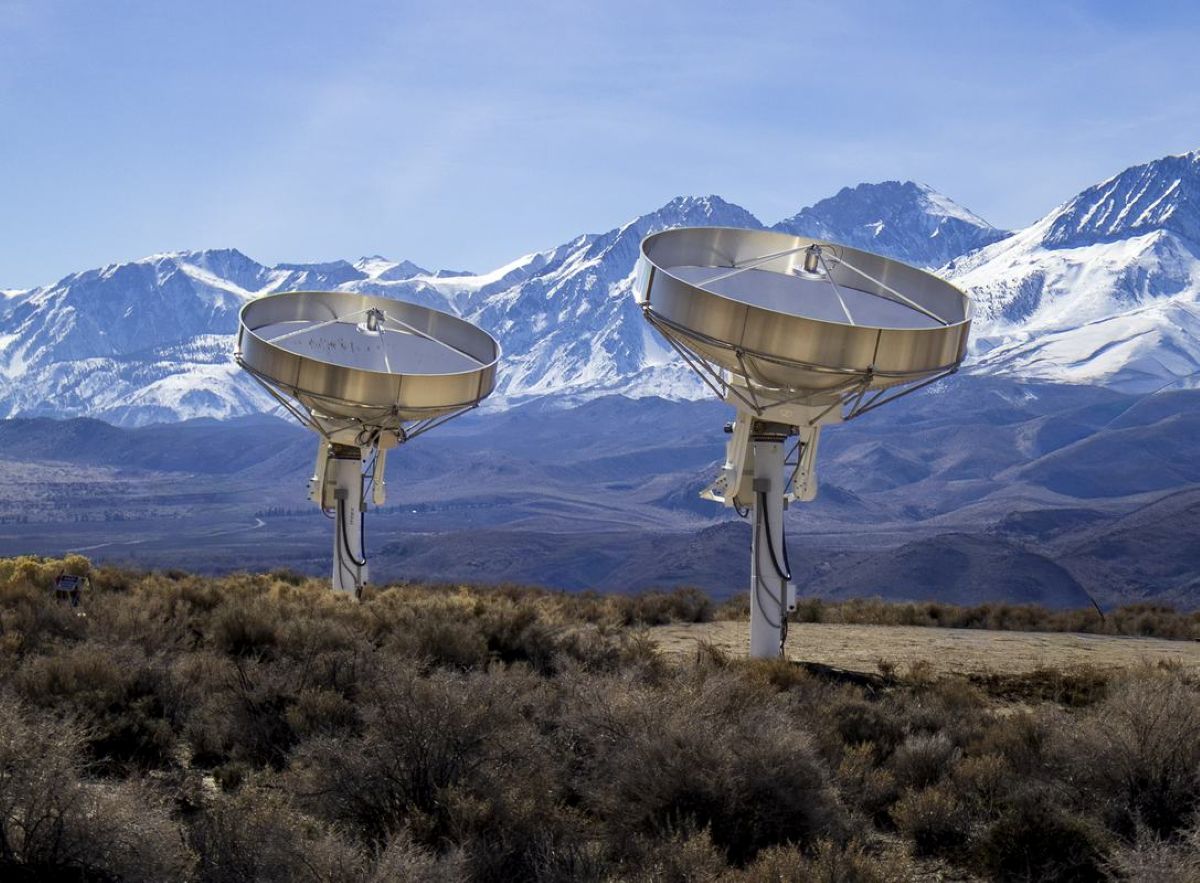
The project is planned for completion by 2029. Its scale is truly unprecedented. The DSA network will consist of 1,650 radio antennas, each about 6 meters in diameter. They will be spread across a vast area of 150 square kilometers in a remote desert region of Nevada. By comparison, one of the best-known modern radio telescopes, the famous Very Large Array in New Mexico, has only 27 antennas.
Such arrays operate as a single giant instrument, providing a key advantage: extremely high spatial resolution for deep-space observations. Although systems of this kind are usually somewhat less sensitive than single-dish antennas, the creators of DSA say their project will significantly improve sensitivity.
In Search of Radio Silence
For the telescopes to work effectively, they need absolute silence — not acoustic silence, but electromagnetic silence. Radio-frequency interference, or “noise,” from human-made devices has hindered astronomers for decades. That is why the site chosen for construction is a maximally isolated valley near Great Basin National Park in Nevada, beyond the reach of excess signals from civilization.
The new array will radically accelerate the scanning of the night sky. According to Gregg Hallinan, professor of astronomy and principal investigator of the DSA project, the system will scan the entire visible sky several times during its first five years of operation.
“All the other radio telescopes in the world combined have so far detected about 20 million radio sources. DSA will reach that number on its very first day of operation! And by the end of the initial survey, we will have found about a billion new objects,” Hallinan promises.
On the Threshold of a New Era of Discovery
Researchers hope to uncover the nature of fast radio bursts and study large-scale phenomena, such as the influence of dark energy on the expansion of the Universe. As project co-lead Vikram Ravi aptly noted, “Radio astronomy is about to move from a sketch to a full-fledged photograph.”
The main “highlight” of DSA, however, will be instant access to information. Astronomers will receive data almost in real time. What is more, this access will be open to the entire public. As project manager Katie Jameson explains, DSA will work like a kind of photo lab, developing cosmic images online so that the whole world can enjoy them.
Baking Pans in the Service of Science
To optimize the budget, Caltech engineers made an incredibly unconventional decision: they partnered with Fat Daddio’s, a well-known manufacturer of baking pans. It turned out that ordinary metal cake pans have the ideal geometry for converting electromagnetic waves into electrical signals.
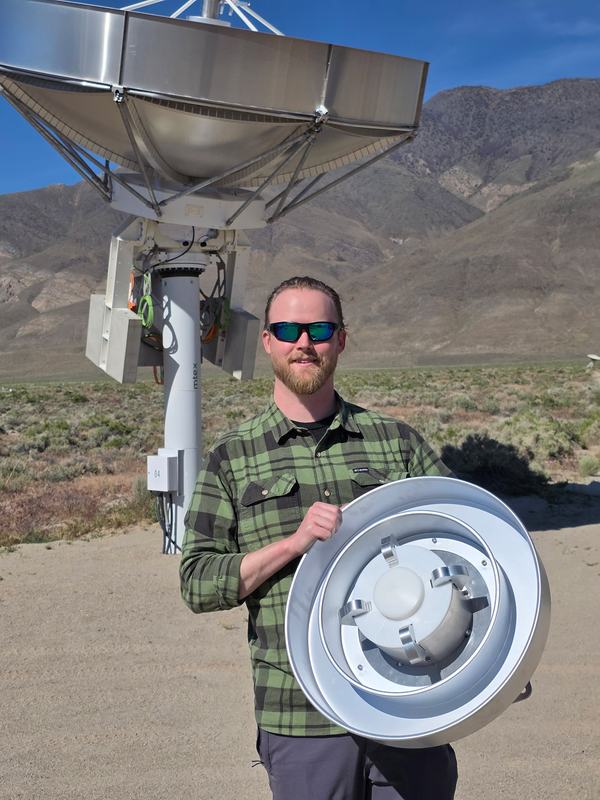
The team ordered thousands of these culinary molds to build the telescope. “Ultimately, it all comes down to high-quality metalworking, and Fat Daddio’s has tremendous experience in that!” project chief engineer François Kapp concludes.
Earlier, we reported on how SETI launched the largest search for extraterrestrials in history.
According to caltech.edu