

Scientists have discovered a huge crater on the visible side of the Moon, formed as a result of a powerful collision with a fragment of an asteroid or comet. The event occurred about two years ago. However, for a long time it went unnoticed by ground-based and space telescopes. In terms of its size, the newly formed crater is larger than the famous Roman Colosseum and is the largest known impact feature in the Solar System to have formed in modern times.
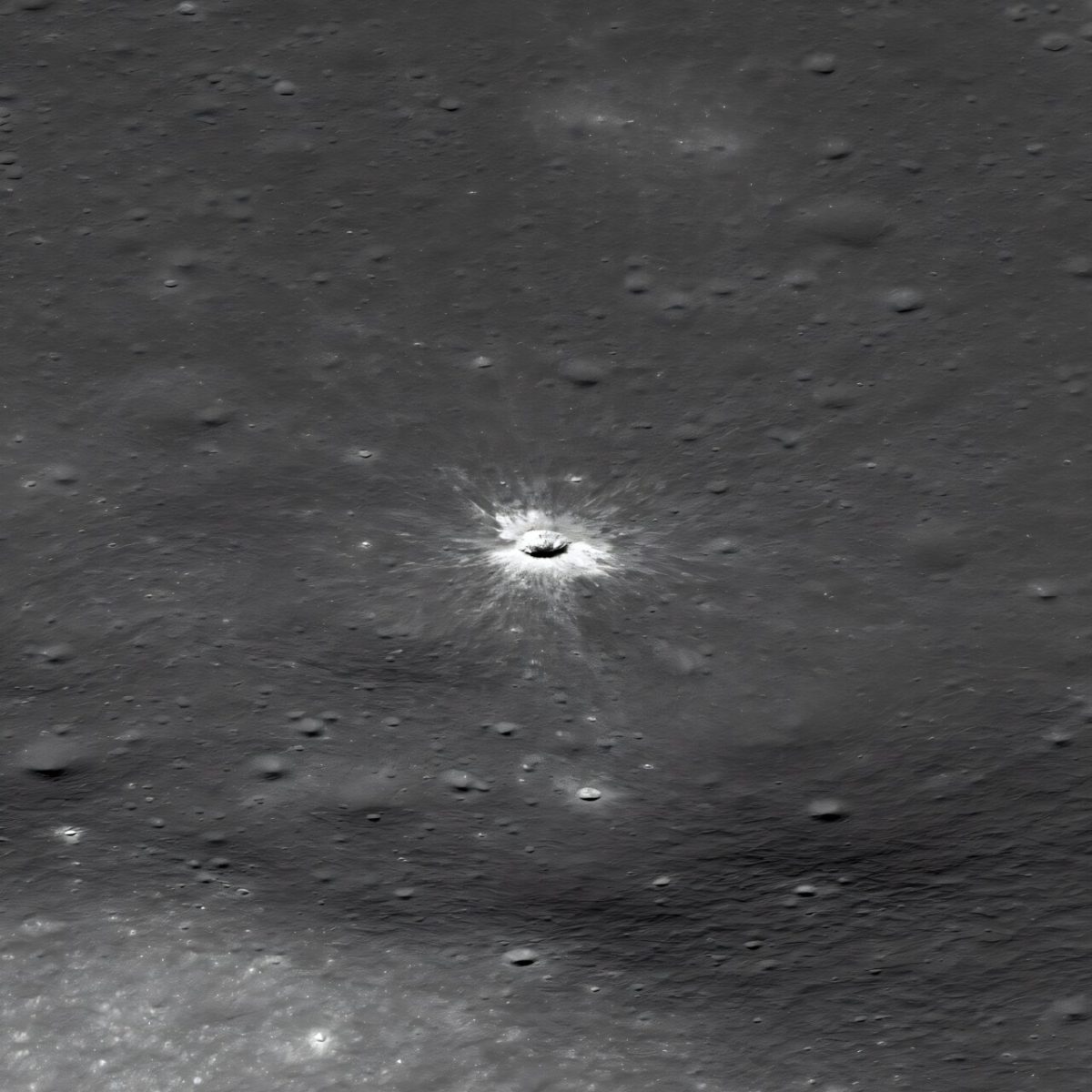
The object, with steep slopes, is about 222 meters in diameter and up to 43 meters deep. It was discovered by NASA’s Lunar Reconnaissance Orbiter (LRO) in May 2024. Because of the enormous volume of satellite data, the wide-angle images were not identified until August 2025. In the autumn of that year, LRO took detailed photographs, and at the beginning of the following year the discovery was officially confirmed.
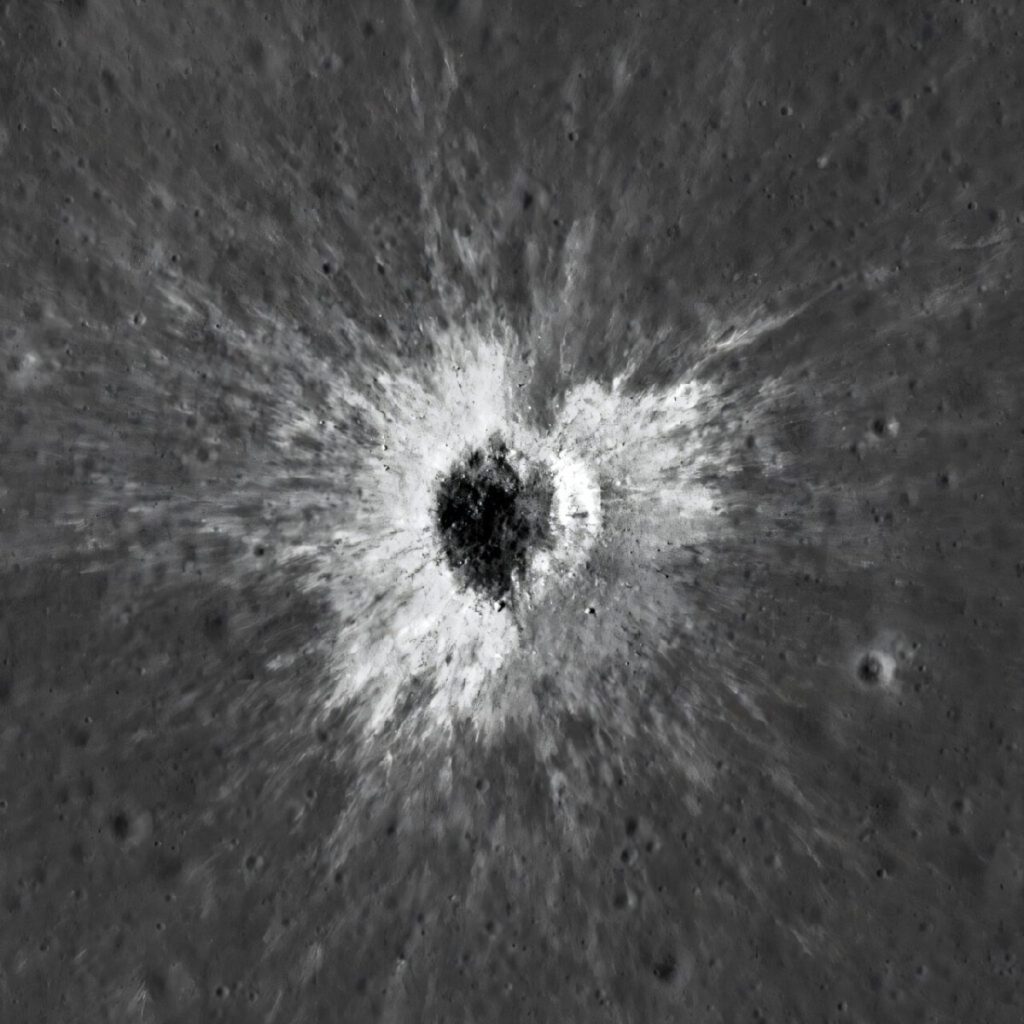
The crater was named after Thomas McGetchin, former director of the Lunar and Planetary Institute in Houston. The newly discovered object turned out to be three times larger than the previous record holder detected by LRO a decade ago. Researchers estimate that an impact of this scale occurs approximately once every 132 years, making this observation a unique scientific event.
Physics of the Explosion
The force of the impact was so powerful that it disturbed the lunar surface within a radius of more than 100 kilometers. Scientists note that dust and rocky material were ejected at a much higher angle than standard models had predicted.
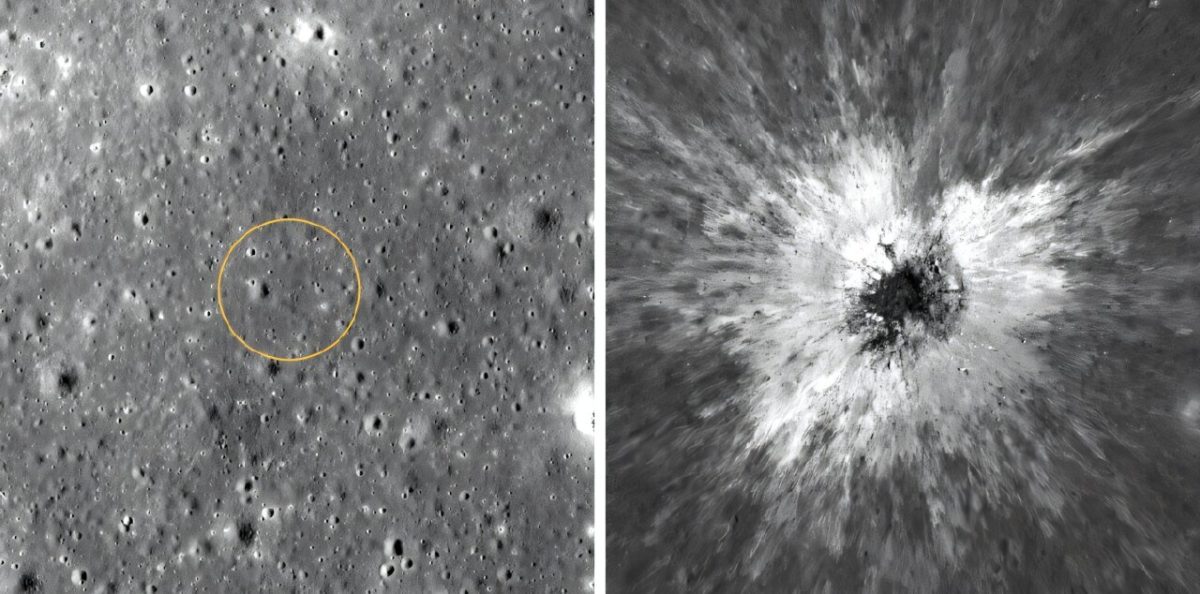
In addition, the analysis revealed a so-called “cold spot” about 7 km wide around the crater. This indicates significant loosening of the upper layer of lunar soil. Researchers compare this process to natural “gardening”: impact events constantly rework the regolith, mixing deposits and bringing deeper rocks to the surface.
A Threat to Future Lunar Bases
Data collected by LRO since its launch in 2009 have forced scientists to revise estimates of the rate at which the lunar regolith evolves. It turns out that the upper 2-centimeter layer is completely overturned by ejecta every 80,000 years — much faster than previously thought.

This dynamic disproves the popular myth that the famous footprints left by Apollo astronauts will remain forever: on cosmic timescales, they will disappear completely relatively soon.
The new data on debris dispersal and ejecta density have critical practical significance. They will help NASA engineers more accurately calculate potential risks to future habitation modules and strengthen lunar-base structures to protect astronauts.
Earlier, we reported on how scientists miscalculated the amount of water needed for settlers on the Moon.
According to Phys
