

The spacecraft designated for the inaugural private mission to Venus remains on Earth. The delay is not attributable to the scientific instrumentation, which is already prepared. Instead, it is due to the new rocket, which has not yet been launched. The exact date of the launch has not been determined.
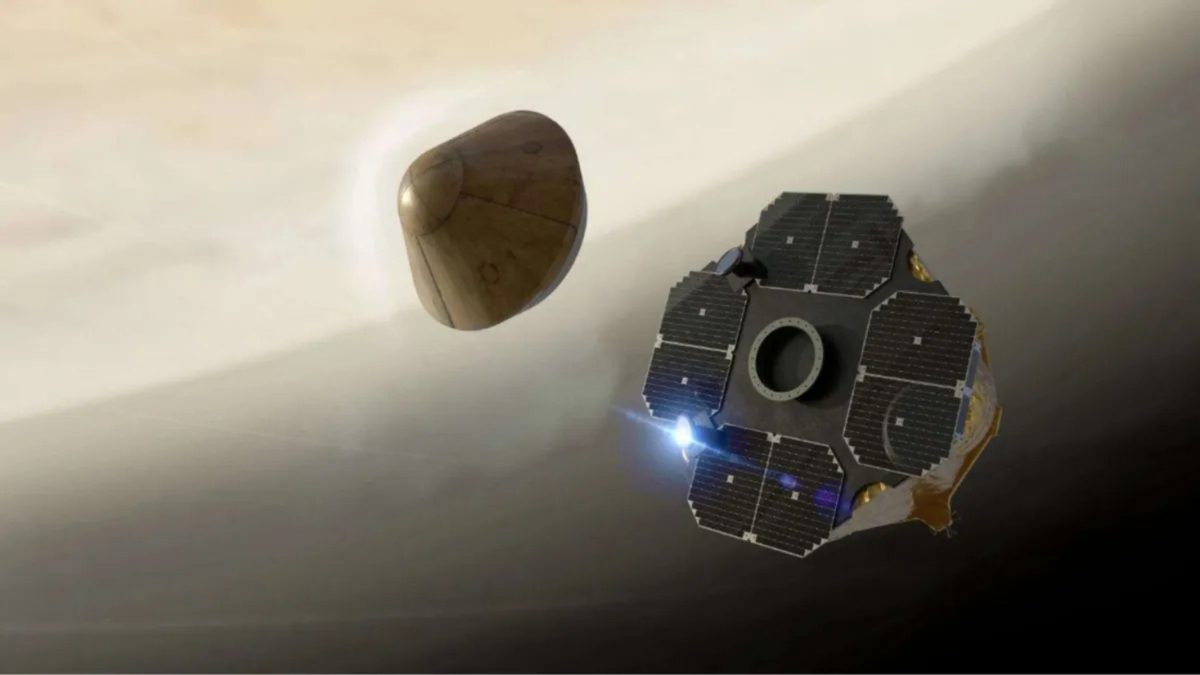
Awaiting the launch of the rocket
Researchers affiliated with the Massachusetts Institute of Technology (MIT) are partnering with Rocket Lab, a California-based enterprise, to investigate potential indicators of life within Venus’s atmosphere. The initial phase of this initiative involves deploying a compact, cone-shaped probe designed to traverse the planet’s dense atmosphere and gather samples during its descent.
Initially, a different launch vehicle was planned for this mission; however, the company transitioned the project to Neutron. As Professor of Planetary Science Sarah Seager informed Space.com, her team is awaiting the readiness of this rocket. The maiden flight was originally scheduled for 2024; however, it has not occurred to date.
The launch is scheduled to occur from Launch Complex 3 on Wallops Island in Virginia. According to the company, the date is contingent upon the successful completion of qualification tests. Launch windows for missions to Venus open approximately once every eighteen months, coinciding with the planets’ proximity in their orbits. Therefore, missing a launch window entails waiting not merely a few weeks but an entire additional cycle.
Ready-to-use equipment
The descent module’s fairing is produced by Rocket Lab, and the heat shield designed for extreme atmospheric reentry conditions (HEEET) was developed at NASA’s Ames Research Center. It is capable of withstanding temperatures of up to 2,500 degrees Celsius. The company received this component in March 2025.
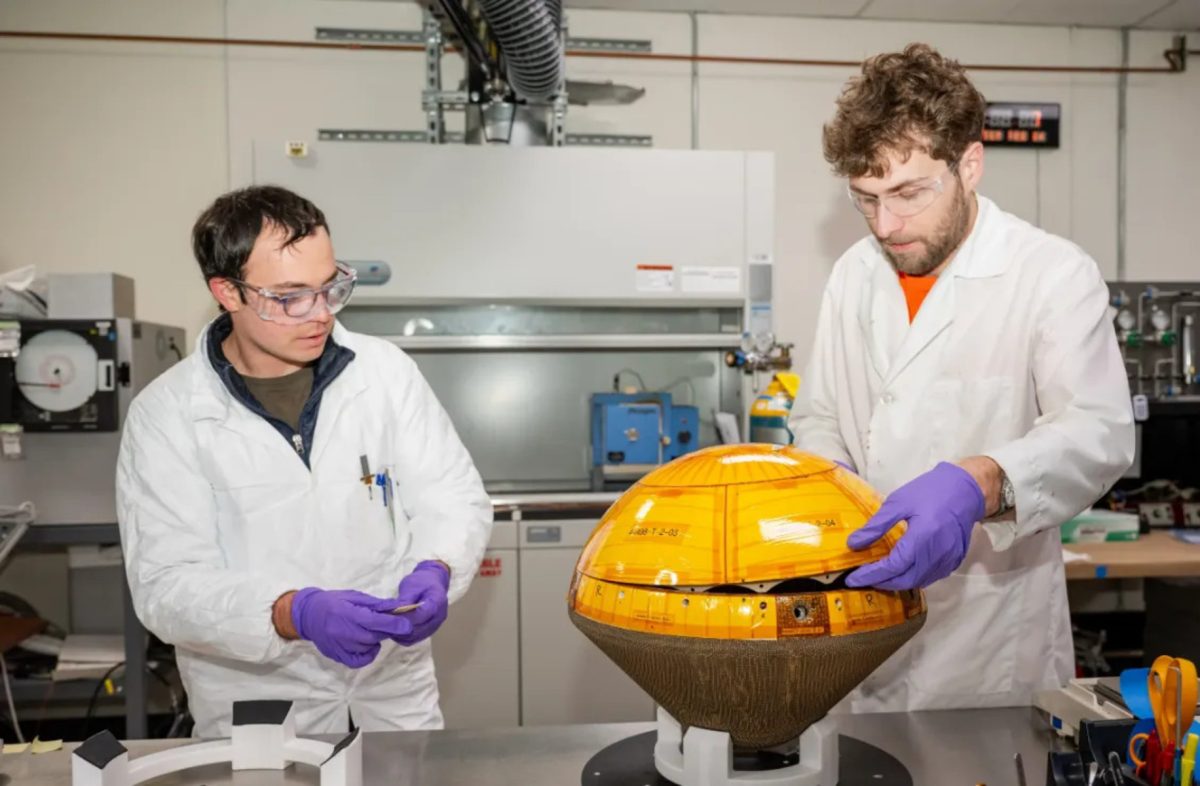
A team from MIT is responsible for the scientific aspect of the mission and is developing an autofluorescence nephelometer (AFN). This instrument will be utilized to analyze individual particles within Venus’s clouds, determining their size, shape, and composition. The team will utilize these characteristics to search for traces of organic molecules.
Acidic environment
Venus’s surface is heated to hundreds of degrees due to an uncontrolled greenhouse effect, which is why researchers are increasingly turning their attention to studying its atmosphere. Sarah Seager and her colleagues believe that the components necessary for life may exist precisely in the upper layers, despite the extremely high acidity.

This week, the peer-reviewed journal Proceedings of the National Academy of Sciences published a paper on short peptides — namely, chains composed of multiple amino acids. These structures maintain stability in highly acidic environments and adopt conformations capable of executing biological functions.
A side view
Planetary scientist Paul Byrne of Washington University in St. Louis is managing the delay with composure. Exploration of the Solar System seldom proceeds exactly as planned. Given a private mission to a lesser-known planet utilizing a new rocket, such expectations should not be anticipated.
He states that Venus possesses numerous surprises. A reexamination of historical data has yielded new insights into the structure of the clouds, and the haze observed by earlier landers may indeed be attributable to cosmic dust.
