

When individuals envision extraterrestrial planets, one of the features that distinctly indicates their perception of an entirely alien world is frequently the depiction of two or more moons in the sky: sizable, captivating, and entirely implausible.
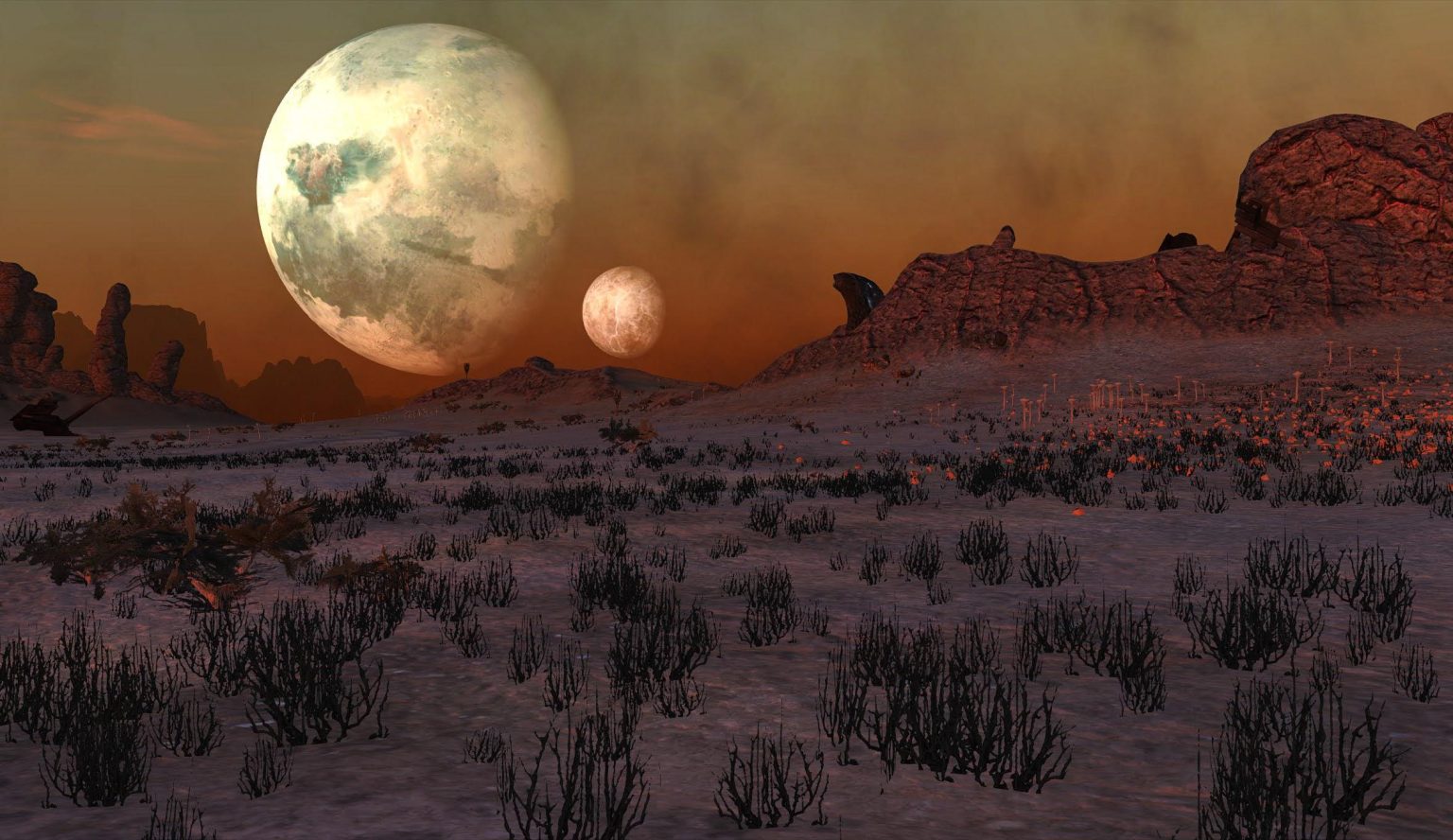
Two moons in the sky
Envision yourself in a novel and picturesque location. Unfamiliar terrains extend in all directions, exotic flora encircles you, and wildlife traverses the area — appearing recognizable, yet simultaneously quite extraordinary.
Have you arrived in the tropics? Or is this a different planet? If the sky’s color is not markedly different, and you lack expertise in botany or zoology, you would most likely assume it is the former. However, upon looking up and observing two enormous moons of a very unusual hue, you would promptly recognize that this is indeed another world.
This accurately represents how the majority of individuals envision the aerial perspective of a terrestrial planet orbiting a different star. It is also highly probable that such phenomena are seldom observed regularly on other celestial bodies within the universe. Nonetheless, let us proceed systematically.
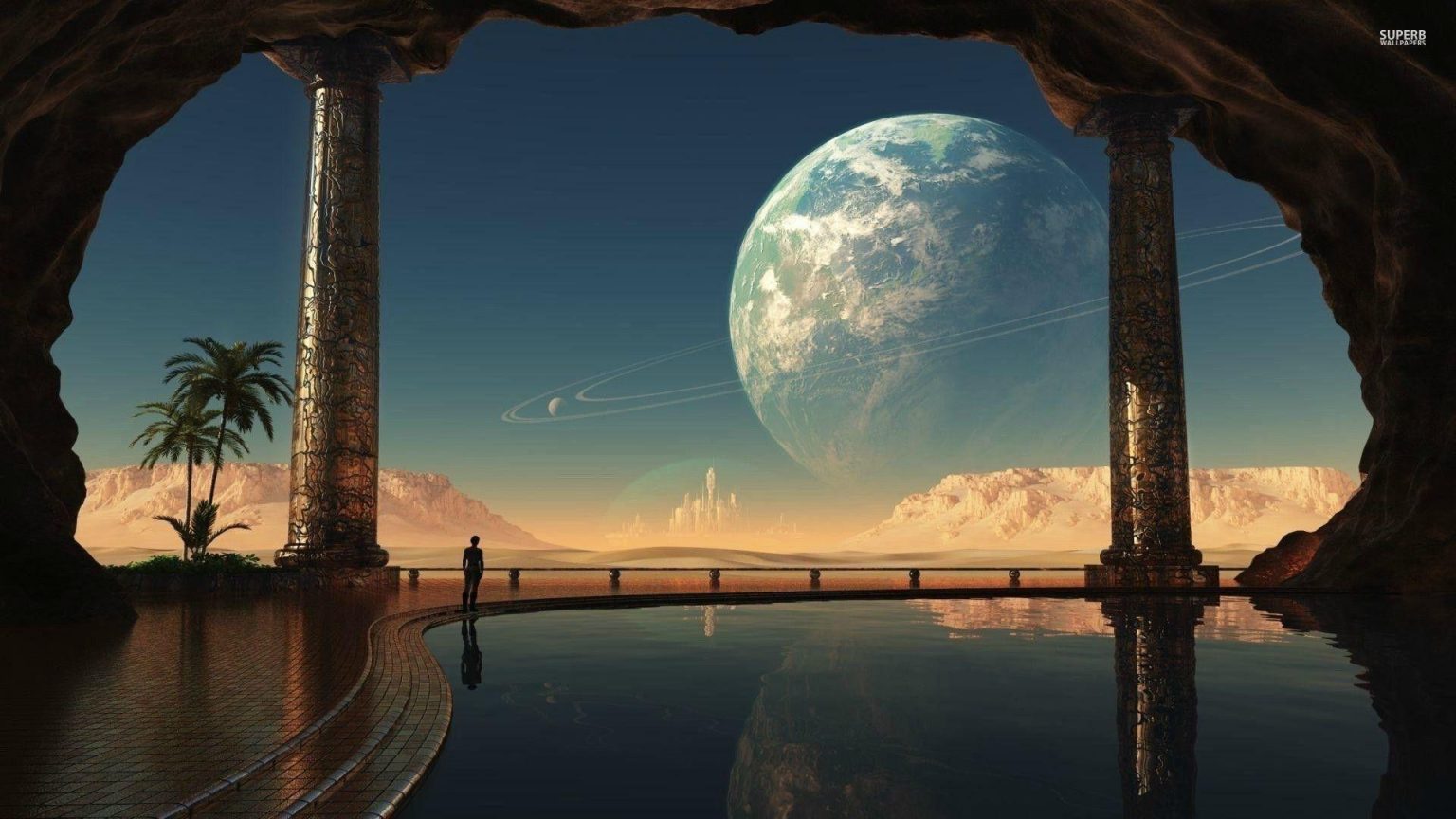
Firstly, it is essential to comprehend the definition of an Earth-like planet. This term most likely pertains to a celestial body with a diameter that falls within the range of fifty to three hundred percent of Earth’s diameter. Bodies smaller than this are improbable to sustain an atmosphere and hydrosphere, whereas larger entities are more akin to minor gas giants.
It will not be straightforward to identify a boundary that delineates the dense atmosphere from the profoundly deep ocean, much less to ascertain whether life remotely comparable to that on Earth might exist there, or whether the moons could be observed through the dense atmosphere.
Is it possible for an Earth-like planet to possess multiple moons?
Within the Solar System, the majority of natural satellites — comprising the largest among them — revolve around gas giant planets. Conversely, Mars, which is considerably smaller than Earth, possesses two moons, namely Phobos and Deimos.
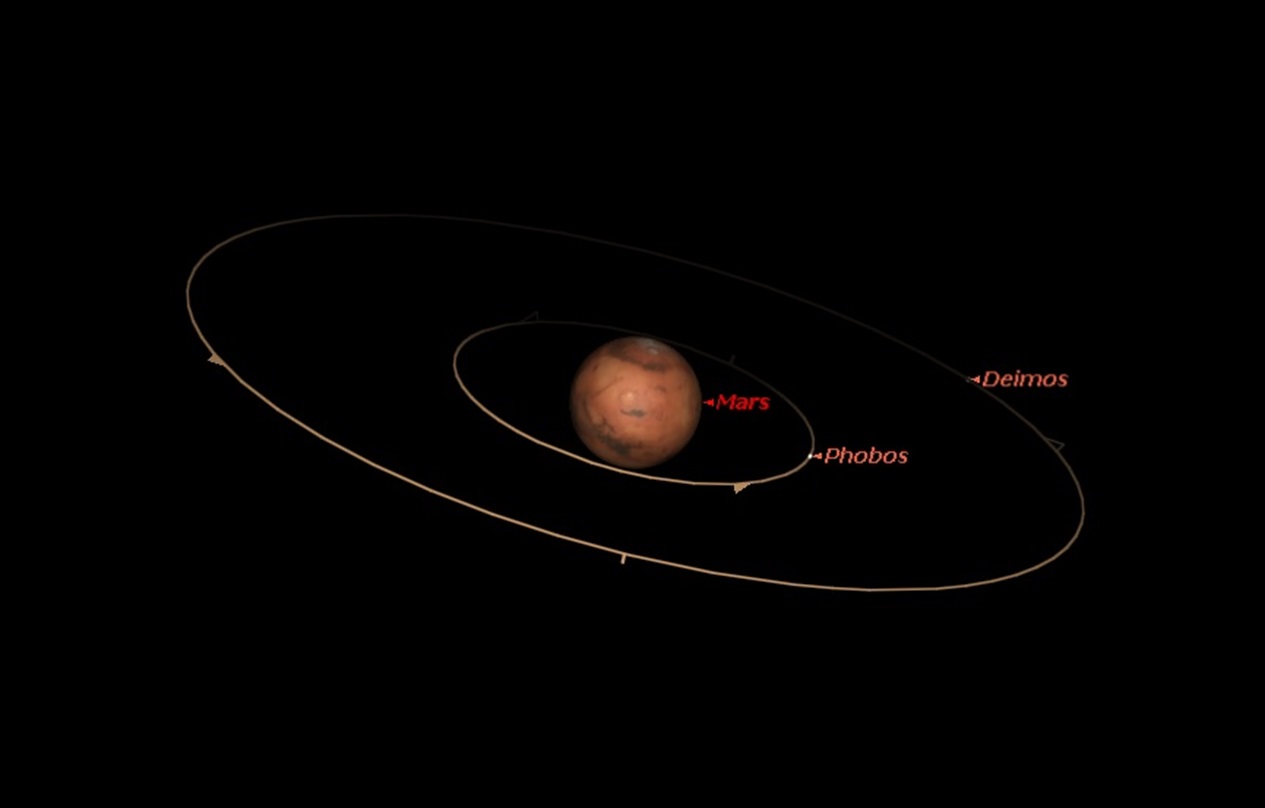
Hence, there is fundamentally nothing extraordinary about experiencing several months simultaneously. The primary consideration is the proximity of the Main Asteroid Belt. Nevertheless, it is Mars — or, more precisely, the images captured by spacecraft on its surface — that reveals that the two moons in the sky bear little resemblance to their portrayals by artists and science fiction writers.
The initial aspect to consider is the angular size of celestial bodies in the sky. On Earth, we are accustomed to perceiving the Moon as quite large — 31 arcminutes, or 0.5 degrees. Naturally, this value represents an average, as its apparent size may fluctuate due to the eccentricity of its orbit.
The apparent size of a celestial body is determined by two factors: its distance from Earth and its intrinsic size. The Moon does not appear large solely due to its proximity; rather, its orbit is situated close to the Hill sphere — the region where Earth’s gravitational influence is sufficiently strong to retain any object.
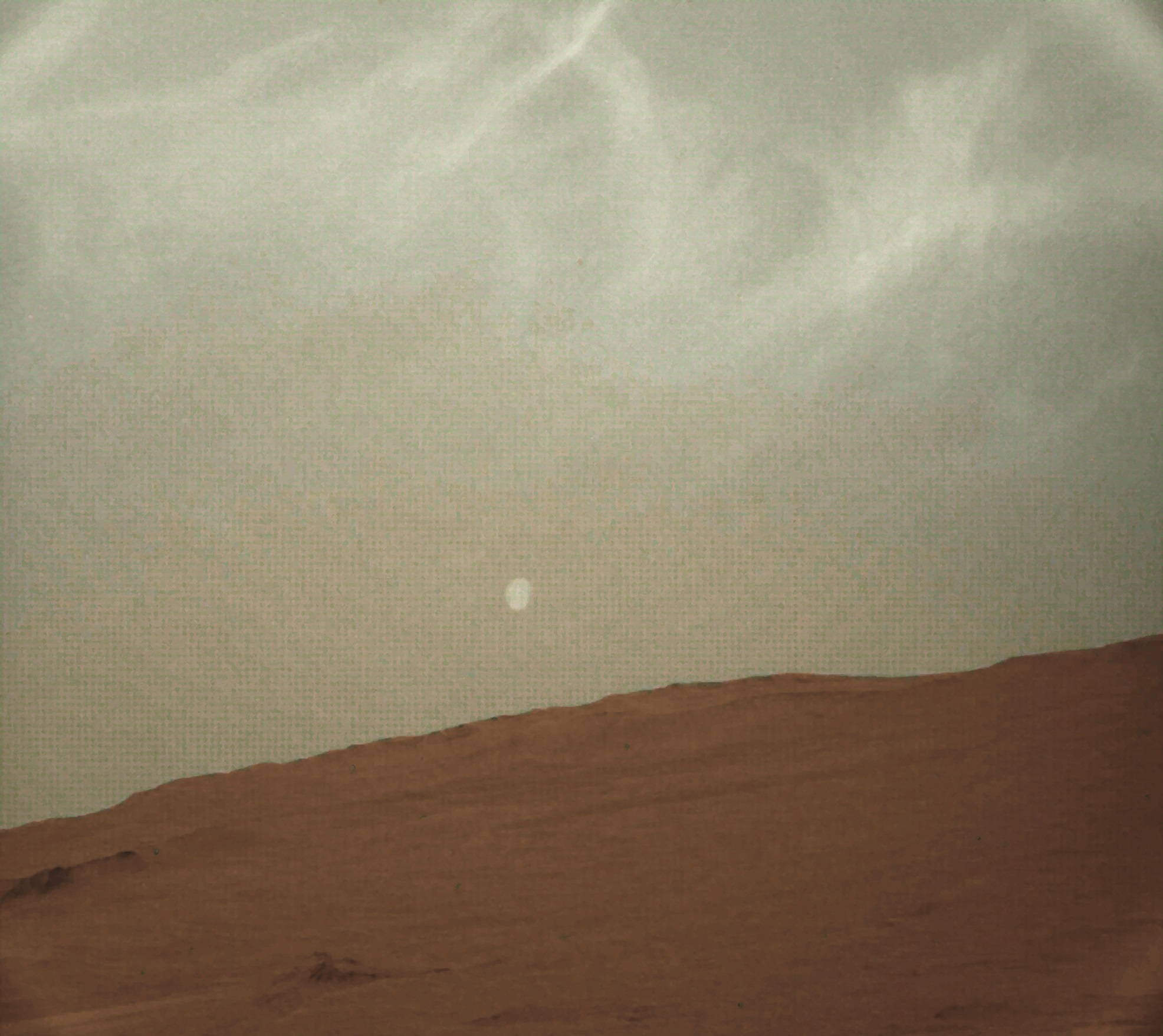
The Moon appears significantly large to us primarily because of its diameter — 3,475 km, which constitutes approximately a quarter of the Earth’s radius. From a planetary perspective, this size is remarkably substantial. In comparison, Mars’s moons are considerably smaller. Phobos has a diameter of 22.5 km and orbits at an average radius of 9,377 km, whereas Deimos has a diameter of 12.4 km and an average orbital radius of 23,458 km. Consequently, these moons are between 150 and 250 times smaller than the Moon, yet they are only 20 to 40 times closer to Mars. This results in their appearing as diminutive specks in the Martian sky, with an angular diameter ten times smaller than the “night light” we are accustomed to; furthermore, their rotation periods around Mars are entirely unaligned: Phobos orbits with a period of 30 hours, while Deimos completes an orbit in 7 hours and 30 minutes.
Consequently, from an observer’s viewpoint on the planetary surface, the first object traverses the sky at a sluggish pace from east to west, whereas the second appears to surpass Mars’s rotation and moves expeditiously from west to east.
This is precisely why witnessing not only the breathtaking sight of two full moons overlapping in the sky but even two small dots positioned side by side is considered an extraordinary rarity. Nevertheless, the orbital inclinations of Phobos and Deimos relative to Mars’s equator differ by only 1°, indicating that they orbit within two planes that are remarkably close to each other.
However, there is no obstacle to the two small moons of the planet orbiting in different planes. In such a scenario, their concurrent appearance in the sky would be so infrequent that the occurrence would be regarded as an exceptional astronomical event worth reporting by the media within a specific region.
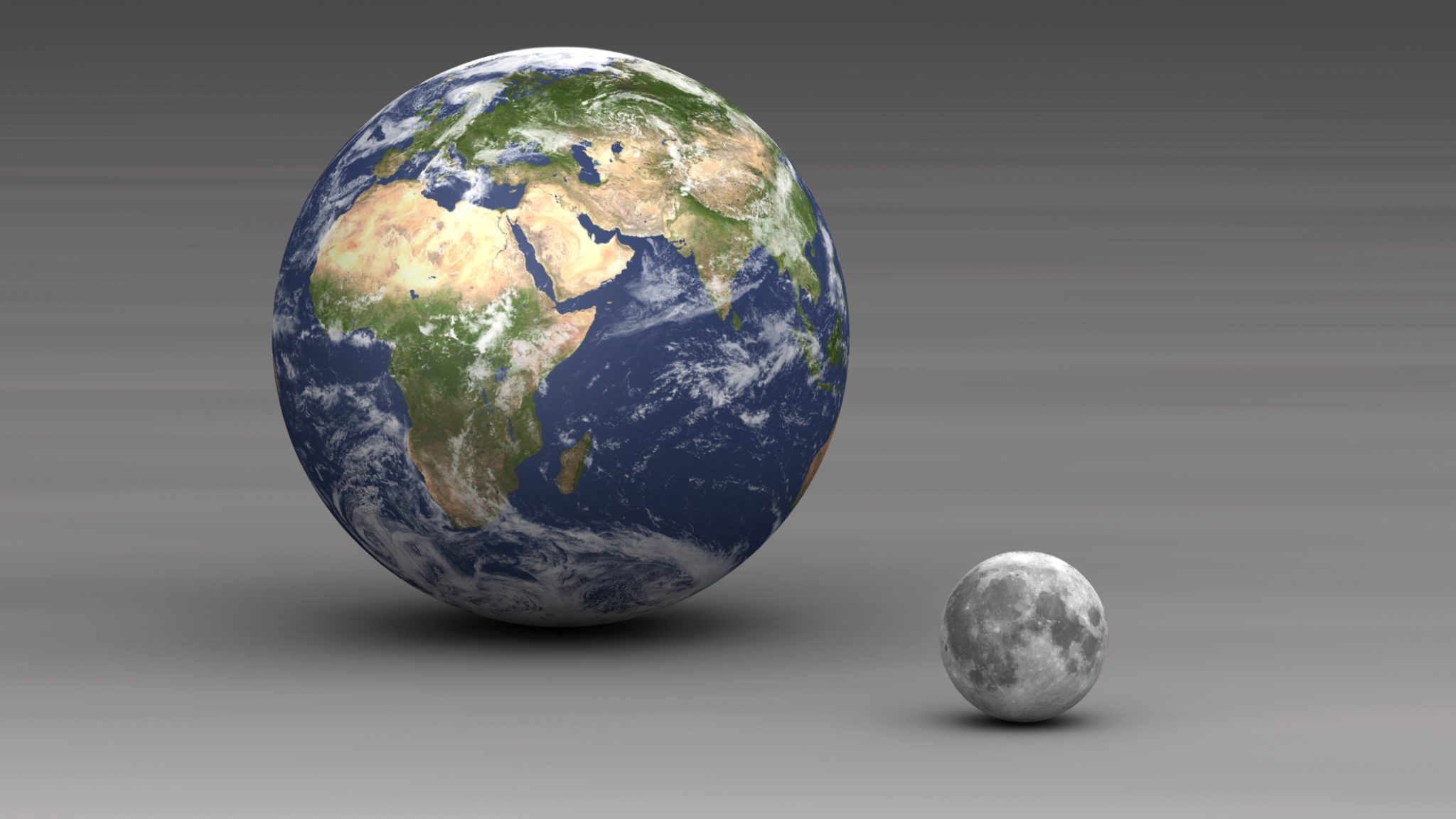
The planet may possess as many as three or five moons, which are asteroids captured by it. Nonetheless, from the planet’s surface, they all appear as minute specks streaking across the sky at high velocity and seldom intersecting each other. This phenomenon occurs because, in order to move at a slow pace, a moon must be situated at a minimum of several tens of thousands of kilometers from the surface. Conversely, to prevent it from appearing utterly diminutive, it must have a diameter of at least several tens of kilometers. There are fewer than three hundred such asteroids within the entire Main Belt of the Solar System. Generally, the larger the asteroid, the less probable it is that the planet’s gravity will be capable of altering its trajectory sufficiently to maintain a stable orbit.
The formation of two large moons
This may prompt the question: Why did the Earth end up with the Moon, which we observe at night? Why could the same scenario not occur with some other planet, more than once? It is also important to bear in mind that we do not possess definitive knowledge regarding the precise origins of such a substantial satellite.
The most widely accepted theory concerning its formation posits that, in the early stages of the Solar System’s development, a protoplanet approximately the size of Mars collided with Earth. Consequently, a considerable amount of debris resulting from the collision was expelled into space, subsequently accumulating in Earth’s orbit and creating a substantial moon.
Certainly, an event of this nature is exceedingly unlikely to occur more than once, let alone on three separate occasions; it is an exceptionally rare phenomenon. Researchers have yet to determine the precise percentage of exoplanets that may have undergone a comparable event. Does this imply that such a large moon can only form once? In fact, the answer is no.
Models depicting the events that transpired on Earth during the colossal impact produce diverse outcomes. Concurrently, they accommodate a scenario wherein, rather than a solitary substantial satellite, two satellites could have developed in separate orbits. Naturally, for this scenario to be feasible, the mutual gravitational interaction among the three bodies (the classical three-body problem) would have needed to be such that it neither expelled one of them from the system nor resulted in a collision between any of the bodies.
This is an even greater challenge considering that the Moon formed significantly closer to Earth than its current distance and has been progressively receding since then. On one hand, this scenario plausibly supports the existence of young planets with a Moon that appears substantially larger in the sky. Conversely, this factor complicates the presence of two sizable moons in orbit concurrently. Not only would these moons have needed to avoid collision during their formation, but they would also have had to drift away from the planet in a coordinated manner over millions of years to prevent their gravitational interactions and the planet’s own gravity from causing one to crash into the surface.
Although it is not entirely impossible, it is rather unlikely. Furthermore, it does not guarantee a picturesque view of the two moons in the sky. This is because, even if their orbital planes are in close proximity, each satellite will continue to orbit at its unique pace.
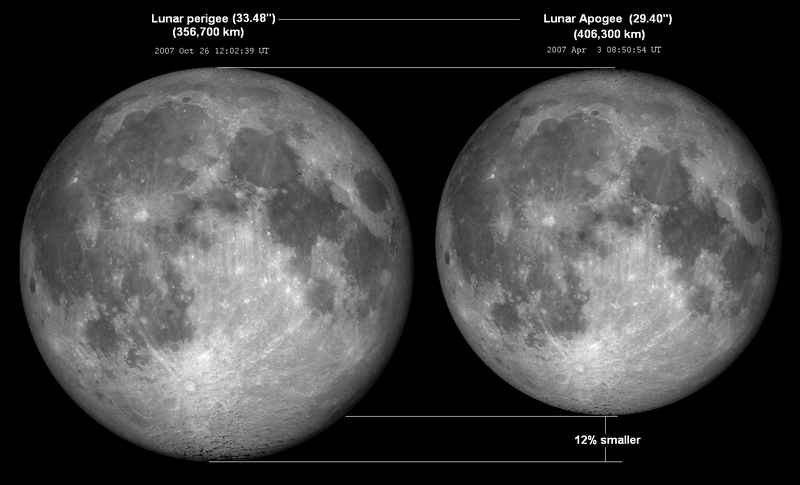
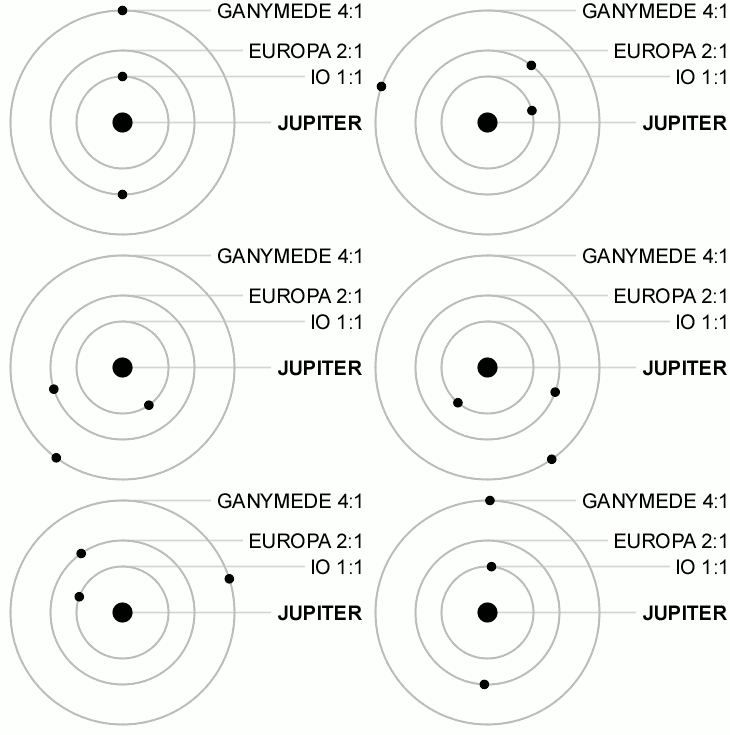
It is quite possible that the two-month orbital periods will eventually form a resonance, such as 1:2 or 2:3. And this would mean that they would indeed meet in the sky at regular intervals. However, for this to happen, other conditions must be met. For example, to create the most beautiful sight, the distant satellite must be larger than the closer one. Otherwise, their proximity in the sky will resemble a firefly next to a streetlight — the contrast will be so great that the sight is unlikely to be impressive.
Secondly, it is important to acknowledge that satellites in closer proximity to the planet will pass in front of each other more frequently; however, the duration of partial or complete obscuration will be relatively brief due to their high velocity.
The farther the moons are from the planet, the less frequently they will meet. For example, if the outer moon is at the same distance as Earth’s Moon, this could very well happen once every three to four months. However, the conjunction itself could last several hours.
It is important to bear in mind that if a satellite in close proximity completes a full orbit around a planet in a duration shorter than the planet’s day, its approach to a second satellite will only be observable from a specific region of the planet’s surface. By the time the planet rotates to present its opposite side, the two satellites will no longer be in alignment with it.
Moons of various origins
It is also entirely feasible for a planet to possess two or even three moons, provided that these moons have different origins. The largest moon would have formed in a similar manner to Earth’s Moon, whereas one or two others would have been captured by the planet at a subsequent time.
This scenario appears even more plausible than the formation of two celestial bodies simultaneously as a consequence of a significant collision. Nonetheless, the challenges associated with this scenario are essentially identical. The asteroid must, in some manner, evade collision with the Moon during the capture process and must not be expelled by the Moon’s gravitational influence over the millions of years during which it will recede from the planet.
However, should this event occur, the most plausible explanation for the presence of two moons orbiting the planet would be this scenario. Under these circumstances, the captured moon would likely be significantly closer to the planet than the moon that formed naturally in its orbit. This reasoning is supported by two considerations: firstly, a shorter distance facilitates the planet’s gravitational capture of a celestial body; secondly, a distant moon would appear too diminutive to produce a remarkable visual spectacle in the sky.
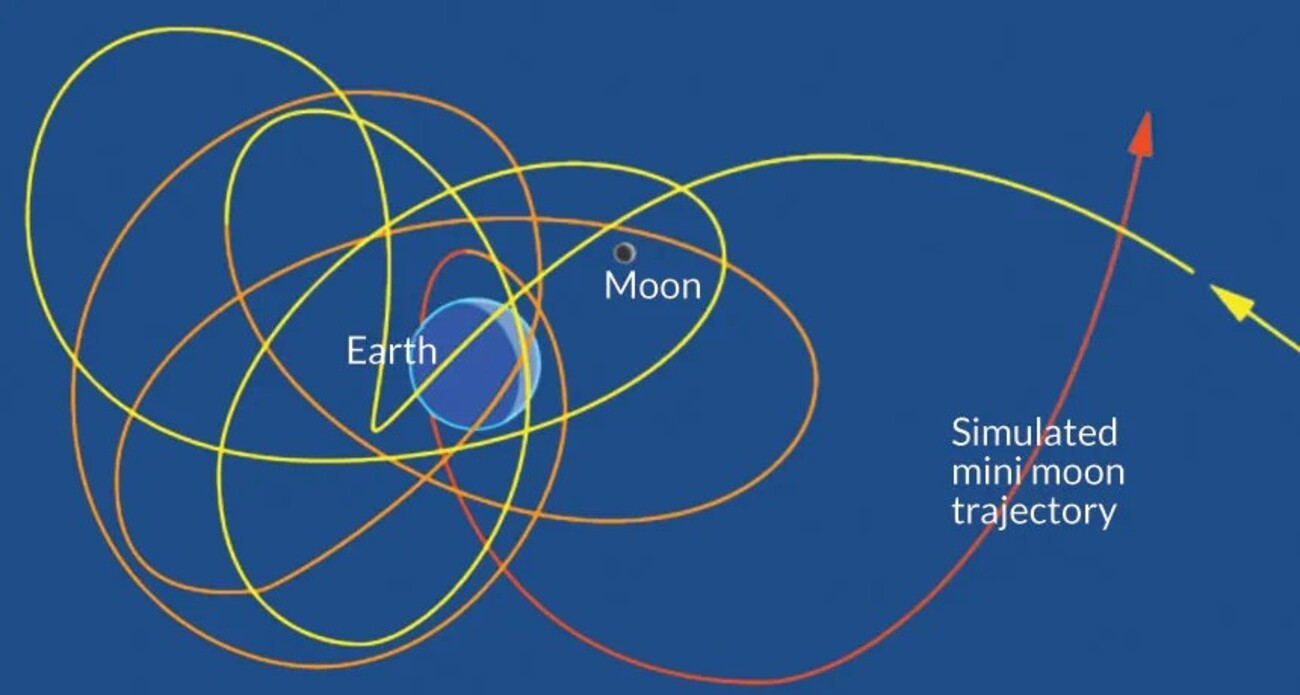
Source: www.sciencenews.org
Simultaneously, it is important to consider that the orbital planes of the two moons in question need not necessarily be aligned, even minimally. Furthermore, they are unlikely to establish a resonance. Consequently, their conjunctions in the sky will occur infrequently and unpredictably. It will appear as though a small pebble swiftly traverses the disk of the larger moon, typically within a few minutes or even tens of minutes.
A moon located in the orbit of another moon
While it is not entirely dismissible that an asteroid might become a satellite of the large Moon, such an occurrence is improbable. This scenario would require the asteroid to approach the Moon — rather than the planet — at a relatively low velocity, enabling the Moon’s gravitational field to capture the asteroid and maintain it in a stable orbit.
Should such an extraordinarily improbable scenario occur, it would nonetheless not present a visually impressive sight to an observer on Earth. Even if a substantial moon were positioned two to three times closer than the Moon is to Earth, an asteroid at that proximity would likely be exceedingly difficult or entirely impossible to observe with the unaided eye. Nonetheless, employing a small telescope or binoculars would enable regular observation of its transit across the disk.
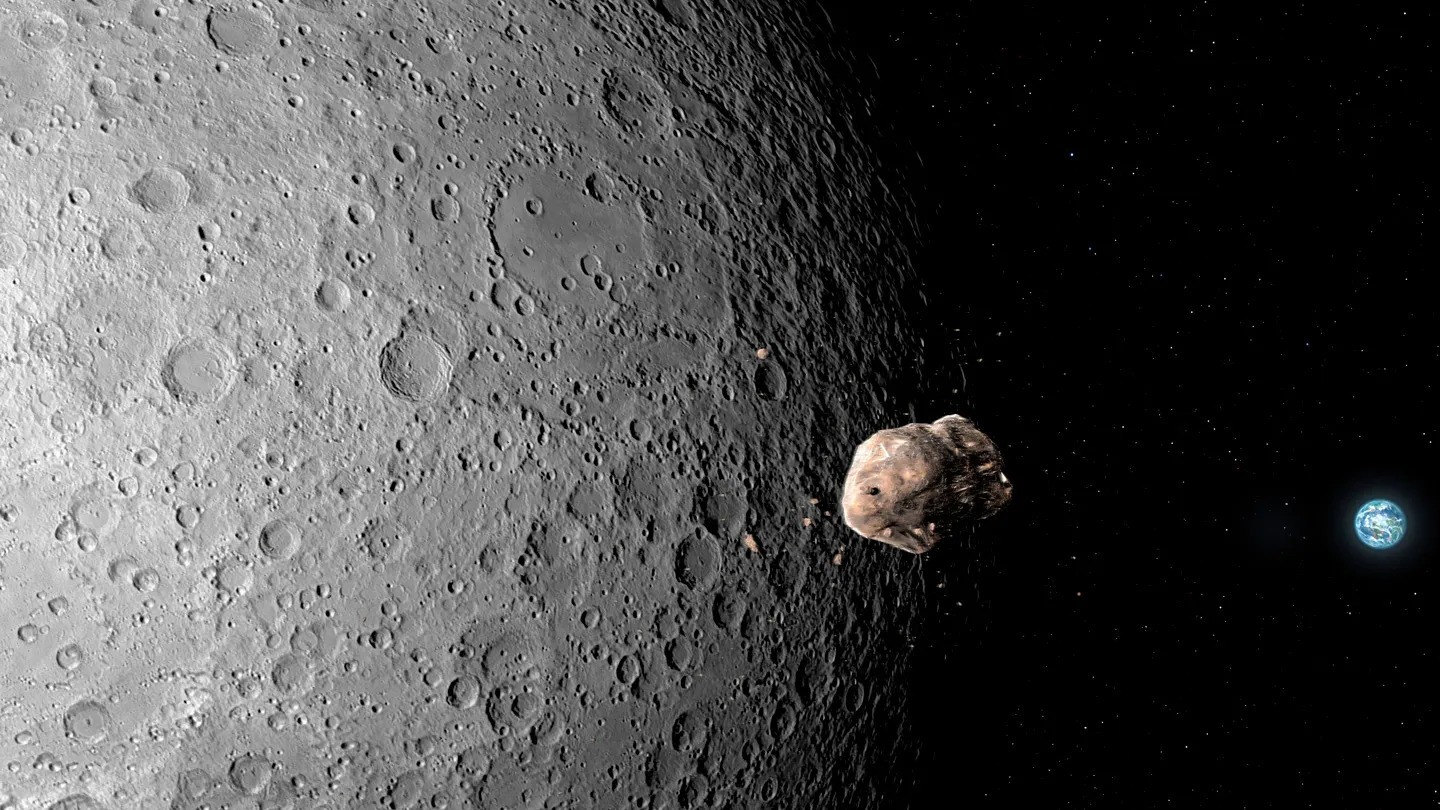
Overall, it can be said that the existence of an Earth-like exoplanet with several moons cannot be ruled out. However, it is quite likely that even our own large moon is a very rare phenomenon. After all, most Earth-like planets are located primarily around red and orange dwarfs. And there, the orbits may be close enough that gravitational interactions preclude the existence of moons.
The significant collisions that lead to the formation of substantial moons, such as our own, may indeed be exceedingly uncommon. Therefore, to certain extraterrestrial observers, even our full moon might appear as remarkable as the sight of two moons in the sky does to us.
