

A day in simulated weightlessness barely changed the human genome. Its structure remained the same as under normal conditions, and the genetic material sustained no damage. Only the cell nucleus grew noticeably larger. Weightlessness was simulated in a laboratory using a device that continuously rotates samples. The findings are important both for understanding gravity’s role on Earth and for spaceflight.
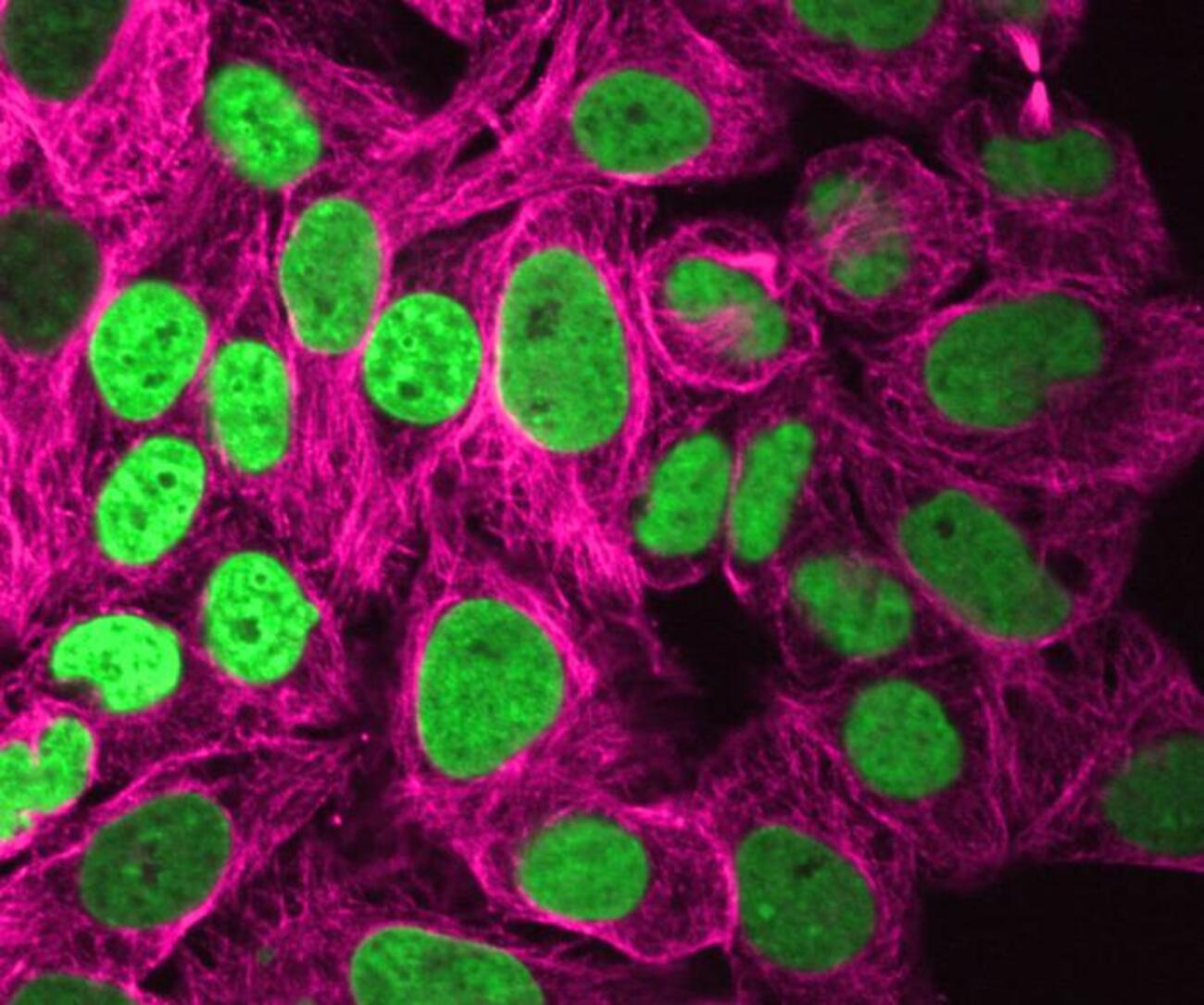
Without Gravity, the Nucleus Expands
After 24 hours in simulated microgravity, the cell nucleus increased in volume by approximately 18%. This suggests that gravity on Earth constantly compresses it slightly.
The nuclear envelope retained its thickness and structure, while the genome inside showed no changes in either its organization or its usual movements. DNA does not sit motionless inside the nucleus: it constantly fluctuates and shifts along with proteins. Microgravity did not cause DNA damage either. Breaks appeared only in cells exposed to strong fluid flows. Such flows arise when the dish containing the cells rotates, and they have often distorted the results of earlier experiments.
Two Meters Inside a Nucleus
The DNA molecules in a single human cell have a combined length of approximately two meters and fit inside a nucleus just 10 micrometers in diameter. If the nucleus were hypothetically enlarged to the size of a soccer ball, the combined length of these molecules would reach 44 kilometers.
How genetic material is packed affects gene function, and disruptions are associated with cancer and developmental disorders. According to Universe Today, the physical principles governing this organization remain poorly understood, and gravity’s role had also remained unknown.
Weightlessness in the Laboratory
To determine how gravity affects the genome, it must be removed from the experiment. Physicists at New York University, led by Associate Professor Alexandra Zidovska, achieved this without traveling to space. Their study was published in the peer-reviewed journal Science Advances.
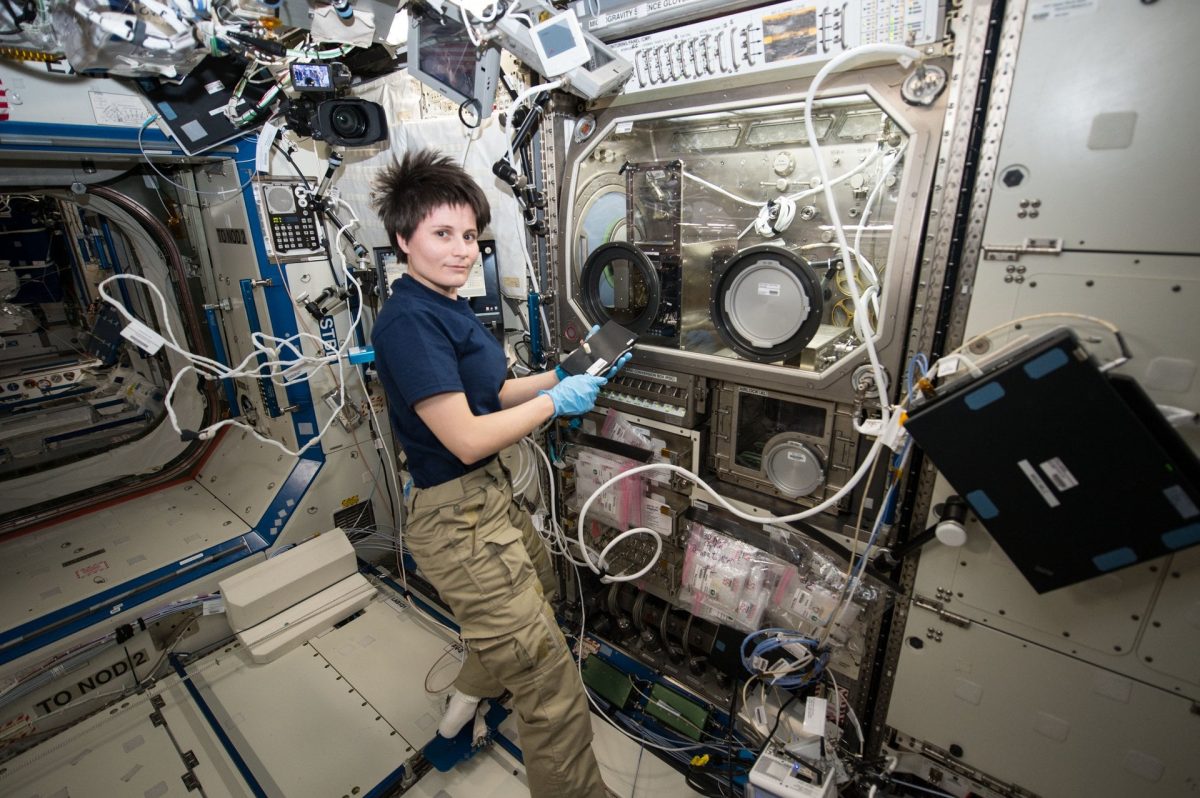
The team built a random positioning machine. It rotates dishes containing living human cells around two independent axes, so the direction of “down” constantly changes. Over the course of the rotation, gravity’s influence averages out to almost zero.
However, this method has a side effect. The liquid in the dish moves and flows around the cells, which does not happen in orbit. The researchers developed algorithms to reduce these flows. Some samples were exposed to strong currents, while others were left undisturbed. Under the flow conditions, the cells became noticeably elongated.
From a Day to Months
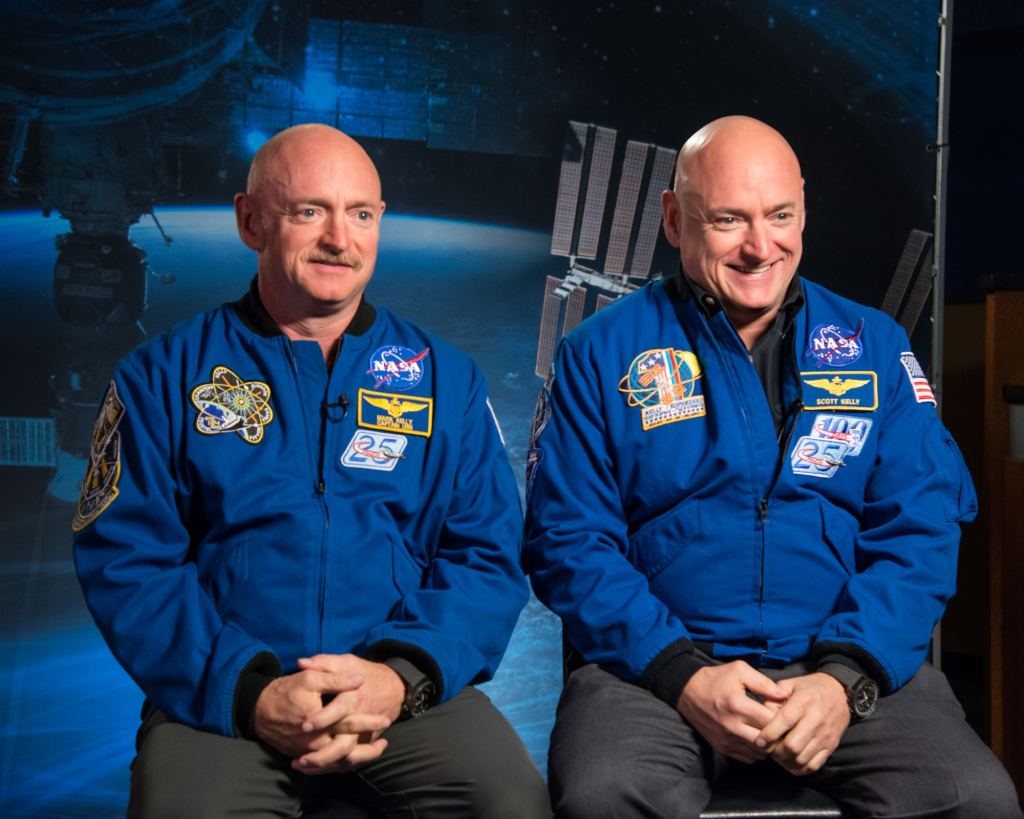
NASA has already investigated the genetic consequences of long-duration spaceflight through its Twins Study. Astronaut Scott Kelly spent 340 days aboard the International Space Station, while his twin brother Mark Kelly remained on Earth. The activity of many of Scott Kelly’s genes deviated from normal levels but largely returned to normal within six months back on Earth. Changes in gene activity have also been recorded in plants, even within the first few minutes of a suborbital flight. The new experiment examined the physical arrangement of DNA rather than gene activity, and that arrangement barely changed over a day.
Alexandra Zidovska believes that the genome’s physical organization might change just as little over a comparable period in space. More substantial shifts could occur during longer stays and as a result of DNA damage in space. Experiments involving longer exposure to weightlessness will be able to test this.
