

An airship is a hybrid aircraft that relies on one principle of physics to achieve lift and another to propel it forward. From a particular perspective, it is among the most efficient aircraft ever developed; nevertheless, for several decades, it has been regarded as a dead-end branch of aviation development.
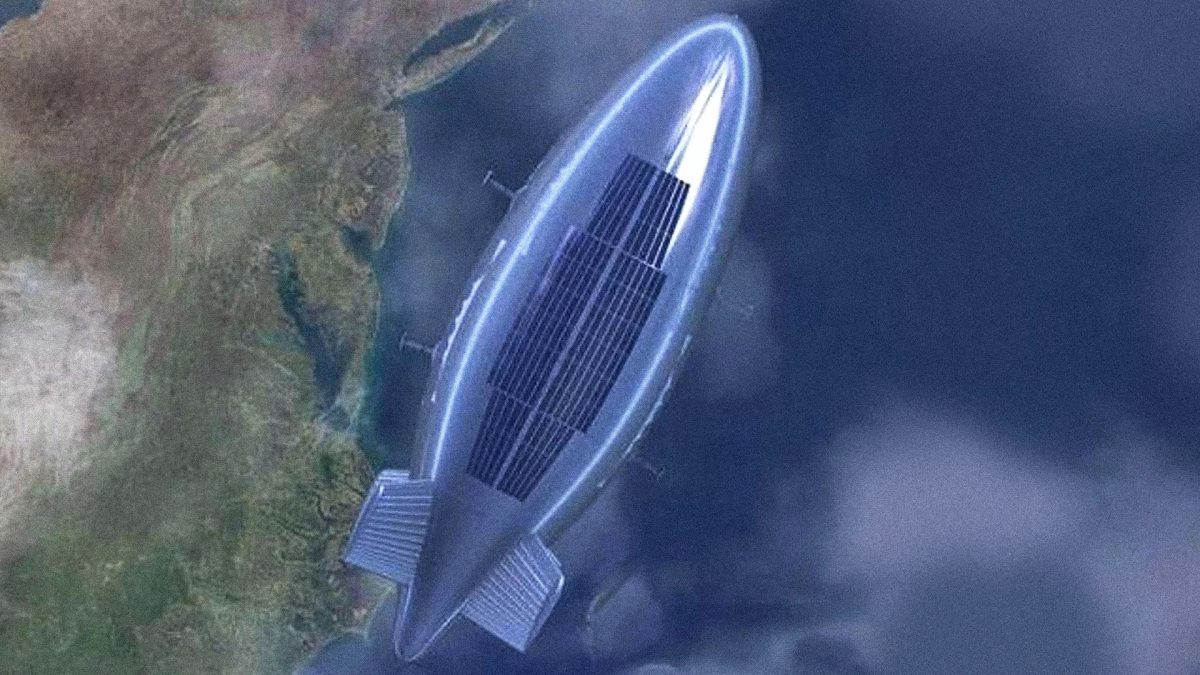
Airship flight
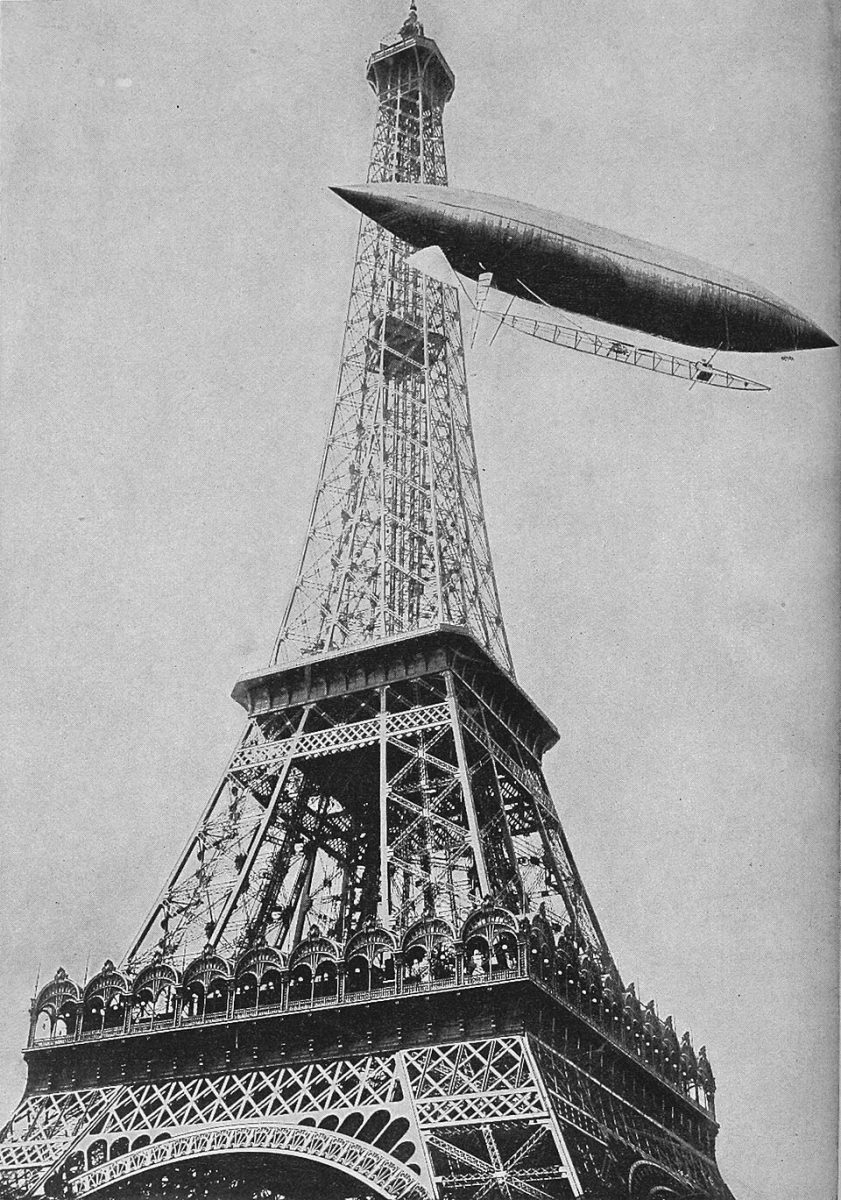
On October 19, 1901, Brazilian inventor Alberto Santos-Dumont flew around the Eiffel Tower in an airship. The 33-meter-long aircraft was powered by a gasoline engine. Through this achievement, Santos-Dumont demonstrated the feasibility of a controllable, lighter-than-air aircraft.
Thus, a new chapter in the history of aviation began — one that ultimately led nowhere. Today, the skies are dominated by airplanes and helicopters, while rockets venture into space. But how far into space could an airship actually travel? To answer this question, we must first understand how such a flight could be possible.
Flight within Earth’s atmosphere can be classified as either aerostatic or aerodynamic. Aerostatic flight results from Archimedes’ principle, whereby a denser medium exerts an upward buoyant force on an object containing a less dense substance. A balloon is one example.
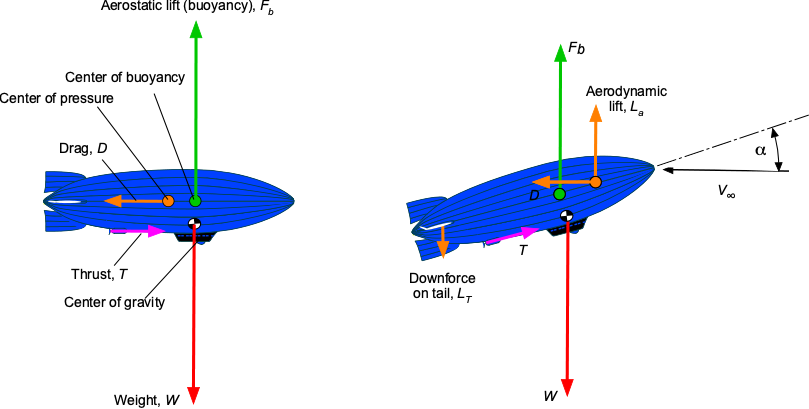
Aerodynamic flight occurs when an aircraft moves forward at a certain speed, and its wing profile causes the air above it to travel a greater distance than the air below. This creates a region of reduced pressure above the wing, generating lift.
A paper airplane provides a useful example, particularly if it is large enough to be propelled from behind by a miniature propeller attached to an electric motor. Jet fighters and quadcopters operate according to the same principle. The key distinction is that, in a quadcopter, the propellers themselves function as aerodynamic surfaces, and their rotation keeps the aircraft aloft.
Balloon and airship
At first glance, aerostatic flight appears considerably simpler than aerodynamic flight, as it requires only a lightweight, airtight vessel filled with a gas less dense than air. Heated air may also be used, since its density decreases as its temperature rises.
That is precisely how aerostats operate. The first flight of a hot-air balloon carrying passengers took place in Paris on November 21, 1789. People realized that flying was not particularly difficult; however, the primary limitation of flight relying solely on Archimedes’ principle soon became apparent. A balloonist can control the balloon’s altitude by increasing the temperature of the air inside it or by jettisoning excess weight. However, the direction of flight remains beyond the balloonist’s control, as the wind carries the balloon wherever it chooses.

At that time, the construction of a flying machine capable of aerodynamic flight was impossible due to the absence of a lightweight, powerful engine. However, by the turn of the eighteenth and nineteenth centuries, it had become clear that the challenges were, in fact, precisely the opposite. An airplane continuously expends energy to remain airborne; nevertheless, it can be controlled as desired.
The first half of the 19th century was marked by extensive exploration of the skies using balloons. In 1839, balloonists reached an altitude of 7,900 meters. In 1862, they established a record of 11,887 meters, which remained unbroken for more than half a century.
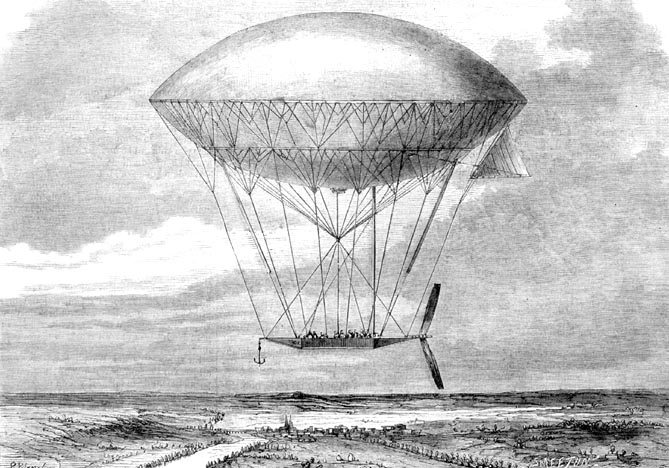
However, the idea of combining the advantages of aerostatic and aerodynamic flight remained in the inventors’ minds. Credit for this concept is due to French General Jean-Baptiste Mignier, who proposed an aircraft in which horizontal movement would be generated by propellers operated by hand. Although the idea was never realized, such craft are still referred to by the French word “dirigeable,” meaning “steerable.”
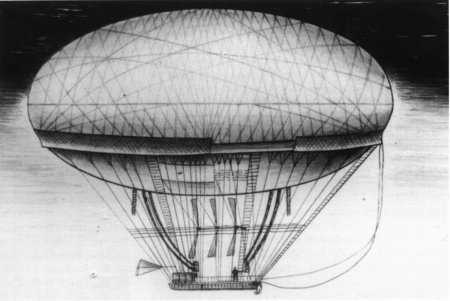
Once a steam engine that was sufficiently lightweight and powerful became available, engineers sought to install it in an elongated balloon, thereby creating an airship. Even at that time, engineers recognized that the craft should have a thick, cigar-like shape to minimize air resistance in the direction of travel.
Henri Giffard made the first flight in a steam-powered airship in 1852. However, the airship’s flexible envelope wrinkled during turns, hindering normal maneuverability. In addition, the steam engine was relatively heavy for an aircraft of this type.
The development of airships gained momentum in the 1880s, as sturdier designs emerged and electric motors began to be adopted. For instance, in 1884, La France, measuring 50.4 meters in length and 8.4 meters in diameter, flew 7.6 kilometers in 23 minutes. Nevertheless, these machines remained experimental for many years.
Alberto Santos-Dumont
Alberto Santos-Dumont, who was still a teenager and living in a rural area of Brazil at the time, witnessed these events. From childhood, he had been fascinated by machinery of all kinds, particularly steam tractors and locomotives, and was an avid reader of Jules Verne.
In 1891, at the age of 18, he moved to France, where his father resided. Soon afterward, the young man purchased a car — at a time when the mass production of such vehicles had been underway for only a few years. He also developed an interest in aviation, particularly in the prospect of equipping an aircraft with an internal combustion engine.
Santos-Dumont’s wealth afforded him the opportunity to experiment. Initially, he learned to fly hot-air balloons; in 1898, he began designing airships. Over the following seven years, he built a total of 11 such craft.

However, the most remarkable of these was ultimately Aircraft No. 5, with which he won the Deutsch de la Meurthe Prize in October 1901 by flying from Parc Saint-Cloud in Paris to the Eiffel Tower, circling it, and returning. In doing so, he definitively demonstrated that these aircraft could serve as a means of transportation.
However, several years later, Santos-Dumont turned his attention to aviation and became one of its pioneers. Debate continues over whether he or the Wright brothers were the first in the world to fly a heavier-than-air aircraft. It is, however, definitively established that in 1906, Santos-Dumont set the first officially recorded aviation record by flying 220 meters in 22 seconds.
For a period, Santos-Dumont was an exceptionally popular figure. In particular, the modern trend of men wearing wristwatches is often attributed to him. Prior to this, women wore wristwatches as accessories, while men typically carried their watches in their pockets.
In early 1910, Santos-Dumont’s health began to deteriorate. He withdrew from aviation and relocated to a village, but was soon accused of espionage in France. Upon his release from custody, he was required to return to Brazil. Santos-Dumont experienced depression, partly because aircraft were rapidly becoming instruments of war. He ultimately died by suicide.
The age of airships
However, at that time, partly as a result of Santos-Dumont’s efforts, the age of airships had begun. Although airplanes were also developing rapidly, airships retained their advantages for many years. Inventors developed three principal designs: soft airships, which were essentially elongated hot-air balloons; semi-rigid airships, in which the steering keel was mounted on a rigid frame; and rigid airships, whose entire envelope was attached to a lightweight wooden frame.
Although all three types could be employed depending on the circumstances, rigid airships became the most widespread in the first half of the 20th century. They rapidly grew to the size of ocean-going vessels and achieved comparable ranges.
Unlike airplanes, large airships can be designed to be exceptionally spacious, making air travel aboard them highly comfortable. They do not require a dedicated runway. Indeed, they need not land at all; they can simply hover near a tall mast. Few people are aware that the upper floors of the renowned Empire State Building, constructed in the 1930s, were originally intended to function as an air terminal. Passenger airships arriving from Europe were expected to dock there.

However, the era of airships came to an end in the 1940s and 1950s for several reasons. Passenger aircraft became larger, faster, and, most importantly, safer. Although airships, which even then consisted of numerous individual gas bags, could theoretically have descended gradually to the ground, they instead exploded because they were filled with hydrogen. Furthermore, landing and docking proved more complicated than initially anticipated.
Airships in the 21st century
However, in the 21st century, interest in airships and aerostatic flight has gradually revived. One of the primary reasons is a shift in priorities within aviation: rather than adhering to the principle of “higher, faster, stronger,” increasing attention is being given to energy efficiency and environmental safety.
Over the past several decades, many long-standing challenges have been addressed. Lighter and stronger materials have been developed, and helium has replaced hydrogen, which is susceptible to explosions. Meanwhile, meteorologists have become increasingly precise in their weather forecasts.
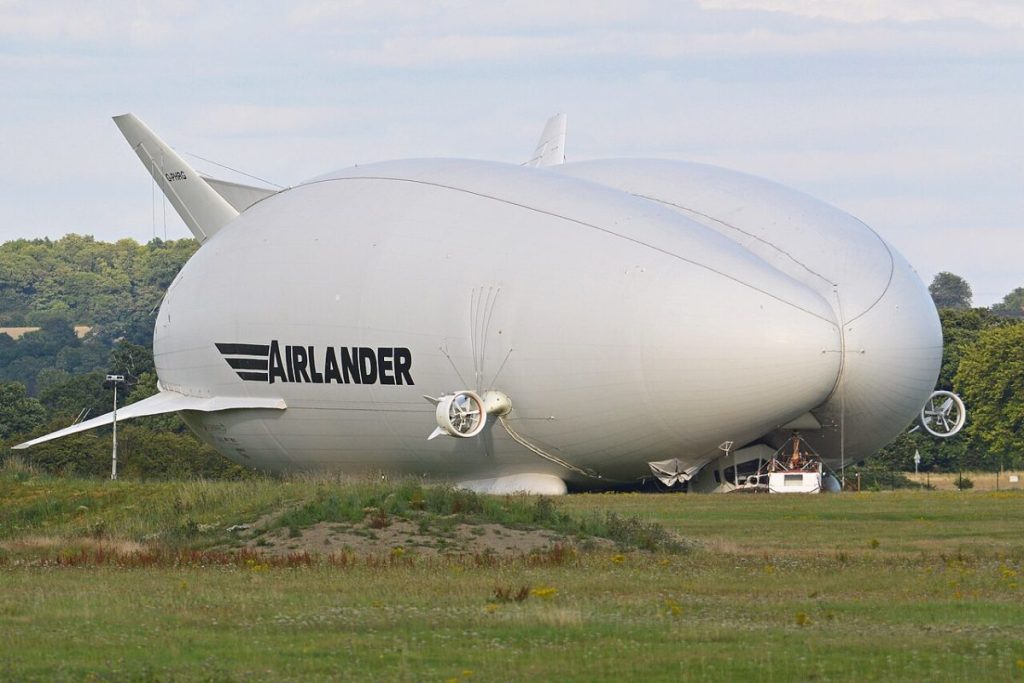
Large airships could once again become an integral component of global transportation logistics. Airship cargo transport is less expensive than air freight and faster than maritime shipping, positioning airships to fill the gap between these modes of transportation.
Another particularly noteworthy feature is their ability to hover in one location for hours without consuming fuel and to dock with towers. Furthermore, they can serve as a means of transportation to settlements that are difficult to reach.
However, experimentation with new models has not yet resulted in the establishment of new transportation companies. The primary reason is the substantial cost of developing large-scale equipment from the ground up. Only large corporations — which have limited confidence in such projects — can afford these expenses, while small startups may require years to complete development.
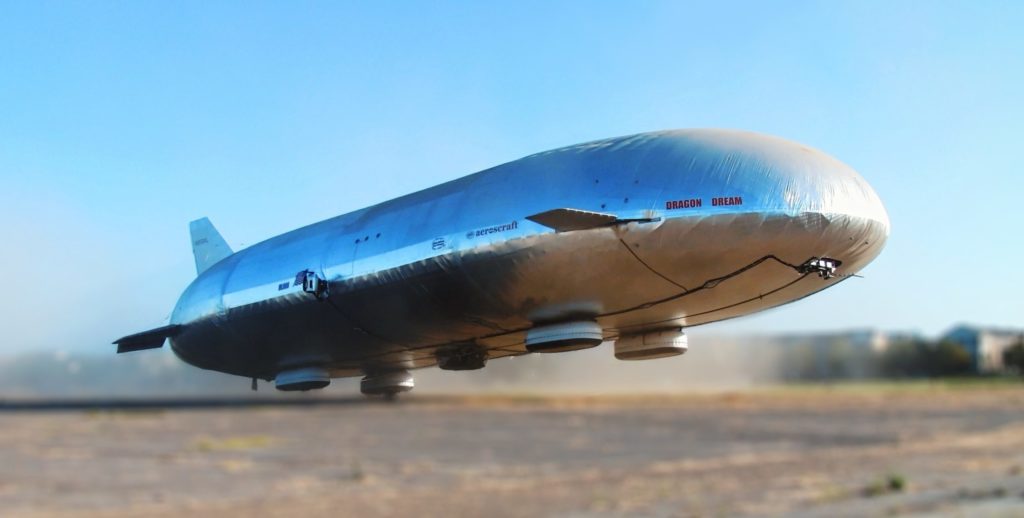
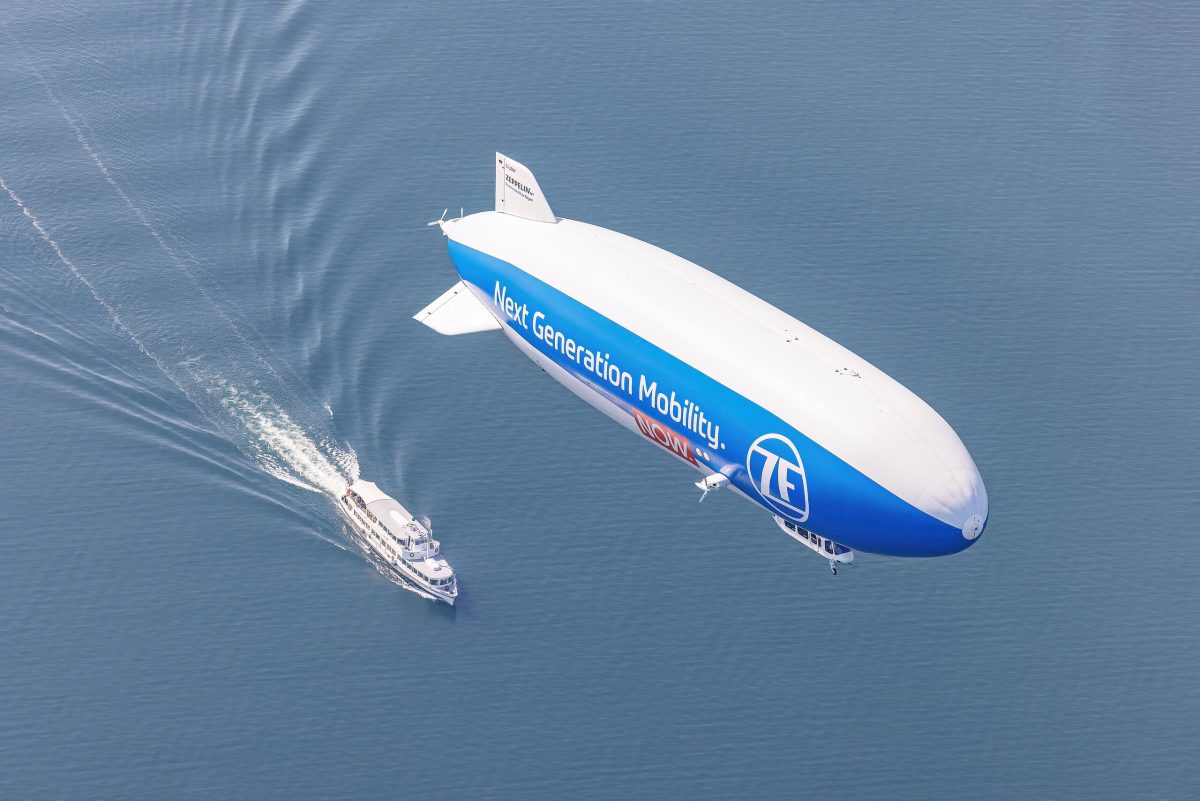
Furthermore, airships are less maneuverable and slower than airplanes, and they are highly sensitive to wind. In principle, these limitations could be tolerated in light of the advantages outlined above. However, the only modern airship currently in operation is the German Zeppelin NT. It is used less for intercity transportation than as a “flying tour bus.”
However, the Airlander 10, Flying Whales LCA60T, and Aeroscraft cargo airship projects are also in the advanced stages of testing. Therefore, it is entirely possible that they will begin transporting cargo over long distances.
It is also worth noting the potential return of airships to military aviation. The military has already resumed using airships as reconnaissance platforms and relay stations. Given the current trend toward lightweight, low-cost aerial weapons, airships may also have a role to play.
Airships and space
Another significant question concerns the feasibility of reaching space by airship. As early as 1875, Dmitri Mendeleev had proposed using airships to study the Earth’s upper atmosphere. In practice, however, this is a highly complex issue.
Despite advances in aviation, balloons retained the record for the highest altitude until the early 1960s, when the X-15 rocket-powered aircraft began flying. Even today, excluding rockets and rocket-powered aircraft, the record for the highest altitude reached by a human remains held by a balloon rather than a winged aircraft.
In 2014, Alan Eustace jumped from an altitude of 41,424 m, while the maximum altitude attained by a MiG-25 piloted by Alexander Fedotov in 1977 was 37,650 m. At these altitudes, the sky already appears black, and the Earth’s curvature is clearly visible. However, these altitudes are still far below space. The Kármán line is located 100 km above Earth, and satellite orbits begin at approximately 200 km.
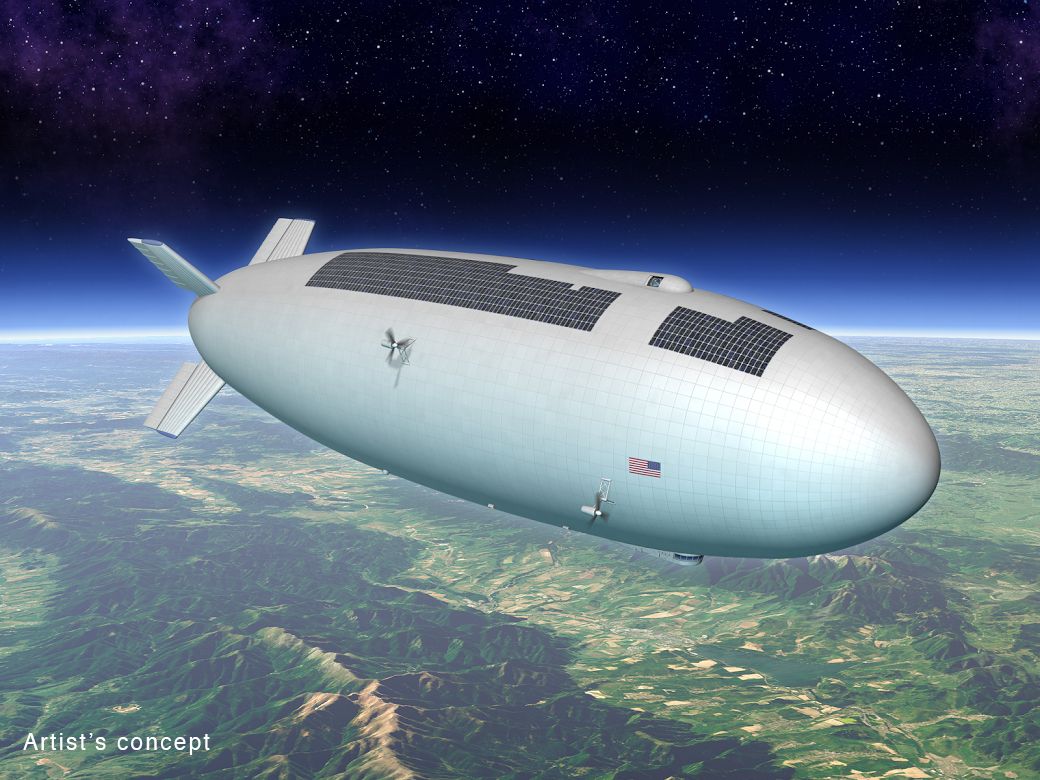
An airship is heavier than a balloon and, by definition, cannot ascend to the same altitude. The practical flight ceiling for such craft is currently approximately 7,500 m. However, this limitation is largely attributable to the fact that airships have primarily been regarded as aerial freighters; no specialized high-altitude balloons equipped with a power plant and a control system comparable to those of an airship have been developed. At the same time, calculations indicate that, under favorable conditions, such craft could reach the stratosphere and ascend to an altitude of 20–22 km.
The results are not particularly impressive, and the propellers’ efficiency at that altitude remains limited. However, the airship’s primary advantage lies not in its speed or altitude, but in its ability to remain stationary for extended periods. This has prompted the proposal to use it as an aerial launch platform for space vehicles. Rockets expend a substantial portion of their fuel overcoming gravity and the drag generated by the atmosphere’s dense lower layers. Launching a rocket from the stratosphere could therefore allow it to be smaller and lighter.
The primary concern is that these remain small devices, and the platform’s stability presents a significant challenge. Balloons already sway in the wind, and the rocket’s exhaust could further destabilize them or even damage the structure. Nevertheless, the concept remains intriguing. The rocket would most likely need to be suspended beneath the balloon. This approach could potentially be used to launch crewed spacecraft, such as Virgin Galactic’s SpaceShipTwo.
One potential application of a high-altitude airship would be to establish an observatory similar to SOFIA, which NASA operated several years ago. The objective of such a project would be to position the telescope above the densest atmospheric layers and the water vapor they contain. It is entirely possible that the role of airships in space exploration is only beginning to emerge.
