

“It may look as though we have started a cosmic war, but that is not the case at all. And this is not a scene from Star Wars,” the European Southern Observatory, ESO, commented on its striking new image. The illustration shows powerful laser beams cutting through the night sky above Chile. At that moment, astronomers were aiming one of the world’s most advanced telescope systems at the distant Tarantula Nebula.

The photograph captures the operation of the Very Large Telescope Interferometer, VLTI, at the Paranal Observatory. This complex system works by combining light: it gathers data from several separate telescopes, effectively creating a single giant virtual telescope. In this way, the size of its “mirror” is equal to the distance between these instruments.
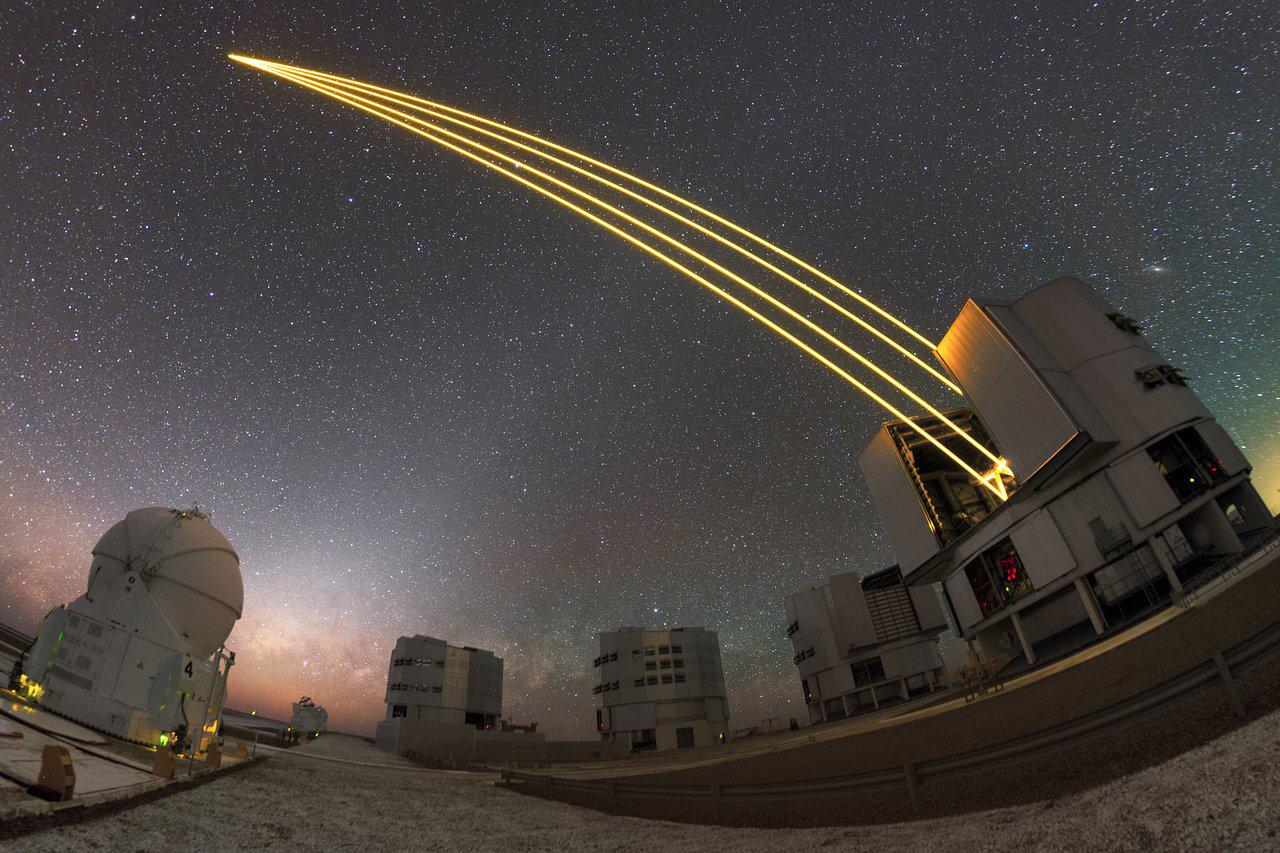
This approach allows scientists to examine extremely fine cosmic details that would be impossible to see with ordinary optics. The lasers are currently part of a major upgrade program called GRAVITY+, which is designed to further improve the performance and precision of the VLTI.
Why does the sky need artificial stars?
The main enemy of ground-based astronomy is our planet’s atmosphere. It is constantly in motion, causing light from distant stars to become distorted and images in telescopes to appear blurred.
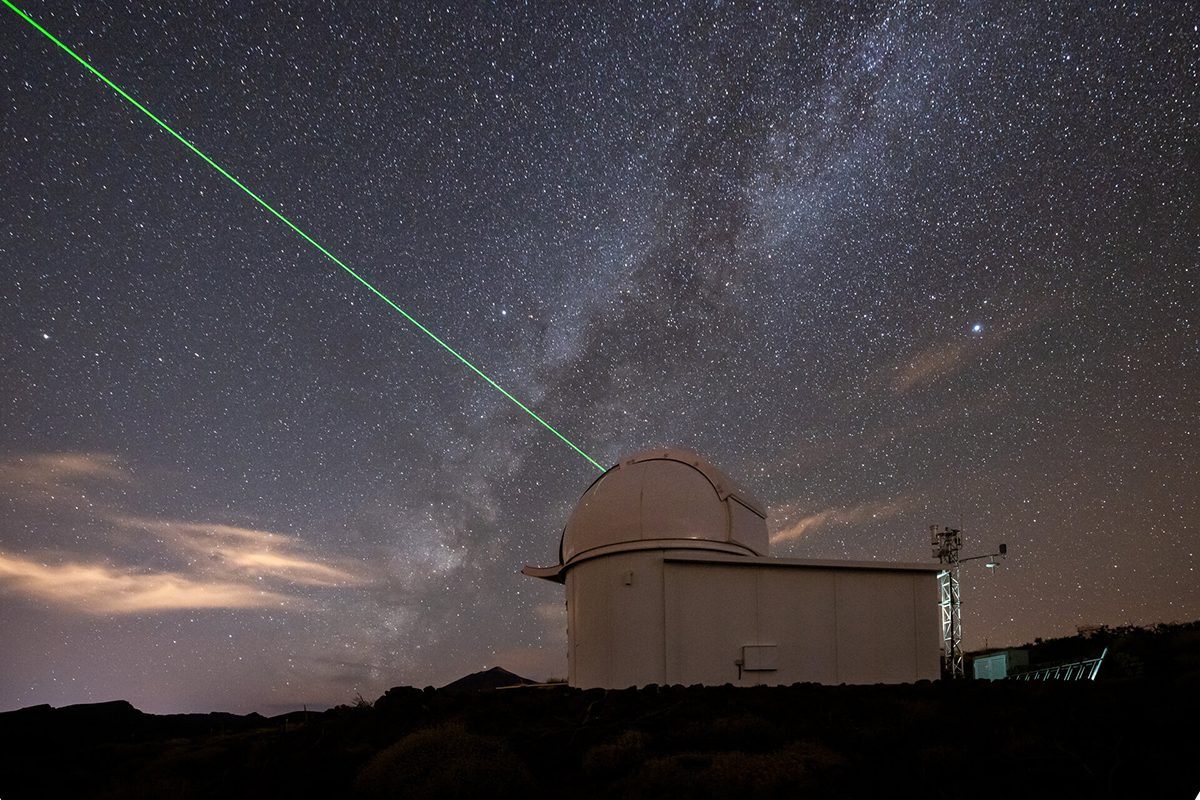
To solve this problem, scientists use lasers. The beams reach an altitude of about 90 kilometers above Earth, where they excite sodium atoms. As a result, bright glowing points appear high in the atmosphere — artificial guide stars. By using them as references, the telescope’s adaptive optics system can measure atmospheric turbulence and instantly adjust its mirrors in real time, making the image perfectly sharp.
From a bold idea to a breakthrough
Interestingly, the idea of using such laser guide stars is not new. It was first proposed back in 1986 in the final report on the creation of the Very Large Telescope, VLT, project. At the time, the developers noted: “If this works in practice, it will be a true breakthrough.”
Today, almost 40 years after the concept first appeared, that technological breakthrough has become a reality, giving humanity an unprecedented view into the depths of the Universe.
Earlier, we reported on how the Extremely Large Telescope could detect life on Proxima Centauri in just 10 hours.
According to skyatnightmagazine.com
