

The neighboring planet was long considered geologically frozen. New calculations suggest that Venus is still changing. Enormous fractures on its surface may have formed quite recently, and some appear to be continuing to widen. The key clue came from the height and width of their raised margins.
Traces of Tectonic Activity on the Surface
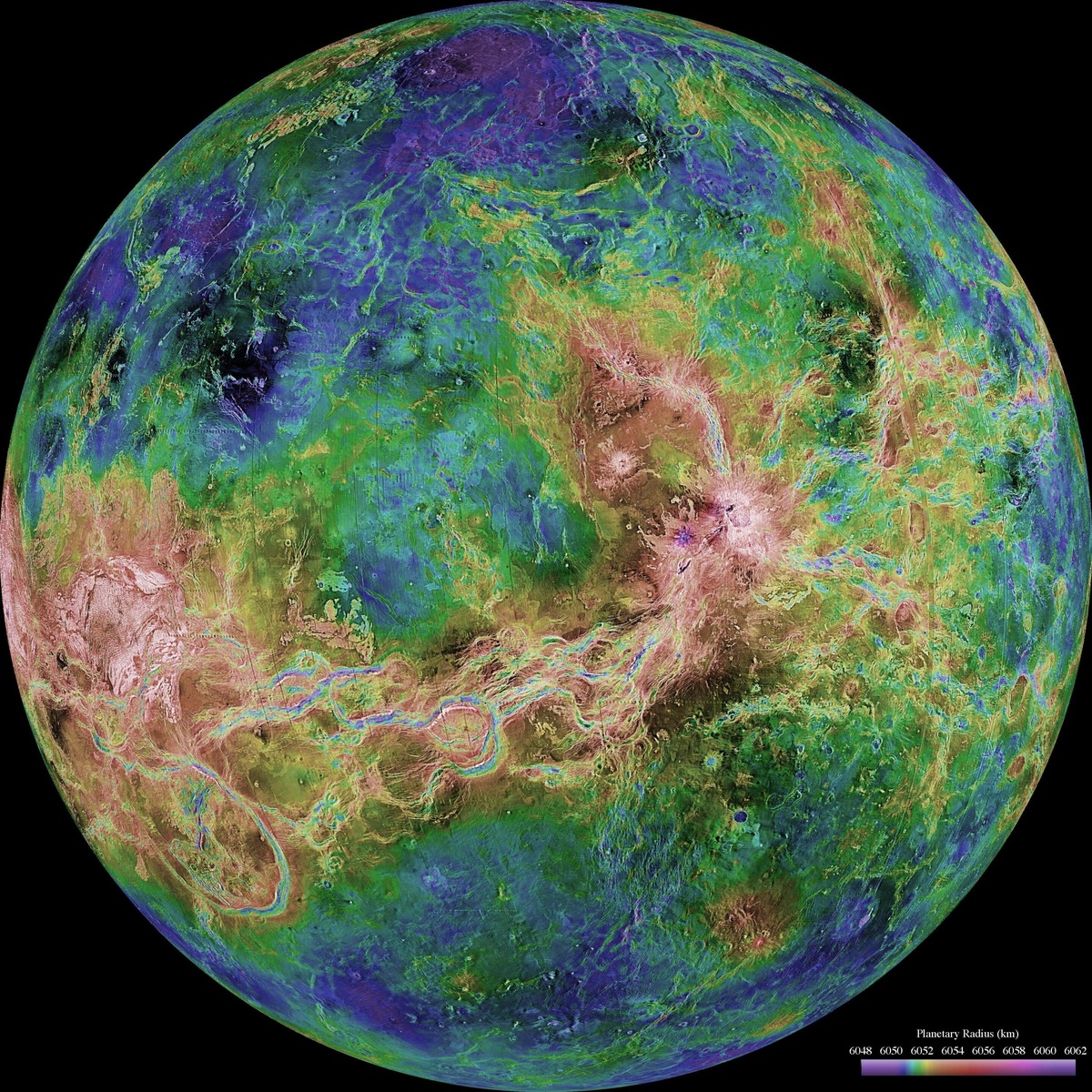
Giant fractures in the crust of Venus extend for distances of up to 10,000 kilometers. Similar structures also exist on Earth, the best known of which is the East African Rift.
Until now, it remained unclear when exactly these fractures formed. Scientists had estimated their age at more than 100 million years and interpreted them as remnants of the distant past.
Computer Testing of the Hypothesis
A team of researchers from ETH Zurich, led by Professor of Geodynamics Taras Gerya, developed a high-resolution three-dimensional model. Previous calculations of this kind had been predominantly two-dimensional and relied on simplified assumptions about rock properties. Lead author Si Yang conducted the work while completing a Master’s degree, and the results were published in the peer-reviewed journal Nature Geoscience.
The modeling showed that rift shoulders—the elevated bands along the edges of a rift—remain broad and high when the structure is young in geological terms. They retain their elevation while movement is continuing or has only recently stopped. The older the system becomes, the lower and narrower these shoulders grow.
Another result concerns the rate of movement. The fractures are spreading apart at between 3 and 10 centimeters per year, considerably faster than previous estimates, Phys.org notes.
What Can Be Seen from Orbit
The modeled rift shoulders matched the features visible on surface maps produced by the Magellan mission in the 1990s. Such structures can indeed be seen in the images, providing observational support for the calculations.
In 2023, a new analysis of the same archival data revealed a change in the shape of a volcanic vent at Maat Mons between images taken during 1991. This is regarded as the first direct evidence of a volcanic eruption on Venus. The new study adds tectonic activity to the evidence for volcanism, undermining the image of Venus as a frozen planet on two fronts at once.
A Guide for Future Missions
The results will indicate which regions should be examined as a priority. NASA and ESA are preparing several spacecraft missions to Venus, and each of them requires specific scientific targets, according to an ETH Zurich release.
Taras Gerya and Professor of Geophysics Paul Tackley are participating in the European EnVision mission and are developing instruments for analyzing the planet’s surface. The launch is planned for the early 2030s, and the observation program will cover everything from the core to the upper atmosphere.
The study is also of broader interest for exoplanet research. The authors hope to identify features that will make it easier to detect rocky worlds beyond the Solar System.
