

Venus Aerospace has raised $90 million in investment to transform its experimental propulsion system into a working solution for defense and space clients. The development of the Rotating Detonation Rocket Engine (RDRE) proved so promising that the startup’s plans changed dramatically. Instead of hypersonic passenger aircraft, the company is now developing vehicles for high-speed weapons and space missions.
An Unexpected Shift in Priorities
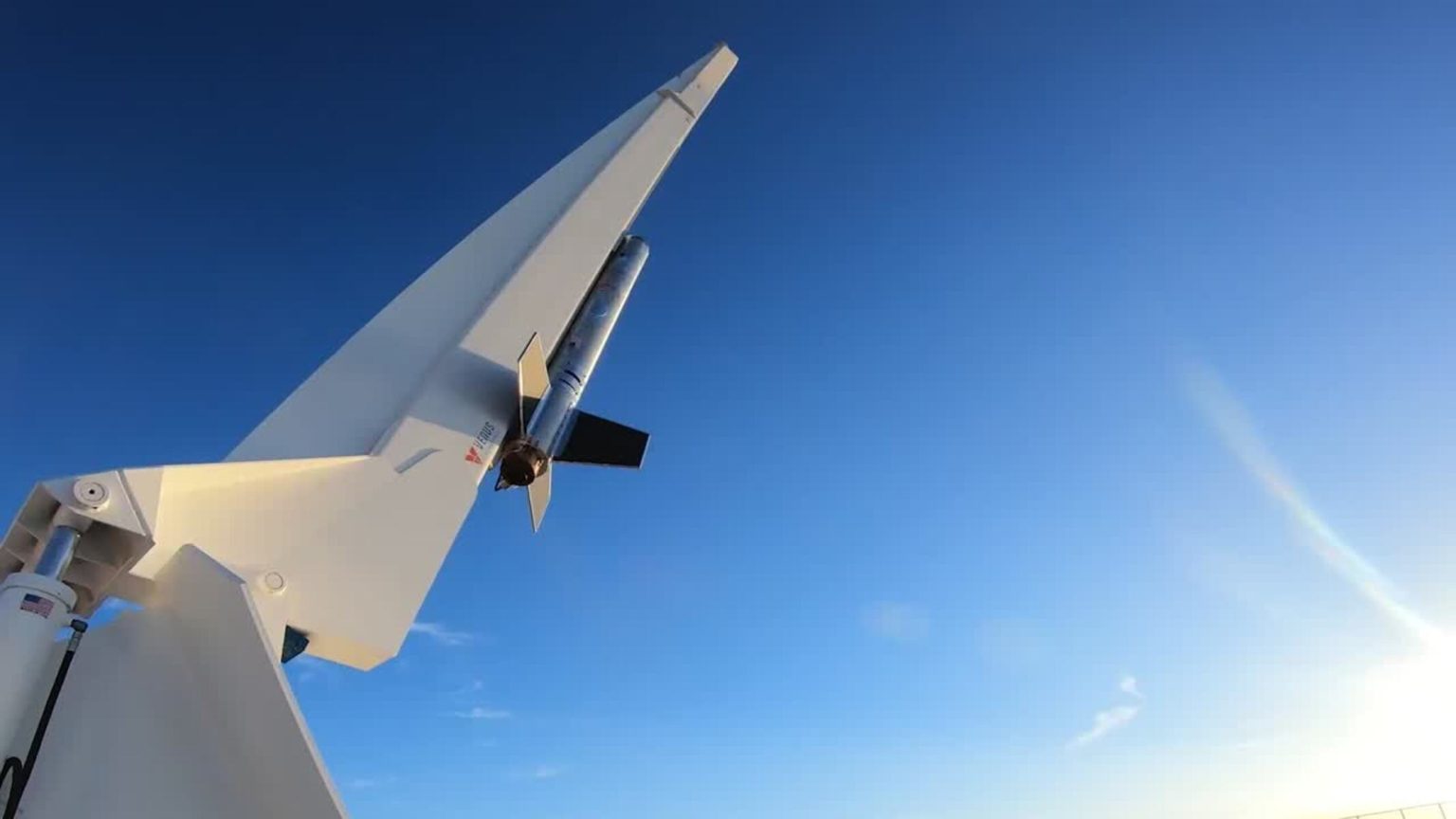
Venus Aerospace’s management had not planned to enter the engine market so quickly. Everything changed after the first successful launch of the RDRE in May 2025, when a rocket equipped with this engine flew for the first time in the United States.
As CEO Sassie Duggleby told TechCrunch , the industry’s reaction was unexpected. Potential customers immediately asked if they could buy a working prototype. Following this, the startup—founded in 2020 by Sassie Duggleby and her husband, CTO Andrew Duggleby—shifted its focus from commercial aviation to the defense and space sectors. Engineers are now working on replacing solid-fuel engines in rockets.
How the Engine Works
The concept of the rotary detonation engine RDRE is not new; its theoretical foundations were laid back in the middle of the 20th century. In a traditional rocket engine, fuel burns in the deflagration mode, i.e., subsonic propagation of the flame front. In contrast, in an RDRE, combustion occurs in the detonation mode: a supersonic shock wave continuously rotates through an annular combustion chamber, compressing and igniting the fuel-oxidizer mixture. This principle provides higher thermodynamic efficiency and allows for reduced fuel consumption.
For a long time, the complex physics of the process could not be mastered. The situation changed with the advent of high-quality 3D printing and computer modeling. The first operational tests were conducted in 2020 at the University of Central Florida (UCF), and in 2022, NASA launched the RDRE on the ground for the first time. In 2021, the Japanese space agency JAXA tested the engine in the vacuum of space, but the test lasted only a few seconds.
A Major Engineering Achievement
The main challenge for Venus Aerospace was cooling. The supersonic combustion wave generates extreme temperatures, and there was a risk that the structure would melt.
According to Sassie Duggleby, this is exactly what the engineers have been working on for the past four years. They managed to solve the problem, and now the RDRE can withstand the thermal loads. A total of 600 ground tests have already been conducted, the longest of which lasted 32 seconds. To meet customer requirements, the burn time will need to be increased to at least 6–15 minutes, and the new round of funding is specifically aimed at building a larger test stand. The Texas Space Commission has already awarded a grant for this purpose.
Investment Fund
The $90 million Series B round was led by Mercury Fund. Participants included Lockheed Martin Ventures, MESH, PEAK6, Draper Associates, Starboard Star Venture Capital, and Green Sands Equity. This was one of the most notable funding rounds in the space industry during the second quarter of 2026.
By comparison, the total volume of global space investments for April–June 2026 reached $8.2 billion. This figure set a new all-time record; we covered this in more detail in another article. The Venus Aerospace deal fits seamlessly into the overall trend of growing interest in space and defense technologies.
