

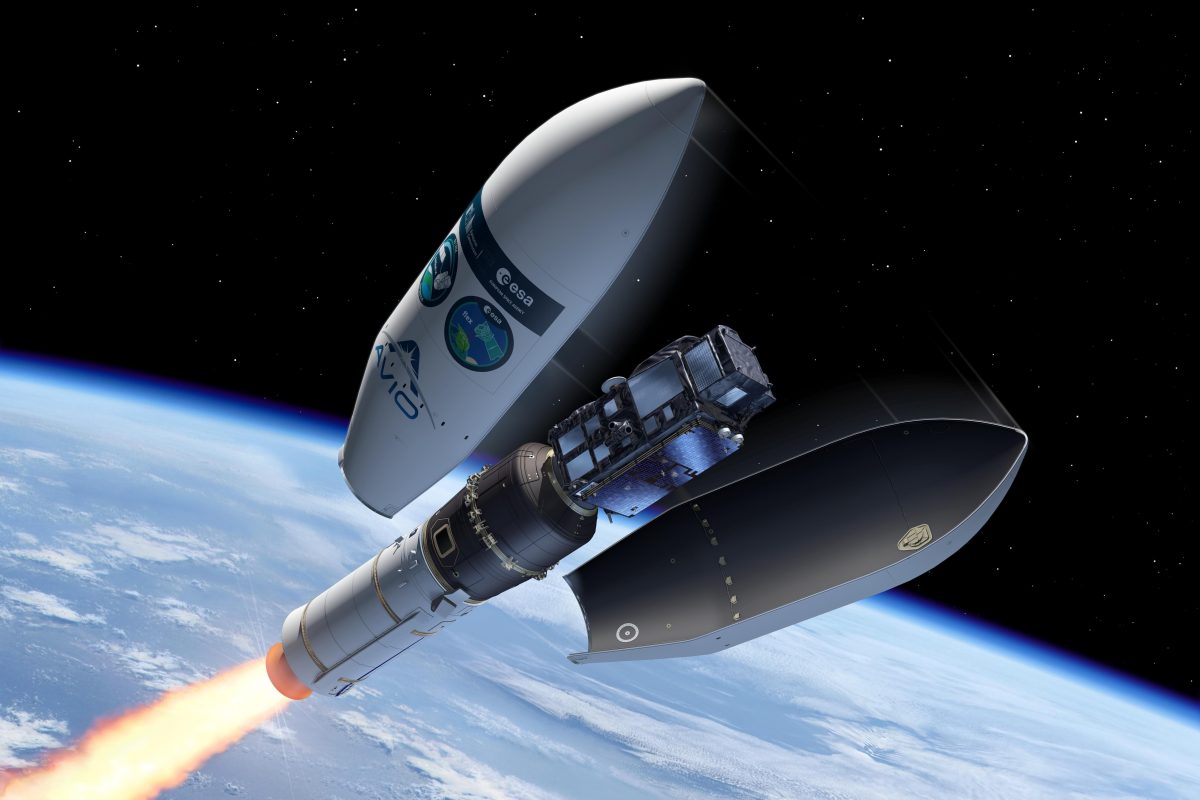
Two satellites with different missions will be sent into orbit on the same rocket. The launch is scheduled for September 15 at 03:21 CEST (14 September at 22:21 local time) from the spaceport in French Guiana. The first spacecraft, FLEX, will measure the faint glow emitted by plants during photosynthesis. The second, Sentinel-3C, will continue observations of the oceans, land, ice, and atmosphere.
The Faint Glow of Plants
During photosynthesis, leaves emit light that is invisible to the human eye. This phenomenon is called solar-induced chlorophyll fluorescence. Its brightness amounts to approximately one to two percent of the solar radiation reflected by vegetation.
Measuring such a signal from orbit is difficult not because the instruments lack sensitivity, but because the much brighter reflected light makes it harder to distinguish. Fluorescence has to be isolated in narrow parts of the spectrum near absorption lines. The smaller the area of the surface under the instrument’s field of view, the fewer photons reach the detector.
The first satellite measurements produced a very coarse picture. The spatial resolution of the TROPOMI instrument, which was used for the first satellite measurements of fluorescence, is 7 by 3.5 kilometers, meaning that anything smaller than this is blended into a single averaged value. The new spectrometer aboard FLEX will produce maps with a resolution of 300 by 300 meters.
The New FLEX Satellite
The FLEX satellite weighs about 400 kilograms. It will operate in a Sun-synchronous orbit at an altitude of 814 kilometers, with a full observation cycle repeating every 27 days. The planned mission duration is three and a half years, plus approximately three months for commissioning, which should be enough to cover at least three seasonal vegetation cycles in both hemispheres.
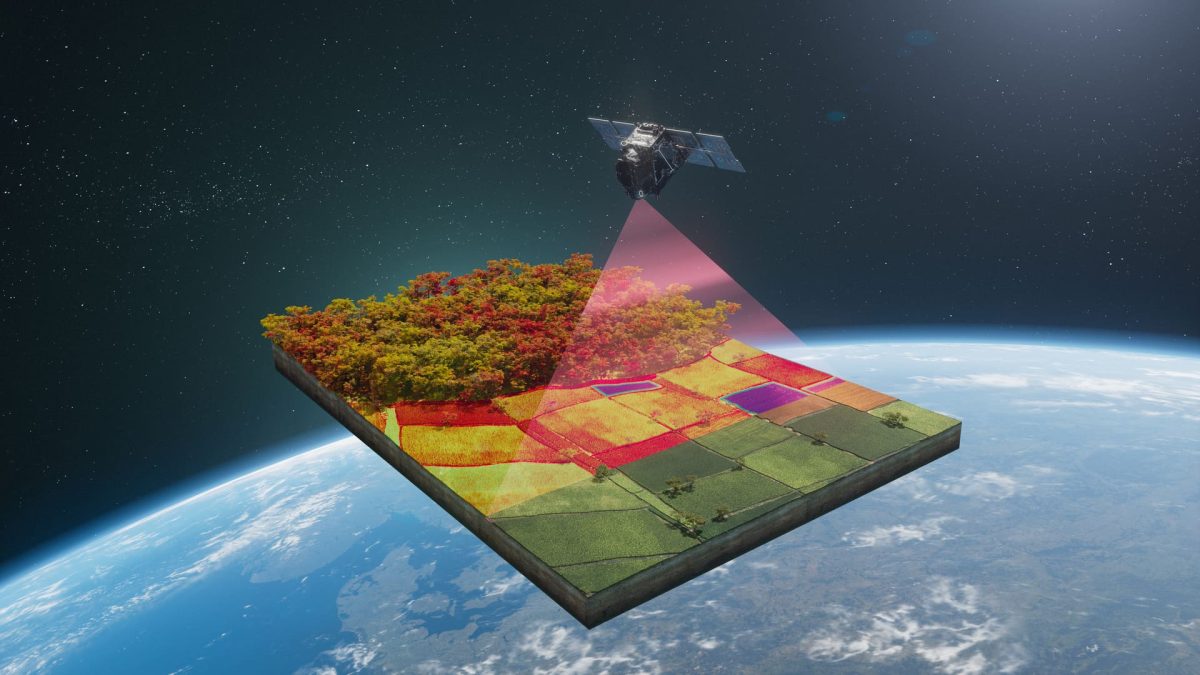
The faint signal will be measured by the Fluorescence Imaging Spectrometer (FLORIS), manufactured by the Italian aerospace company Leonardo. The prime contractor is the French division of Thales Alenia Space, a joint venture between Thales and Leonardo, and its contract with ESA was worth approximately €150 million.
According to ESA, FLEX will operate in tandem with one of the Sentinel-3 satellites already in orbit, rather than with Sentinel-3C, which is being launched alongside it.
Expanding the Sentinel-3 Series
Sentinel-3C has a mass of approximately 1,150 kilograms, including 130 kilograms of fuel. It is designed for seven years of operation, while onboard consumables should last for approximately twelve years.
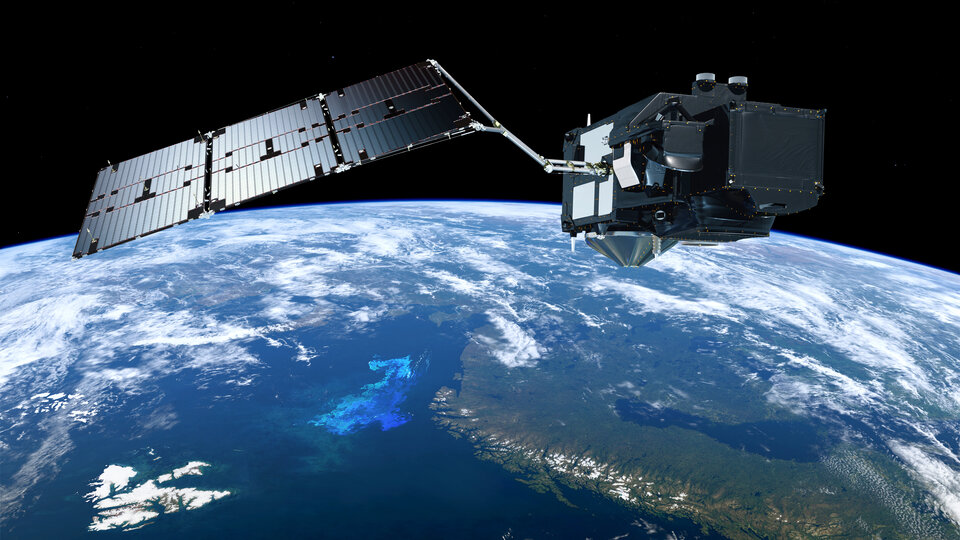
Its suite of instruments measures surface temperature and ocean color, wave height, and the condition of land and ice. Sea level is measured using a radar altimeter, while data from a nearby microwave radiometer are used to remove the effect of atmospheric water vapor.
The two previous satellites in the series were launched in 2016 and 2018. They operate as a pair, separated by approximately 140 degrees in the same orbital plane. The new spacecraft will be commissioned gradually so that it can eventually replace the oldest of them, which is approaching the end of its original design life.
The Rocket and Dual Payload
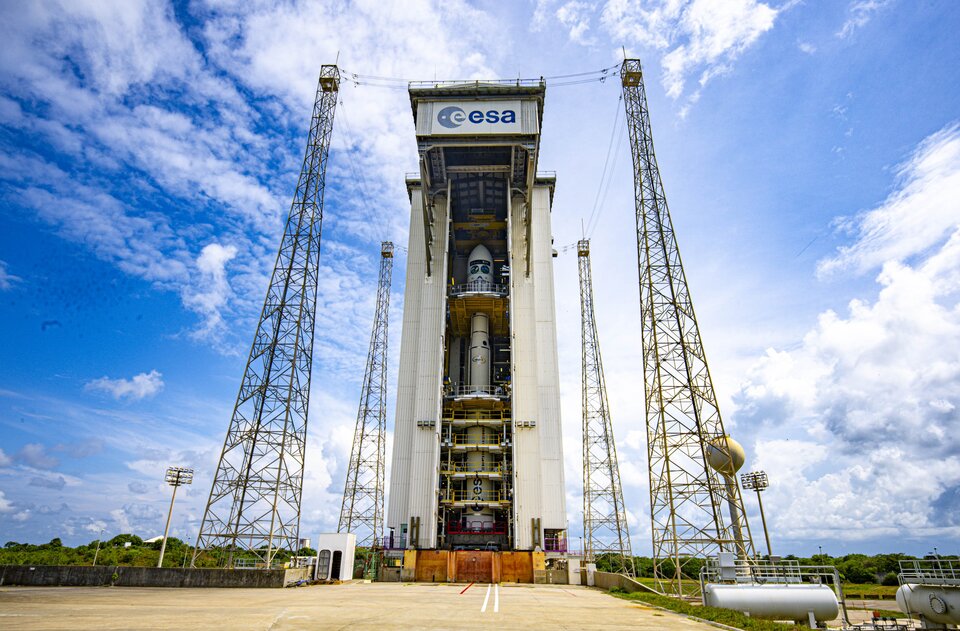
The rocket can carry up to 2,300 kilograms of payload into orbit and weighs 210 tonnes on the launch pad. Its first three stages use solid propellant. The fourth, liquid-fueled stage is responsible for precise orbital insertion.
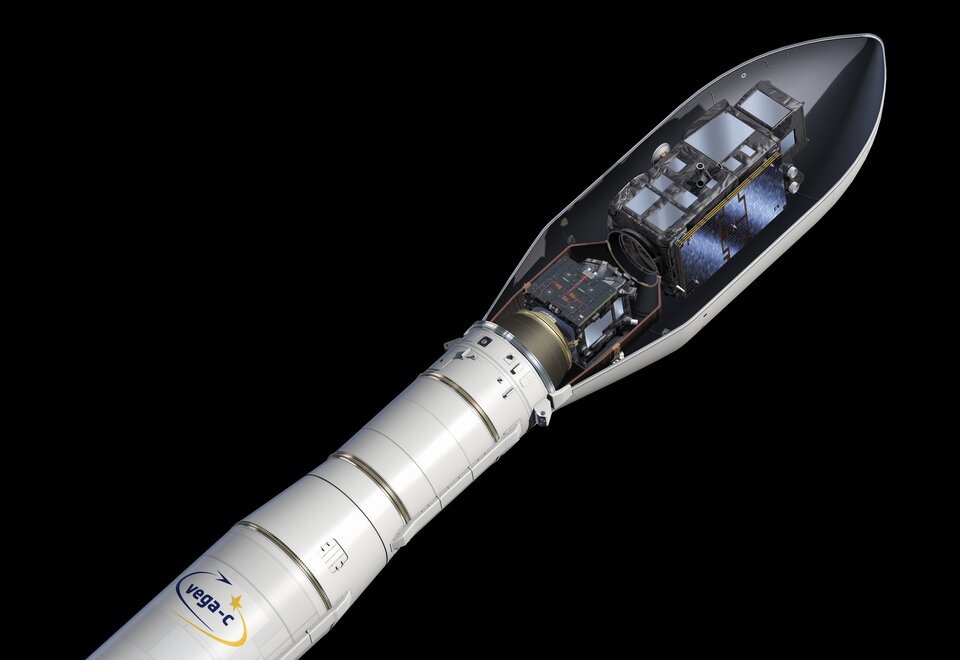
To accommodate both satellites beneath the fairing, FLEX was placed in the lower section of the additional Vespa adapter. Sentinel-3C was mounted on top and will therefore separate first.
Flight VV30 will be the sixth since the accident in December 2022, which was caused by a failure of the Zefiro 40 second stage. Vega-C returned to flight in December 2024, and since then all five launches have been successful.
This time the operator is the Italian company Avio, the program’s prime contractor.
Copernicus Data in Ukraine
Ukrainian researchers have been using imagery from Sentinel satellites — part of the same Copernicus program to which Sentinel-3C belongs — for years.
An agreement on Ukraine’s participation in certain components of the EU Space Programme was signed on April 9, 2025, as reported by the European Commission. It covers Copernicus as well as space weather and near-Earth object activities.
The usefulness of such imagery is demonstrated by research conducted by scientists from the Igor Sikorsky Kyiv Polytechnic Institute in cooperation with the European Commission’s Joint Research Centre and the World Bank.
Using Sentinel-1 and Sentinel-2 data from 2016 to 2024, the territory of Ukraine was divided into 19 land-use classes, including a separate category for unsown areas. The results were published in the peer-reviewed journal International Journal of Applied Earth Observation and Geoinformation. The study is based on Copernicus data.
The broadcast will begin half an hour before launch, at 02:50 CEST. It can be watched on ESA’s YouTube channel and on ESA Web TV Two.
Sentinel-3C will separate from the rocket at 04:21 a.m., FLEX at 5:17 a.m., and the broadcast will end at 5:36 a.m. The first fluorescence data are expected approximately three months later, after the spacecraft complete commissioning.