

The European Solar Telescope project in the Canary Islands has been upgraded to “Landmark” status. This will allow the team behind it to raise funds much faster. Once the project is completed, scientists are expected to gain a powerful and reliable instrument for studying the relationship between sunspots and magnetic fields on our star.
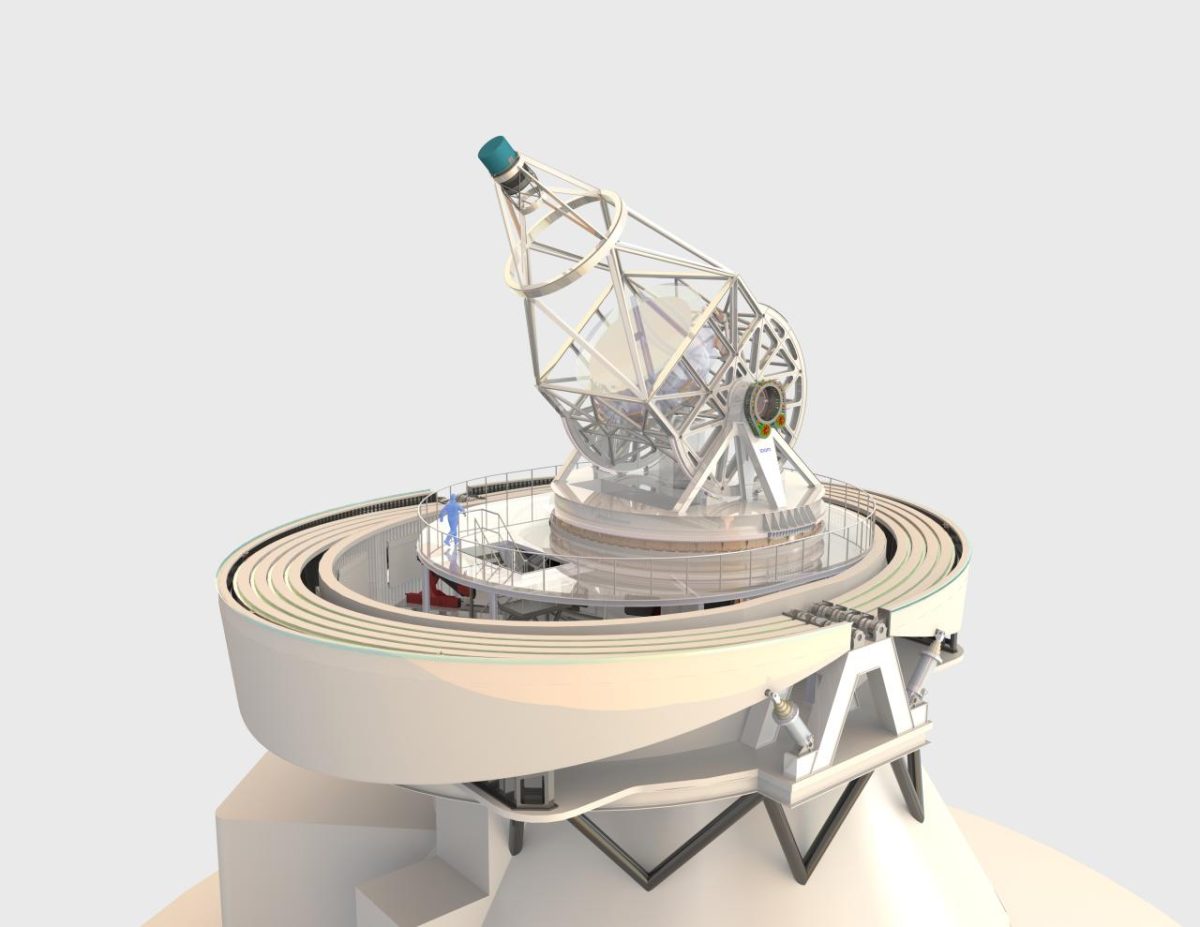
European Solar Telescope
The website of the Institute of Astrophysics of the Canary Islands reports that the European Strategy Forum on Research Infrastructures (ESFRI) has granted the European Solar Telescope project “Landmark” status. The decision was made during the organization’s 97th meeting, held on September 23–24.
At first glance, this event may seem like a bureaucratic formality of little interest to anyone. In reality, however, it could significantly accelerate fundraising for the project. The initiative comes from the Institute of Astrophysics of the Canary Islands itself, in collaboration with numerous other Spanish research institutions. Essentially, it is a Spanish project, but it could prove important for European science as a whole.
So far, however, progress has been extremely slow. The project has been included in ESFRI’s plans since 2016, yet the organization responsible for its development was established only in 2023. Design work has not even begun: the telescope still exists only as sketches. However, the “Landmark” designation is expected to get the project moving.
What the New Telescope Is Needed For
The European Solar Telescope is planned for construction on Roque de los Muchachos on the island of La Palma, which already hosts numerous astronomical instruments, some of which are to be combined into a giant interferometer. If the telescope is eventually built, it will be operated by the same Institute of Astrophysics of the Canary Islands.
The European Solar Telescope will help scientists observe the formation and movement of sunspots and the behavior of the Sun’s magnetic fields. These two phenomena are closely connected, but their relationship is highly complex. Scientists develop sophisticated models to explain it, yet they have still not fully determined what to expect from our star.
The reason the nearest star remains a much greater mystery to scientists than millions of others in the sky lies in its proximity to us. Other stars probably also experience flares associated with spots, but only the Sun is close enough for its flares to threaten our electronics.
