

The United States Federal Communications Commission (FCC) has granted approval to Reflect Orbital to proceed with testing its innovative Earendil-1 satellite. This spacecraft features a substantial mirror engineered to redirect sunlight towards the nighttime side of Earth. The primary objective of the startup is to continue of solar power plants after sunset and illuminate extensive regions up to 5 kilometers in width. By the year 2035, the company intends to deploy a constellation comprising 50,000 such orbital reflectors.
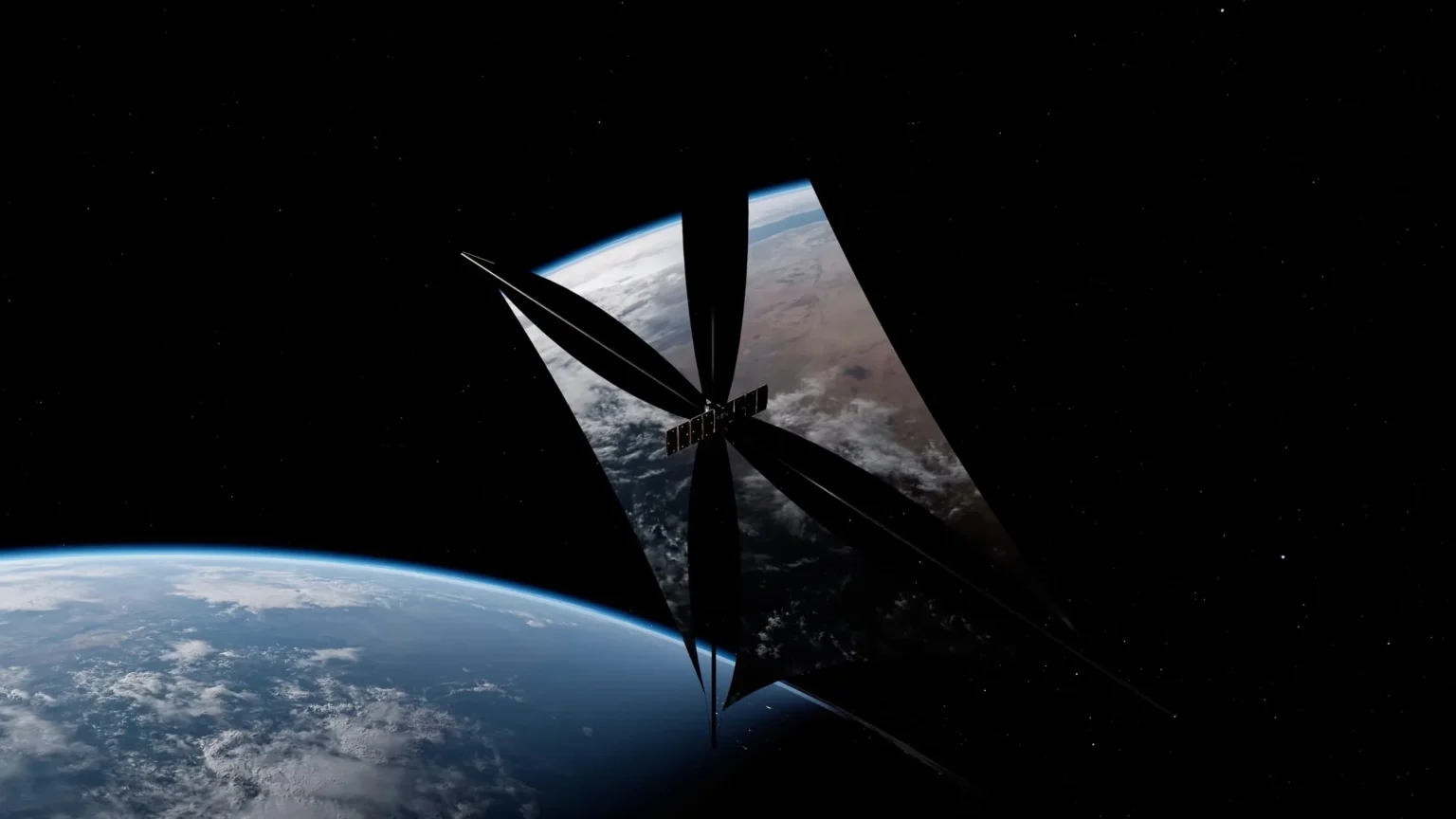
Notwithstanding the potential advantages for agriculture and emergency services, the initiative has elicited grave concerns within the community. The reflections from the mirrors, which are reoriented every four minutes, possess the capacity to blind drivers and airline pilots. Artificial illumination during nighttime poses a significant threat to the circadian rhythms of both humans and animals. Furthermore, the repercussions for astronomy are profoundly detrimental: highly sensitive telescope instrumentation faces the risk of becoming entirely inoperative due to light overload. The Federal Communications Commission (FCC) has explicitly dissociated itself from the environmental hazards, emphasizing that its jurisdiction is confined solely to the allocation of the radio frequency spectrum.
The Era of “Strange Space Things”
Current proposals for the commercial utilization of low Earth orbit (LEO) are becoming progressively more extravagant. The phrase “spectrum surplus for unconventional space activities” has already been documented in official Federal Communications Commission (FCC) documents. Presently, firms are presenting investors with opportunities ranging from space tourism and orbital advertising to extraterrestrial burials, as well as the establishment of AI-powered data centers directly in space.
SpaceX continues to be the dominant entity in the orbital domain, having launched approximately 11,000 Starlink satellites into orbit. As a result of this extensive presence, all other missions — including NASA’s Artemis I and Artemis II government initiatives — must coordinate their trajectories with the private company to prevent space collisions. Critics argue that this de facto occupation of space constitutes a violation of the 1967 Outer Space Treaty, which explicitly forbids national or corporate appropriation of outer space.
A million artificial intelligence satellites
The ambitions of the private sector continue to expand at a rapid pace. SpaceX has already filed an application with the US Federal Communications Commission (FCC) to create an orbital data center with a constellation of up to a million satellites for artificial intelligence computing. Separately, the company is requesting permission to deploy another 100,000 next-generation satellites for a communications system. The first project alone involves a number of devices that is approximately 40 times the total number of satellites launched by humanity in the entire space era. In parallel, several other companies have also filed large-scale applications for the creation of large satellite constellations and orbital data centers. This further exacerbates the issue of congestion in near-Earth space and the need for a thorough assessment of environmental risks.
U.S. Regulatory agencies in the United States are increasingly unable to manage the extensive volume of applications and conduct thorough analyses. The Federal Communications Commission (FCC), originally founded to oversee broadcasting, does not possess sufficient expertise to evaluate the physical safety of orbits. Additionally, the budget constraints faced by the U.S. Space Commerce Administration hinder its capacity to assume these responsibilities.
The clandestine environmental risks associated with ‘green” technologies
Engineering initiatives that entail the collection of solar energy in orbit and its subsequent transmission to Earth via highly directional microwave or laser beams pose significant concerns. These energy beams have the potential to locally modify the chemical composition of the atmosphere and pose a threat to avian life, in addition to necessitating the establishment of extensive no-fly zones for civilian aviation.
Most space startups present themselves as environmentally sustainable solutions; however, experts often regard this as the common practice of “greenwashing.” The manufacturing of launch vehicles, the frequency of launches, and the subsequent incineration of numerous decommissioned satellites within the dense atmospheric layers result in a significant environmental impact. Even advanced space debris removal technologies merely relocate the issue, as removed metal structures burn up in the atmosphere, releasing microparticles of aluminum oxide that contribute to ozone layer depletion. Low Earth orbit is a limited resource; therefore, the unregulated exploitation of space necessitates an immediate revision of engineering strategies—humanity must adopt more efficient approaches by utilizing fewer spacecraft.
We previously reported on the potential risk to astronomers of losing the starry sky.
Provided by The Conversation
