

NASA has released a unique image of the Moon’s far side featuring handwritten notes made by the Artemis II crew during their historic flyby. Colored markings on the photograph indicate where the astronauts spotted flashes of light from meteoroid impacts.
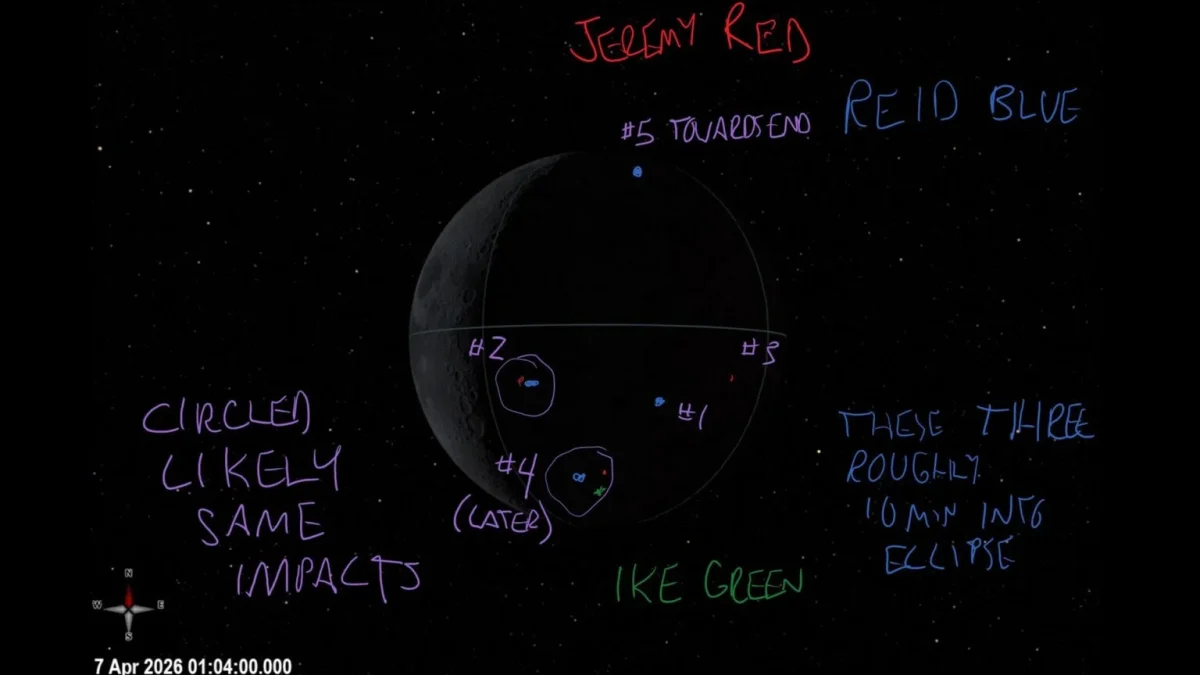
The image contains notes from three crew members: NASA astronauts Reid Wiseman, who used blue, and Victor “Ike” Glover, who used green, as well as Canadian Space Agency (CSA) astronaut Jeremy Hansen, who used red.
Watching for possible impact flashes was part of the mission’s science program, but the results surprised even the scientists. Aboard the Orion spacecraft, approximately 74,000 kilometers from the Moon, the astronauts spotted five extremely faint pinpoints of light. After ruling out other explanations, such as cosmic-ray effects or reflections from the spacecraft itself, scientists officially confirmed the observations.
The Physics of Microcraters
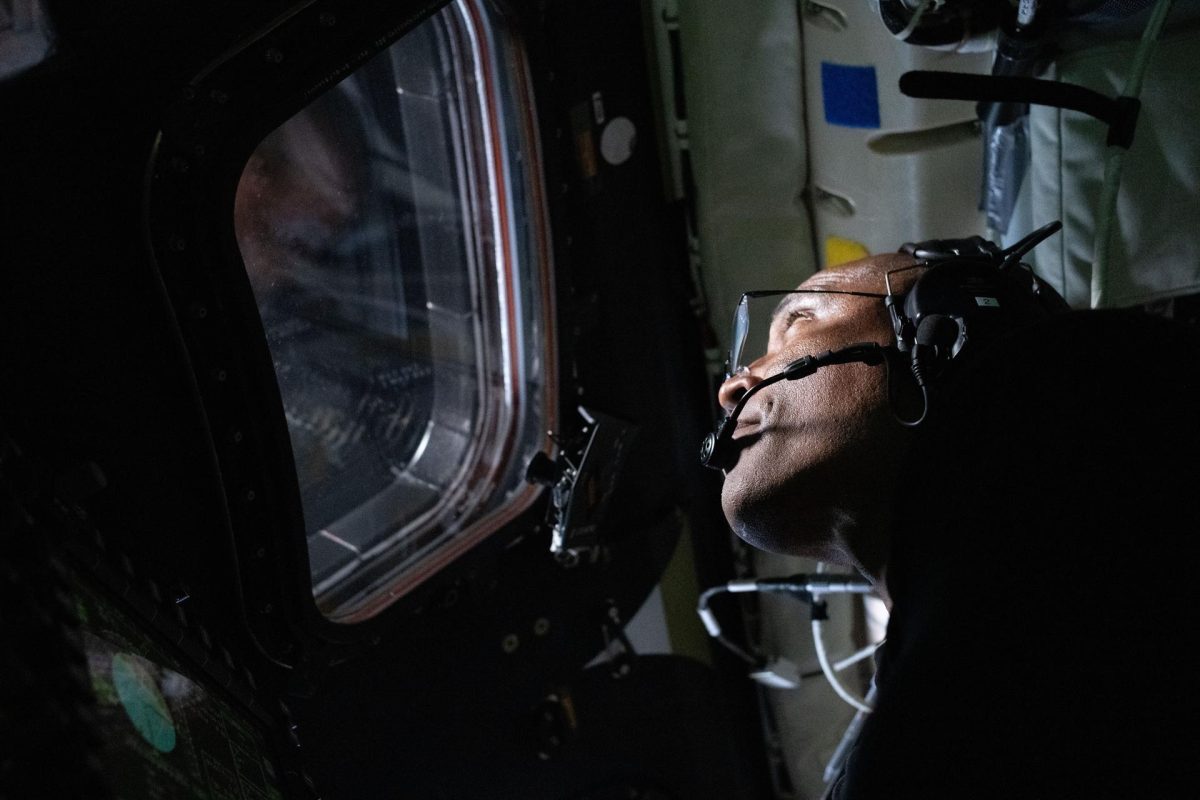
Although Apollo crews also witnessed similar flashes, the Artemis II team may have recorded the faintest ever observed with the naked eye.
Calculations indicate that the fragments striking the Moon were no more than a few centimeters across. With no atmosphere to burn them up or slow them down, they slammed into the lunar soil at thousands of kilometers per hour. The kinetic energy of each impact was instantly converted into a brief pulse of light.
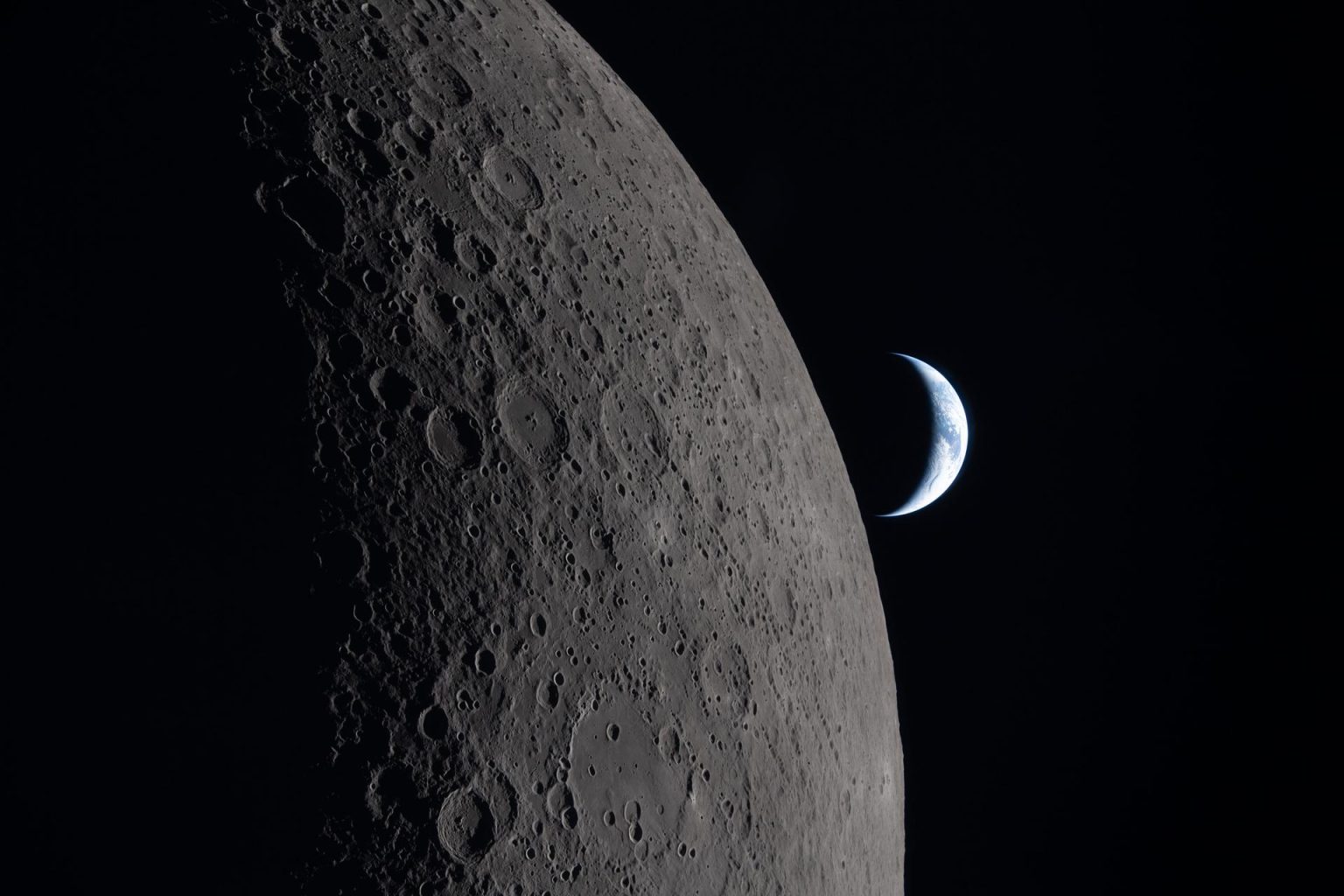
Detecting such faint flashes was possible thanks to a rare combination of circumstances: as Orion passed over the Moon’s far side, the Moon completely blocked the Sun, creating ideal darkness for almost an hour.
Keeping Future Lunar Bases Safe
The data collected by the crew have important practical implications for lunar exploration. Direct observations of the frequency and intensity of small meteoroid impacts help scientists assess risks to future long-term infrastructure, habitats, and astronauts on the surface more accurately.
NASA emphasizes that the crew’s ability to assess situations quickly, perceive changing colors and light, and hold real-time scientific discussions complements decades of automated and robotic exploration. The full dataset collected during the April mission is now available to the international scientific community.
We previously reported on how an amateur astronomer captured a meteorite impact on the Moon.
Based on material from petapixel.com.
