

At first glance, scientific data indicate that Mars is so exceptionally cold that its temperatures are difficult to comprehend. However, a closer examination reveals a more nuanced picture. Is Mars truly that cold?
The cold on Mars
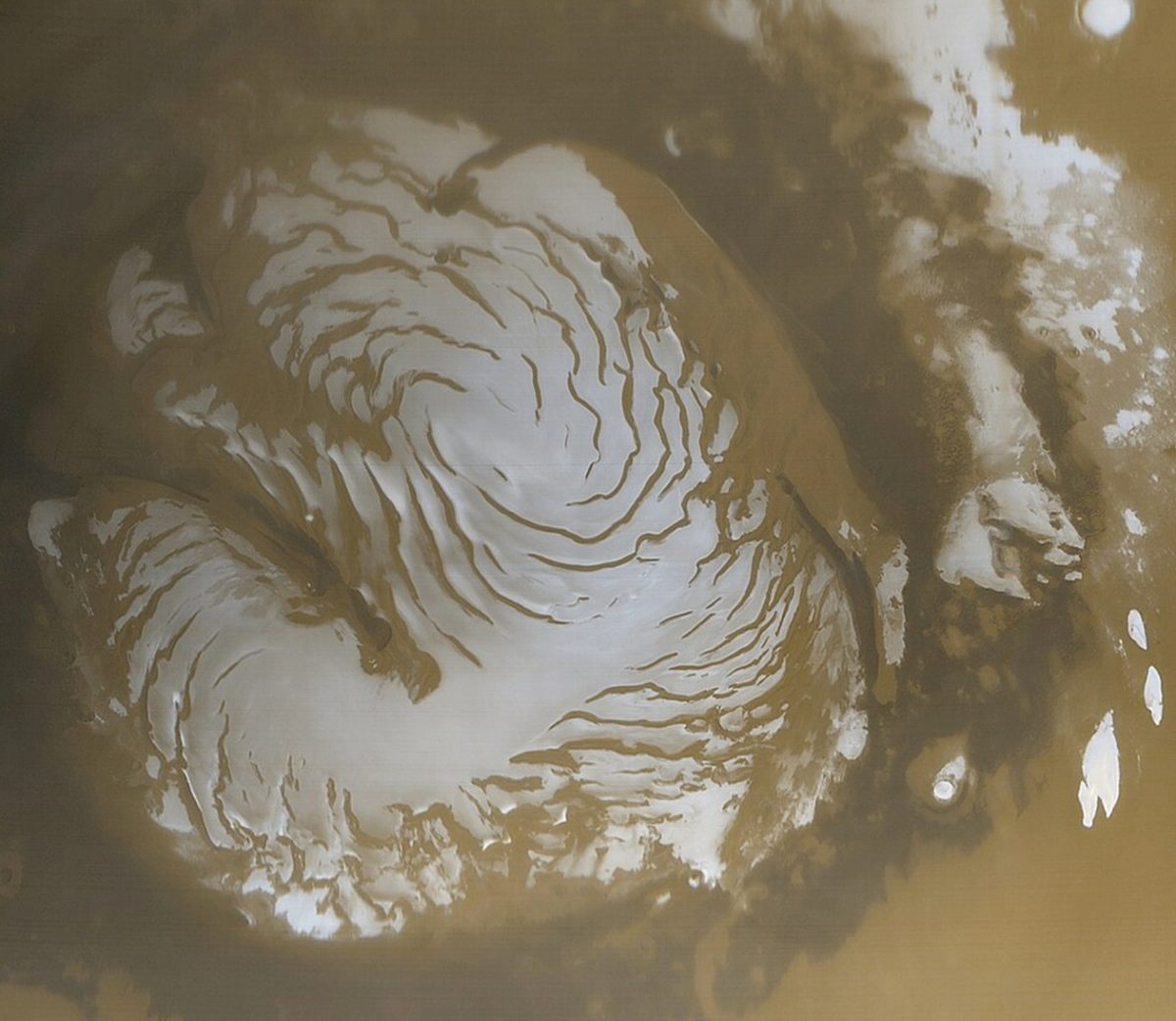
Mars is a planet on which humans have long sought evidence of life; however, conditions on its surface have proven extremely inhospitable. Its atmosphere is approximately 100 times thinner than Earth’s, resulting in elevated radiation levels. Liquid water is unstable on the surface, and no life has yet been detected there. Temperatures can also fall as low as −153 °C.
There are several reasons for this. First, the average distance between the Sun and Mars is 228 million km, approximately 1.52 times the distance between the Sun and Earth. Consequently, Mars receives approximately 2.3 times less energy than Earth, since the amount of energy received is inversely proportional to the square of the distance, rather than to the distance itself.
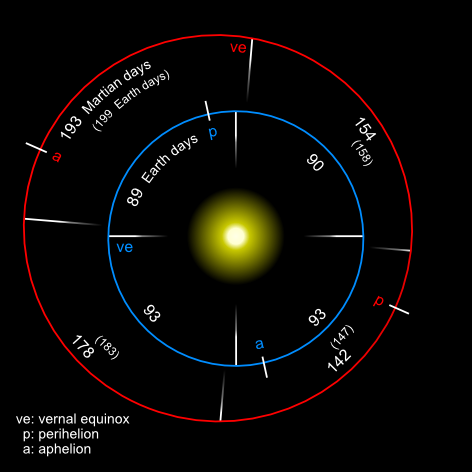
The second reason is that this planet’s orbit has a higher eccentricity than Earth’s. Earth’s aphelion (the point in its orbit farthest from the Sun) is 152.1 million km from the Sun, while its perihelion (the point closest to the Sun) is 147.1 million km. For Mars, these distances are 249.2 million km and 206.5 million km, respectively, indicating that its orbit is more elongated.
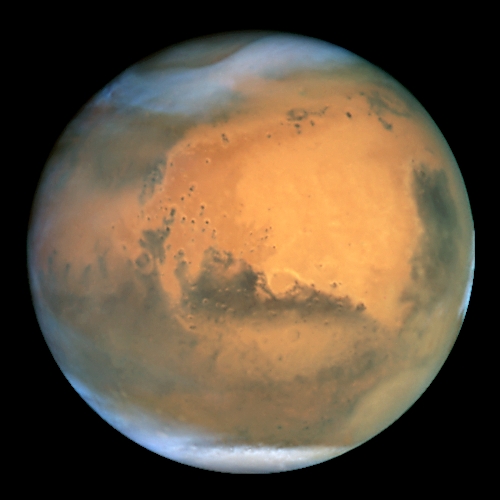
At the same time, in accordance with the laws of celestial mechanics, Mars moves most slowly near its aphelion. Consequently, the period during which it receives the least energy of the year is disproportionately longer than the period during which it receives the most sunlight.
Moreover, according to Kepler’s third law, a planet’s orbital period is proportional to the semi-major axis of its orbit. A Martian year therefore lasts 687 Earth days, or 668 sols (the number of times the planet rotates on its axis). In other words, as Mars passes through the portion of its orbit farthest from the Sun, it could experience severe freezing if it had an atmosphere and hydrosphere similar to Earth’s.
However, neither of these is present there, which is the third reason for the extreme cold. Mars’s thin atmosphere retains virtually no heat; consequently, the day–night cycle causes its surface to cool far more significantly than the deserts on Earth. Near aphelion, temperatures can therefore range from −80°C to −125°C, even at the equator.
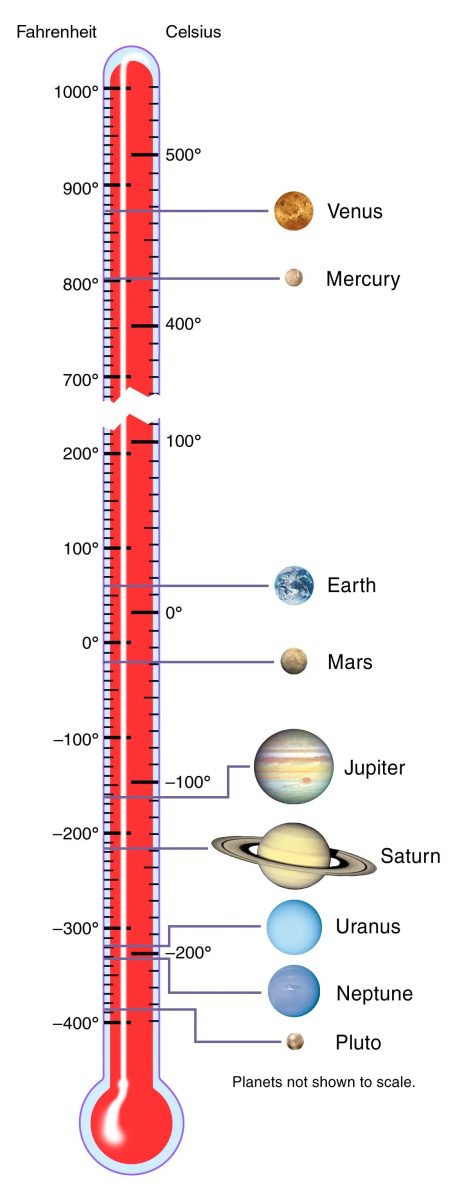
The absence of a hydrosphere further amplifies the substantial elevation range: 29.75 km on Mars, compared with just under 9 km on Earth, measured from the ocean surface to the summit of Mount Everest. This constitutes the fourth significant factor.
Fifth, the absence of tectonic activity: On Earth, internal heat makes a small but still noticeable contribution to the planet’s overall heat balance. On Mars, however, this contribution is virtually nonexistent.
Seasons on Mars
Despite the foregoing, Mars is not as exceptionally cold as might be expected. In fact, −153 °C is the lowest temperature ever recorded on the planet, above the polar cap. On Earth, the corresponding figure is −89.2 °C.
This appears to be a substantial difference. However, these temperatures are observed specifically over the polar ice caps during winter. The highest temperature ever recorded on Mars is 35 °C, which is comparable to a hot day in Europe.
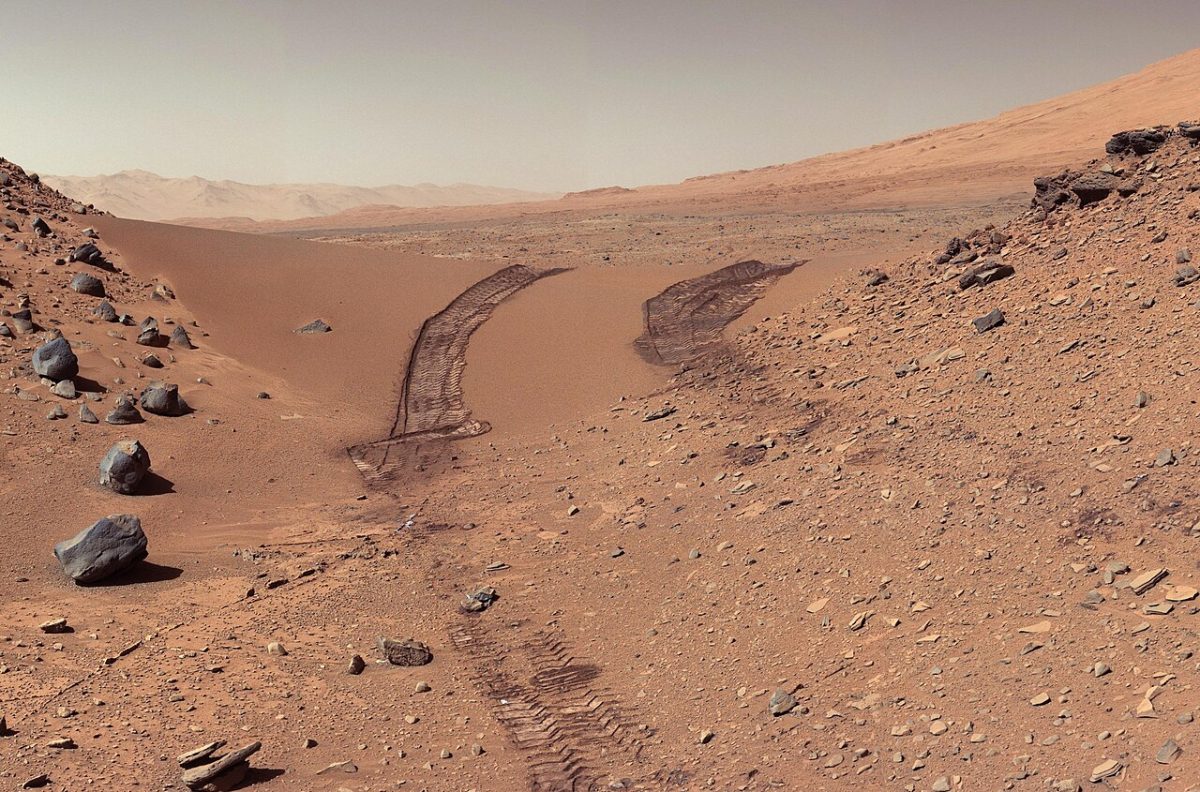
In general, it should be noted that the high eccentricity of the orbit is responsible only for part of the temperature variations on Mars. The inclination of the planet’s axis of rotation relative to the perpendicular to the orbital plane has a much greater influence on temperature. On Mars, this inclination is approximately the same as on Earth — 25°.
Therefore, there are four distinct seasons on Mars. In the northern hemisphere, spring lasts 194 sols, summer 178, fall 142, and winter 154 sols. In the southern hemisphere, the seasons occur in the opposite order, but their durations remain the same.
As is readily apparent, the planet’s eccentricity alone causes late spring, summer, and early fall in the Northern Hemisphere to be relatively longer and cooler, while these seasons in the Southern Hemisphere are shorter and hotter.
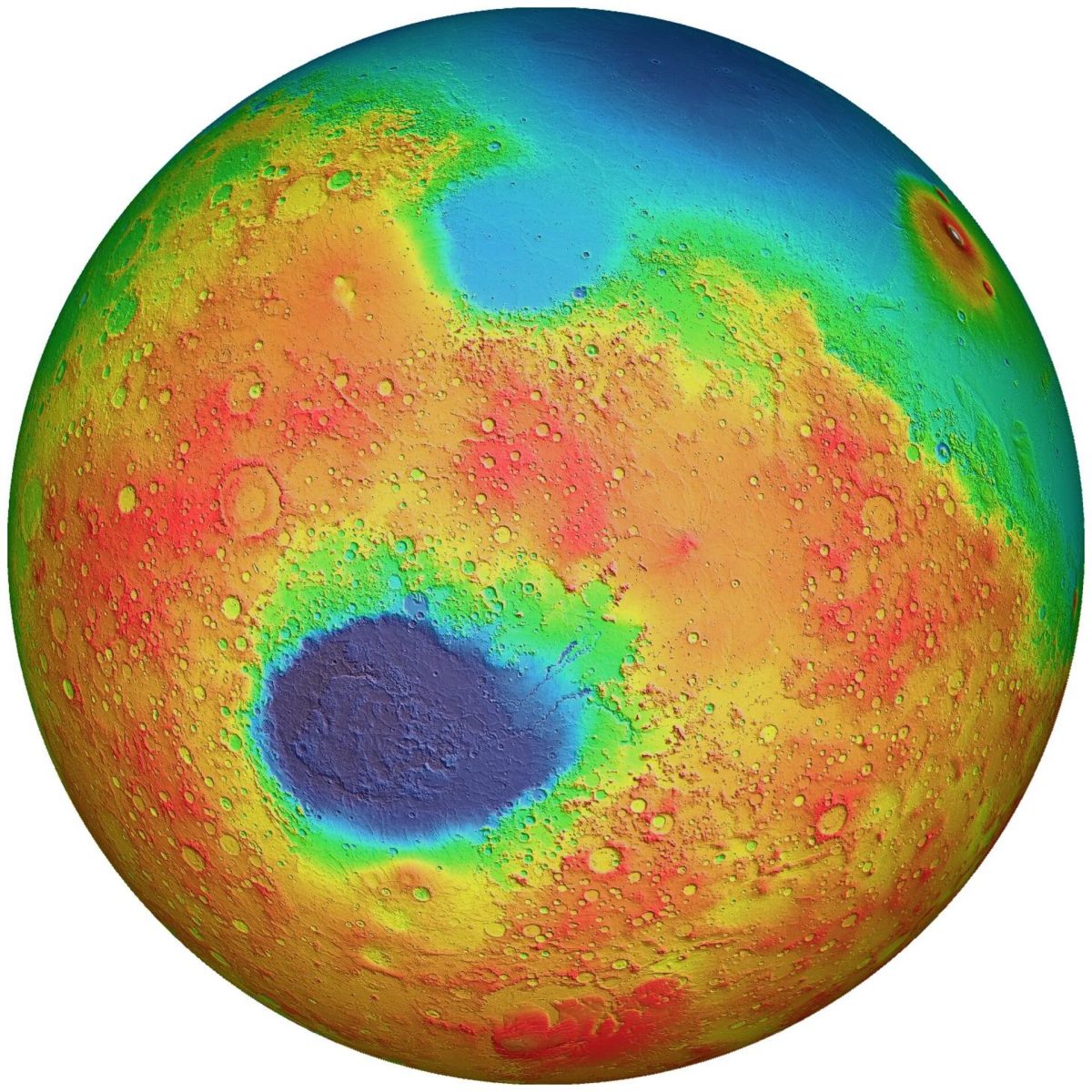
Additionally, the hemispheres of Mars differ substantially in topography, which influences the planet’s climate. Although Mars has a very thin atmosphere, it is considerably denser over the lowlands than over the highlands. This greater density increases the atmosphere’s thermal inertia, bringing it closer to that of Earth’s atmosphere and enhancing heat retention.
An intriguing phenomenon has been observed: the lowlands on Mars warm considerably more slowly than the mountainous regions, yet they cool relatively quickly. Most of the planet’s northern hemisphere consists primarily of a vast polar basin, with an ice cap at its center. Although this hemisphere also features narrow canyons and enormous volcanoes, it is considerably colder overall.
In contrast, the Southern Hemisphere consists primarily of flat plateaus and moderately elevated ridges. It contains only two large impact basins: Hellas Planitia and Argyre Planitia. Their surfaces lie several kilometers below the surrounding plains and, with the arrival of spring, remain pockets of intense cold.
Where is the warmest place on Mars?
As a result of this arrangement, an interesting effect is observed across many regions of Mars, particularly in the near-equatorial zone. During the lengthy equatorial year, temperatures initially reach a single peak in late autumn, followed by a cold winter. Warmth returns in spring, but only briefly, as summer in the Northern Hemisphere is long and cold, and aphelion occurs at the beginning of spring. Temperature variations in the northern and southern regions are more typical, although they are influenced by the terrain.
The highest temperature recorded on Mars was measured at the Spirit rover’s landing site in Gusev Crater. This region lies at the boundary between Elysium Planitia and the volcanic region known as Terra Cimmeria; therefore, it is unsurprising that the air above the surface reaches its highest temperatures there.
Another region of Mars where consistently high temperatures are recorded is the area known as the “Eye of the Night,” or the Sun’s Plain. This highland lies near the planet’s equator and was familiar to astronomers even before space probes began exploring Mars. This small, dark feature is particularly striking.
Its coloration results from dark rocks, which absorb substantial solar heat and raise the temperature of the air layer near the surface to 15–22 °C. In fact, during summer, most of the southern hemisphere — excluding the polar cap, Hellas Planitia, and Argyre Planitia — reaches temperatures above 0 °C.
However, two important points require clarification. First, only the layer of air extending to a height of several tens of centimeters warms to this extent; at higher altitudes, the air remains significantly colder. Second, as the sun sets, the temperature drops rapidly to –70 or even –80 °C.
Was Mars warmer in the past?
Overall, Mars’s environmental conditions are highly similar to those of dry Antarctica. A person wearing appropriate thermal clothing could endure these conditions for a limited period, provided the atmosphere were breathable.
At the same time, it is entirely possible that Mars’s climate was considerably more hospitable in the past than it is today. This period was not billions of years ago, when the planet had only recently formed. Studies indicate that Mars’s axial tilt relative to the perpendicular to its orbital plane may have varied between 10° and 50°. Scientists estimate that, between 1 million and 400,000 years ago, Mars’s axial tilt was approximately 45°. Consequently, the polar caps received substantially more sunlight and melted more rapidly during the summer. This caused the atmosphere to become denser, thereby intensifying the greenhouse effect.
Clouds remain present on Mars today. Rain and snow occasionally fall from them; however, precipitation typically evaporates before reaching the surface. Snow cover persists for several months in only a few locations.
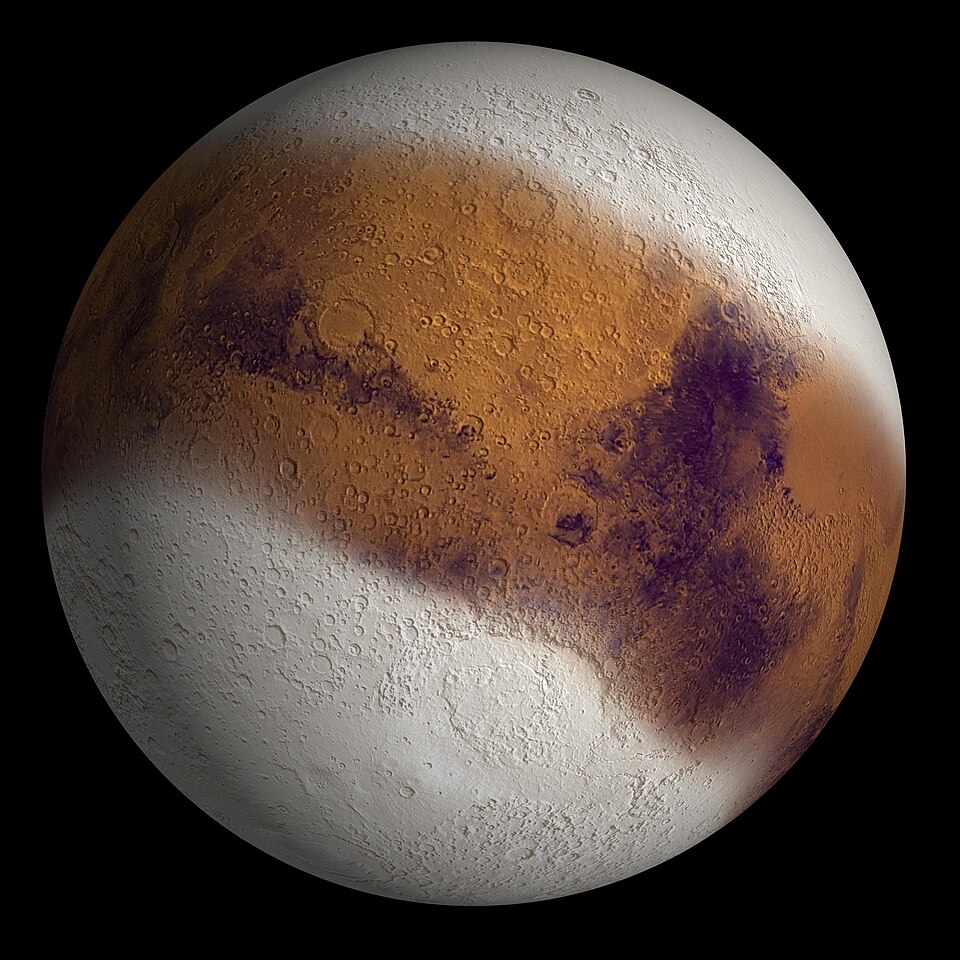
During periods of greater axial tilt, these processes occurred more intensely, and snow covered a broader area. Mars was consequently more white than red. Although extensive snowfall on Earth is associated with colder conditions, active snow transport on Mars would have moderated daily temperature fluctuations. These fluctuations would have been smaller, and the planet as a whole would have been slightly warmer.
Would it be possible to make Mars warmer in the future?
For several decades, science fiction writers and scientists have discussed terraforming, a hypothetical process that would make the climate of another planet more suitable for human life.
A wide range of methods have been proposed to achieve this, including the production of greenhouse gases, the release of icy asteroids and comets onto the surface, the planting of vegetation, and the introduction of microorganisms. The game Plan B: Terraform provides an example of what this process might entail.

Most plausible terraforming projects focus on Mars. This is unsurprising: among the celestial bodies that have been studied extensively, Mars most closely resembles Earth. Moreover, only the Moon, Venus, and Mercury are closer to us than Mars is.
Mars’s own history suggests potential ways to make its climate more hospitable to humans. For example, we could attempt to alter the tilt of its rotational axis by causing Mars to collide with a large celestial body or by triggering a powerful explosion. However, this approach appears to substantially exceed our current energy capabilities; such a project would likely take several centuries to complete.
A more effective approach would be to use icy bodies orbiting in the outer regions of the Solar System to deliver additional heat and water to the planet through collisions. After all, the greater the amount of water on the planet — even if it is frozen — the more water vapor will be present in the atmosphere. Water vapor is, in fact, one of the most potent greenhouse gases. In addition, factories could be constructed to produce substances such as carbon dioxide by extracting it from rock formations.
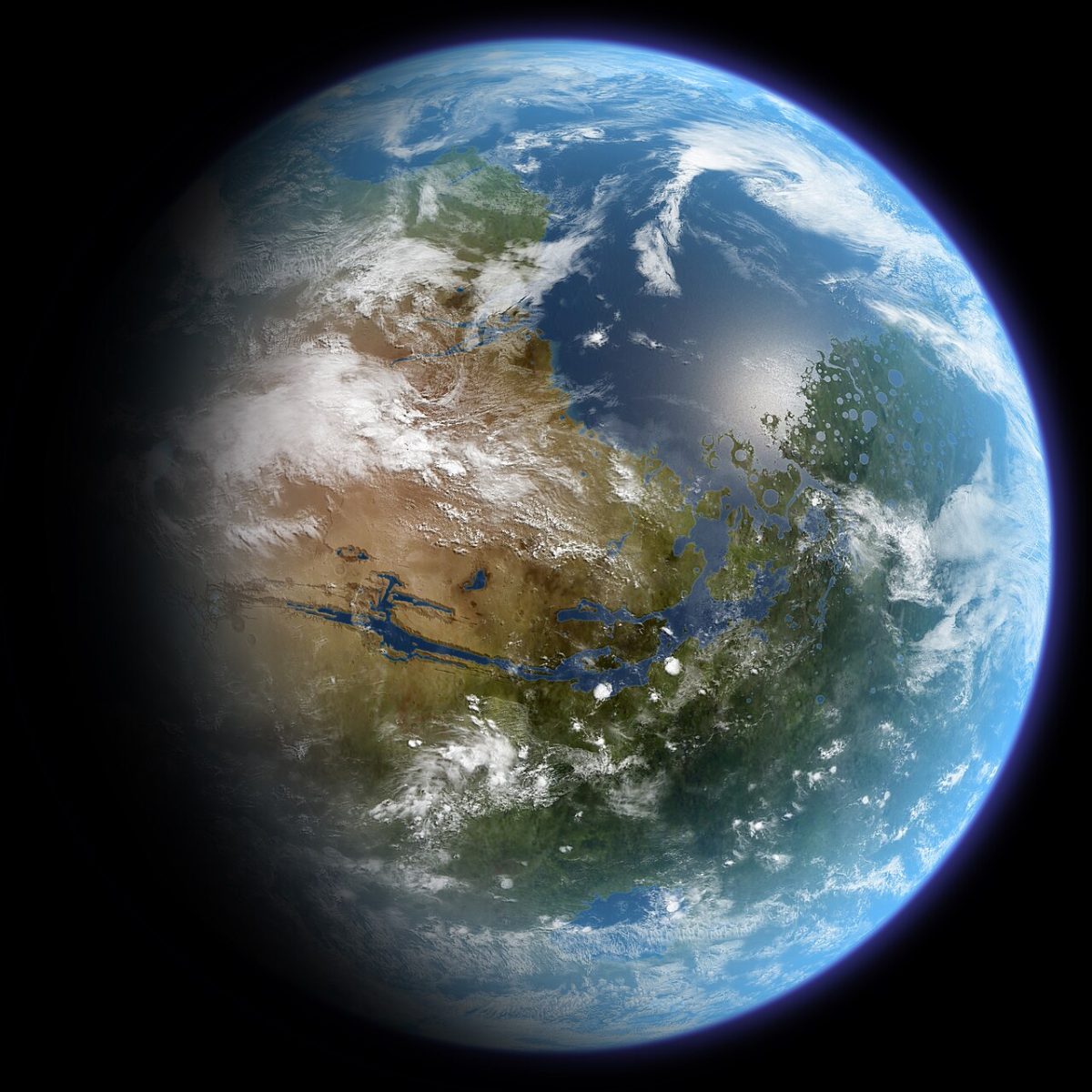
In fact, for Mars to transition from an uninhabitable state to a habitable one — albeit an unpleasant one — the temperature would not need to increase substantially. As the atmosphere becomes denser, daily temperature fluctuations would diminish. Over time, conditions could become suitable for the survival of certain plants. These plants would not only enrich the atmosphere with oxygen but also increase heat absorption, as the dark leaves or branches of conifers absorb more heat than the sand does at present.
In many respects, Mars lacks a dense, oxygen-rich atmosphere capable of effectively retaining water vapor. If such an atmosphere were to form, conditions on the planet could become suitable for human habitation.
