

The two-week hope of recovering Starship’s upper stage appears to be fading. For the first time in the history of the program’s testing, the giant Ship splashed down and remained intact long enough to be towed toward shore. However, changing weather conditions in the Indian Ocean disrupted the plans. The vehicle will most likely be lost, although SpaceX engineers have already obtained unprecedentedly detailed images of critical areas of the heat shield and engines.
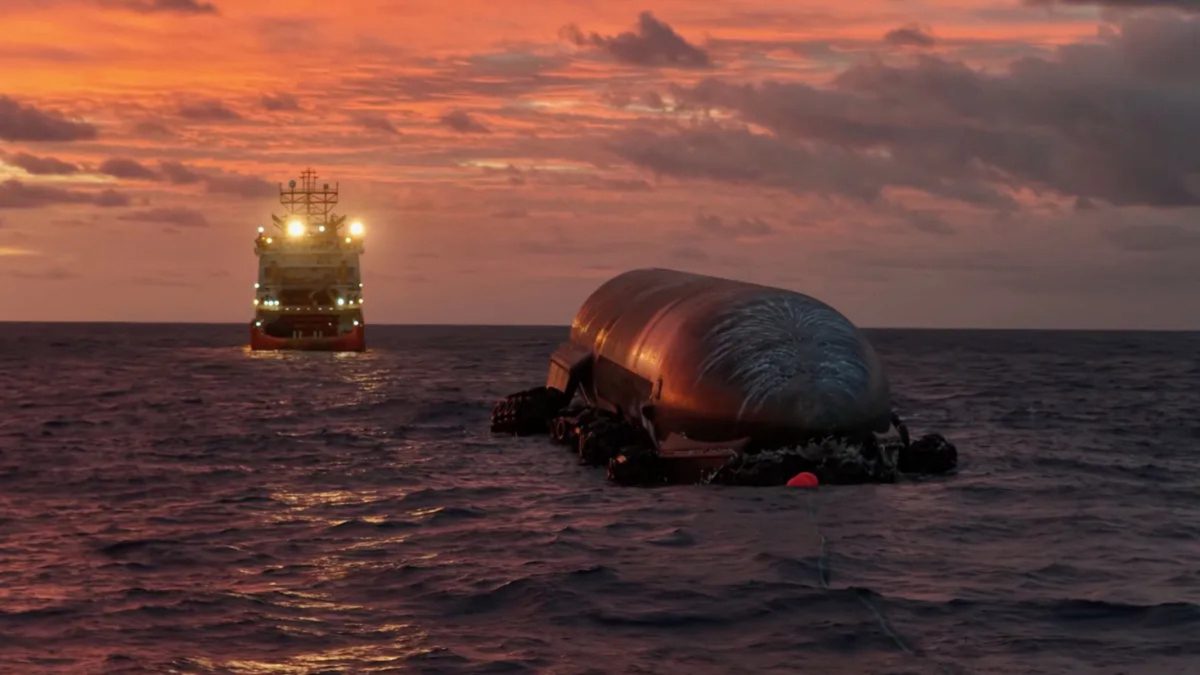
Two Weeks Afloat
The thirteenth test flight of the Starship system took place on July 24, 2026, from the Starbase launch site in Texas. After completing its flight, the 52-meter-tall Ship upper stage made a soft splashdown in the Indian Ocean off the coast of Western Australia. Unlike previous flights, Ship 13 did not break apart upon hitting the water. It remained intact for two weeks, while the SpaceX team spent that time attempting to tow it to port.
According to the company’s post on X, the recovery operation faced increasingly difficult weather conditions and stronger waves. SpaceX founder and CEO Elon Musk acknowledged on August 7 that the recovery effort was “not looking very good.” Despite the disappointing outlook, company specialists managed to accomplish something they had never done before: obtain close-up photographs of critical areas of the heat shield and engines.
The Heat Shield Is No Longer the Main Problem
Thermal protection has been one of the biggest challenges in recovering the stage. It determines whether Ship can survive atmospheric reentry at a speed of about 27,000 km/h without being destroyed. Without such protection, rapid reusability is impossible.
Each stage must fly not once every few months, but several times a day if the cost per kilogram delivered to orbit is to fall to levels comparable with air transportation. During SpaceX’s first-ever quarterly earnings report on August 4, Elon Musk said he considered the heat-shield problem solved. According to him, images from the 13th flight will allow engineers to refine vulnerable areas around the engines and thermal protection system for future upgrades.
Starlink V3 as the Payload
The thirteenth flight followed a profile similar to previous missions and ended with splashdowns of both stages, although there was one major difference. For the first time in space, Ship deployed 20 operational Starlink V3 satellites, a larger and more powerful version of the company’s broadband spacecraft.
All of them later deorbited and burned up in the atmosphere on the same day, but the mission demonstrated what lies ahead. SpaceX plans to build a constellation of about 100,000 such satellites and intends to launch them using Starship.
The location of the 52-meter stage can be tracked through publicly available maritime tracking data. Whether it can ultimately be brought into port should become clear in the coming days.
