

In September 2026, the U.S. Space Force brought the history of one of the longest-running and most important orbital programs of the Cold War era to a close. The last two operational satellites in the legendary Defense Support Program (DSP) constellation were moved into a higher orbit, after which their final decommissioning process began.
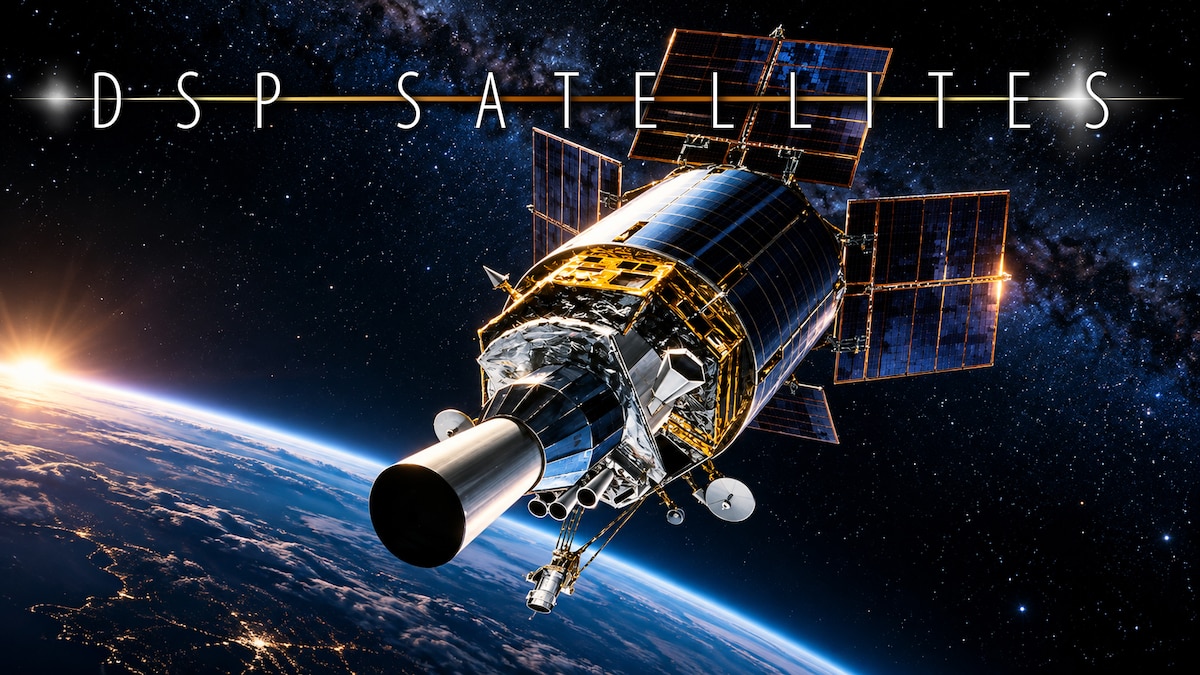
Launched in late 1970, the program remained a crucial component of America’s early warning system for more than half a century. During that time, its spacecraft not only helped deter nuclear attacks but also supported military forces in regional conflicts and even detected major natural disasters on Earth.
Tireless “Eyes” in Geostationary Orbit
DSP satellites operated in geostationary orbit at an altitude of 35,888 kilometers. Their primary task was to continuously monitor our planet’s surface using highly sensitive infrared sensors. These sensors detected the intense heat emitted by ballistic missile engines during launch.
To ensure comprehensive coverage, each spacecraft rotated continuously, scanning Earth’s surface approximately six times per minute. When development began, infrared surveillance technologies were still in their infancy, but the DSP program helped turn them into a reliable and highly precise line of defense.
From Nuclear Deterrence to Natural Disasters
The U.S. military initially developed DSP as a direct response to the growing threat posed by Soviet intercontinental ballistic missiles. However, after the Cold War ended, the range of applications for these unique spacecraft expanded considerably.
During Operation Desert Storm in 1990–1991, DSP satellites demonstrated their effectiveness in conventional warfare by promptly detecting launches of Iraqi Scud tactical missiles. Civilian and scientific agencies also repeatedly used the satellites’ sensitive infrared sensors to detect natural disasters early, including volcanic eruptions and large wildfires.
Evolution and a New Generation
Between 1971 and 2007, the U.S. Air Force placed a total of 23 satellites from this series into orbit. With each new launch, engineers significantly improved their capabilities. While the first spacecraft weighed approximately 907 kilograms, carried 2,000 infrared detectors, and was designed to operate for just one year, the latest versions weighed 2,381 kilograms, had 6,000 sensors, and remained in active service for more than 12 years.
Over time, however, even extensively upgraded DSP technology gave way to more advanced solutions. These veteran spacecraft were replaced by a new generation of Space Based Infrared System (SBIRS) satellites, whose launches began in 2011. The constellation will soon be joined by Next-Generation Overhead Persistent Infrared (Next-Gen OPIR) spacecraft.
According to U.S. Space Force representatives, retiring the final DSP satellites marks the end of an era. This constellation provided deterrence during periods of geopolitical confrontation and protected military personnel for decades.
We previously reported on how the United States acknowledged having its own weapons in orbit for the first time.
Based on material from Space Force.
