

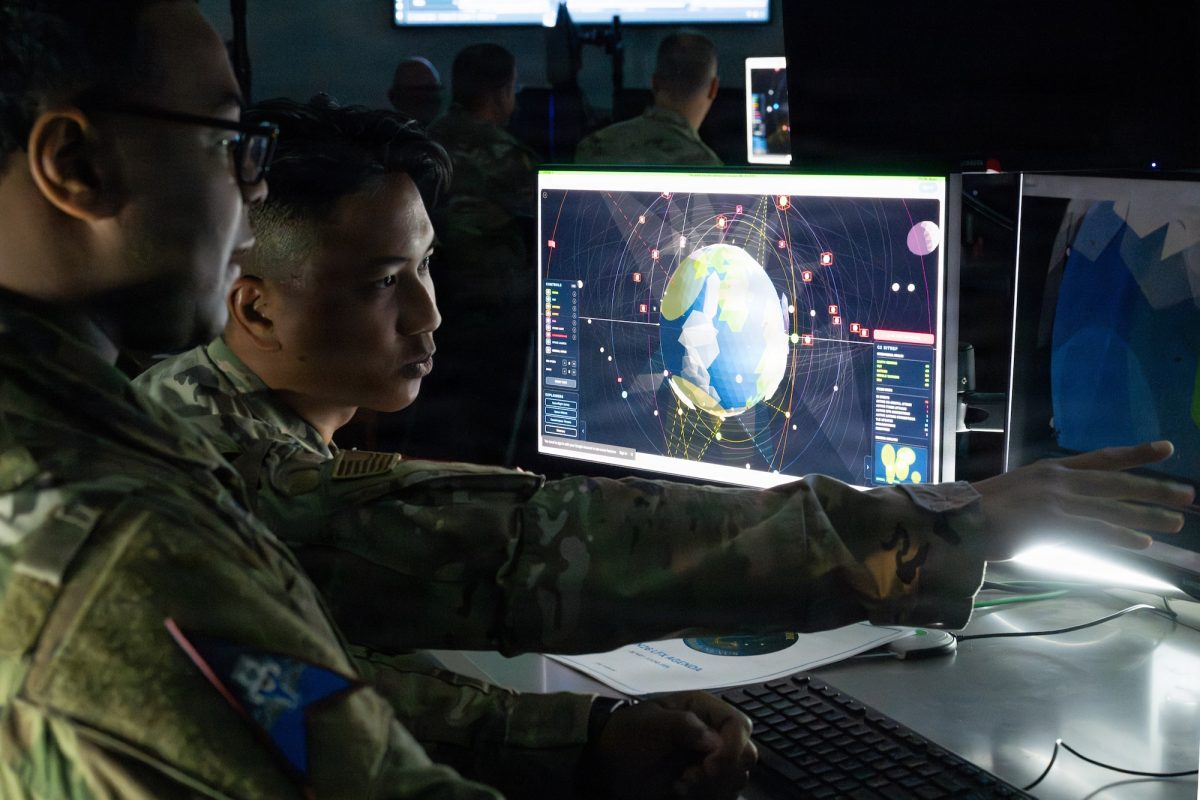
For the first time in its history, the Pentagon has openly acknowledged the presence of combat systems in space. U.S. Air Force Secretary Troy Meink made the statement at the annual Air, Space & Cyber Conference of the Air & Space Forces Association outside Washington. He did not disclose details, arguing that specifics would undermine deterrence. It is not even known when these systems were deployed in space.
A Statement Without Details
Troy Meink chose his wording carefully. In his prepared remarks, he said that “the United States now has space-control capabilities on orbit capable of defending the joint force against hostile adversary actions.” He did not specify the type of equipment or when it was deployed.

At a press conference, Meink explained the lack of detail in terms of deterrence. Discussing technical characteristics, he said, would undermine the effect. As Ars Technica reports, officials even discussed internally how such statements should be worded.
Actions by Russia and China
Public attention in the United States to orbital weapons intensified as early as 2020, when the U.S. military pointed to a Russian test of a spacecraft resembling an anti-satellite weapon. In 2024, the Biden administration accused Russia of deploying operational systems of this type.
That same year, former House Intelligence Committee Chairman Mike Turner disclosed a U.S. government assessment that Russia could place a nuclear device in space. A detonation in low Earth orbit could disable thousands of satellites, including Starlink spacecraft, U.S. intelligence assets, and the International Space Station.
Chinese satellites regularly approach U.S. military targets, most likely for observation. The United States conducts similar maneuvers near Chinese and Russian spacecraft. Analysts at the Center for Strategic and International Studies noted in their 2025 Space Threat Assessment that the maneuverability of Chinese satellites was already sufficient to support a full range of counterspace capabilities.
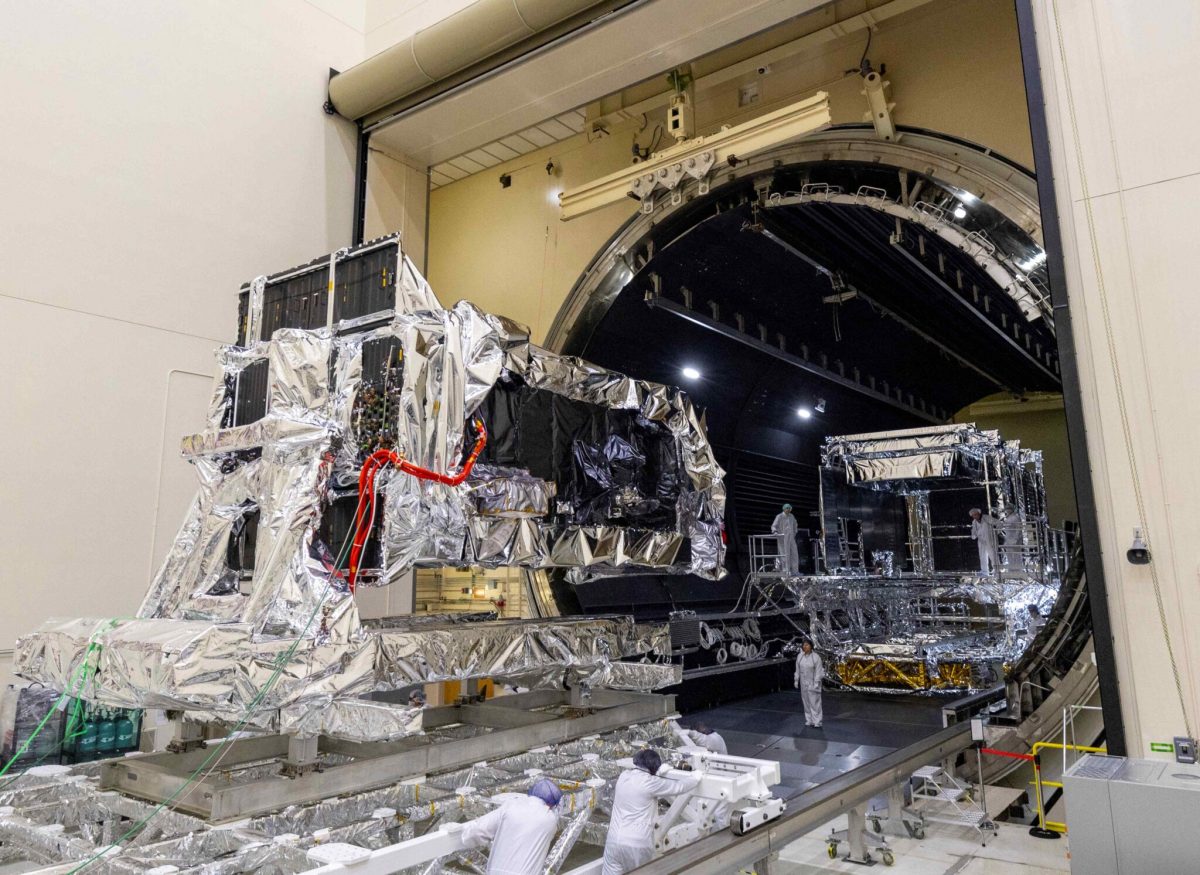
The stakes in this field are illustrated by the cost of the hardware that must be protected. The first Next-Generation Overhead Persistent Infrared missile-warning satellite cost more than $4 billion and became the most expensive spacecraft acquired by the U.S. Space Force since its creation in 2019.
Likely Nature of the Systems
Categories of space weapons in U.S. military doctrine include directed-energy systems such as lasers, radio-frequency jammers, and kinetic systems that physically destroy targets. They can be deployed either on the ground or in orbit. General Chance Saltzman said last year that other countries were developing all six categories, while the United States at that time was not working on every one of them.
The first officially confirmed weapon system shown by the Space Force came in June, when it announced that the mobile ground-based Meadowlands jammer had entered service. Victoria Samson of the Secure World Foundation suggests that the systems in orbit may also be jammers, since similar capabilities have been attributed to China and Russia. A kinetic strike in space would create a debris cloud dangerous to U.S. satellites as well, so the United States has consistently favored systems that do not generate debris.

Clayton Swope, deputy director of the Aerospace Security Project at the Center for Strategic and International Studies, notes that non-kinetic weapons are almost indistinguishable in hardware terms from ordinary orbital equipment. Any radio transmitter can function as a jammer, while an inter-satellite optical link can potentially be used to blind sensors.
Experts Express Doubts
Clayton Swope considers the statement too vague to have a meaningful deterrent effect. Deterrence depends not simply on the existence of a weapon, but on an understanding of how and when it might be used, while Meink’s comments reveal neither the systems’ intended purpose nor their destructive capability.
Victoria Samson adds that after the official acknowledgment, China and Russia may similarly announce their own orbital systems, after which the United States could cite those declarations as evidence that its own deployment was justified. This creates a closed loop of mutual justification in which each new statement becomes an argument for the next one.
Satellite communications and commercial orbital imagery have long become everyday tools for the Ukrainian military. Orbital jammers would target exactly these channels. The greatest risk falls on the side whose intelligence and command systems depend on foreign satellite infrastructure. China and Russia have not yet officially responded to the statement.