

Silicon-based solar panels produce significantly less electrical energy per unit area than those based on other semiconductors. However, as a recent study shows, under conditions of mass satellite launches they may turn out to be considerably more economically advantageous. At the same time, a number of unresolved problems remain in this field.
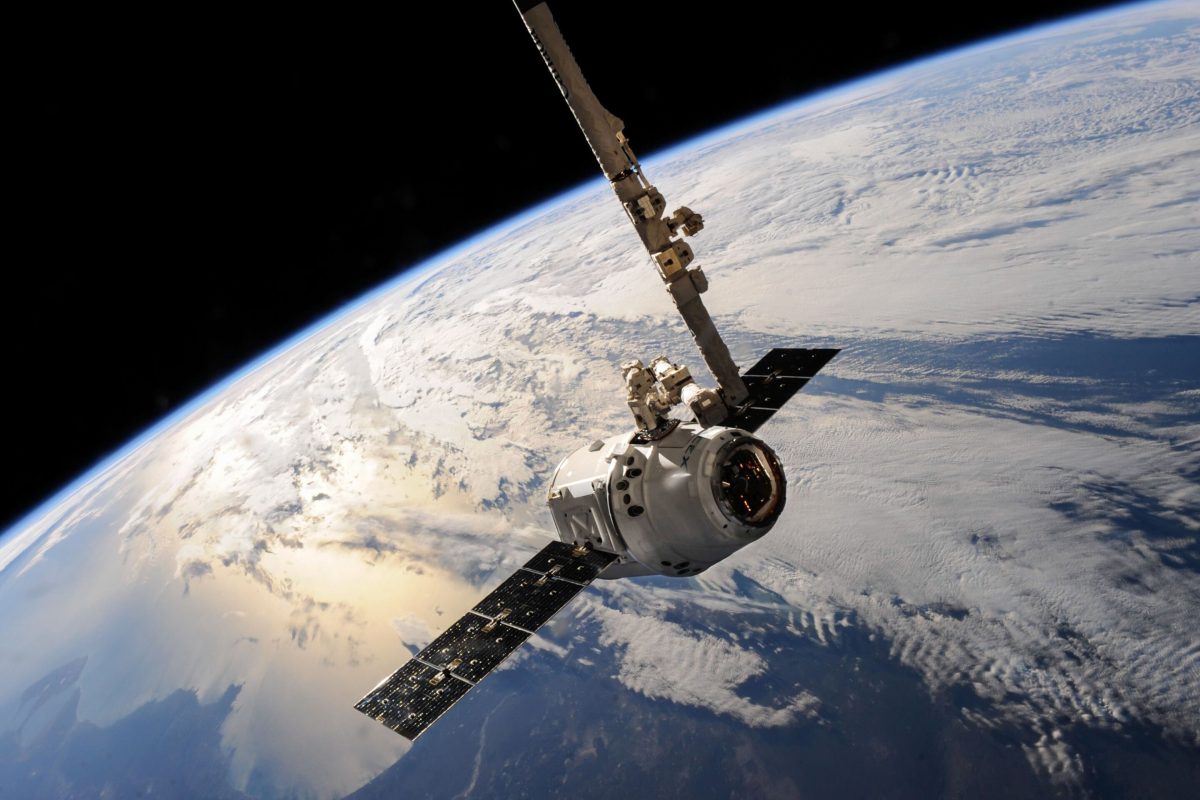
Silicon Solar Panels
As phys.org reports, a team of researchers from the University of Surrey published a study in Acta Astronautica devoted to the economic feasibility of using silicon-based solar panels for spacecraft. The scientists concluded that the use of this type of device could reduce satellite operating costs by 90%.
In general, silicon-based solar panels have already been used in space. This is the simplest type of such device, so from 1956 to 1977 they dominated spacecraft applications. However, much more efficient devices based on gallium, germanium, or indium were later developed, and since then these have been used predominantly in space.
At present, the efficiency of the most effective silicon panels remains at 27.8%, while perovskite-silicon panels reach 34.85%. This is much lower than that of more advanced technologies. However, the difference in price is also enormous. For germanium-based panels, the cost is $450 per 1 watt of output power, while for silicon-based panels it is $0.275, $0.285, and $0.39, depending on the specific type.
Unresolved Problems
The research team decided to model how much more economical small-class satellites — for example, those consisting of three CubeSat modules — would be if silicon solar panels were used instead of gallium arsenide panels. Their calculations showed savings of 85–90%.
Of course, the panels themselves would have to be larger, which would increase launch costs. However, they would still remain relatively small because the spacecraft themselves require very little power, so the low price of the devices would outweigh the additional expense.
The point is that silicon semiconductors themselves are so inexpensive that even the protective glass covering them costs more. Therefore, the developers propose making this glass thinner, which would additionally reduce the spacecraft’s weight. The relatively low power output is also not such a major problem.
The durability of silicon panels is another matter. It is 2.6 times lower than that of more advanced alternatives, and this is a real problem. The effect of ultraviolet radiation on them is particularly poorly studied. However, considering that satellite operational lifetimes are becoming shorter while their numbers are increasing, this may not be such a serious problem after all.
