

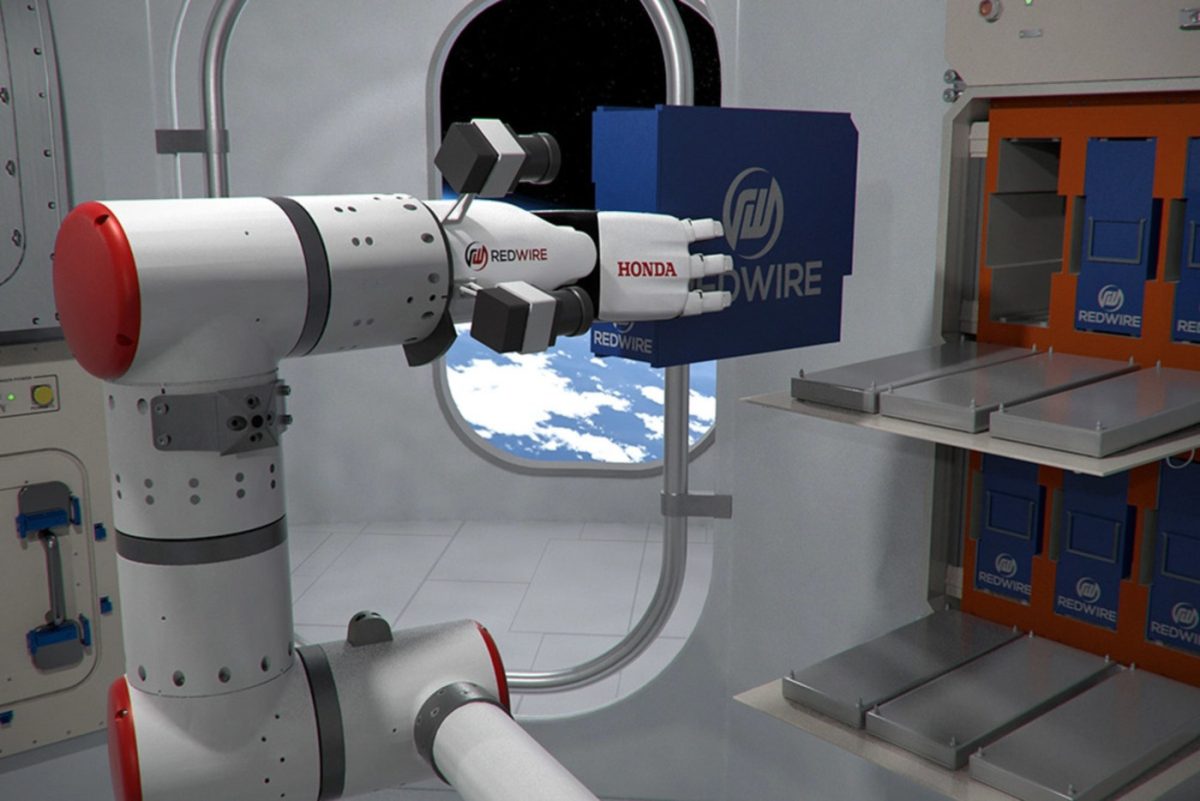
An automated lab assistant could appear aboard future commercial space stations. Japanese manufacturer Honda and U.S. company Redwire are developing a robotic system to perform routine tasks during scientific experiments in weightlessness. This would allow crews to devote more time to the science itself.
The Most Expensive Resource in Orbit
Every minute of astronauts’ time aboard the International Space Station is scheduled in advance. Some of that time goes toward simple tasks such as scanning barcodes during inventory checks or replacing trays of biological samples. Highly qualified specialists have to do this work because there is no one else aboard to handle it, as Universe Today notes.
The ISS is also approaching the end of its operational life. NASA plans to deorbit the station, which is roughly the size of a football field, around 2030. Its remains will be directed toward the most remote region of the Pacific Ocean.
Private stations developed by Axiom Space and Vast, along with the Orbital Reef project, are intended to replace the ISS. At least initially, they will be much smaller, with crews of two or four, and will operate without anyone aboard for extended periods. To keep microgravity experiments running uninterrupted, operators will have to rely on automation.
Fingers with a Sense of Touch
U.S. company Redwire, which has eight operational research facilities aboard the ISS, is responsible for the Space Technology Agile Autonomous Robotic Kit (STAARK) manipulator and the experiment cabinets. During recent tests, the manipulator autonomously tracked and grasped moving objects. Its task is to reach the required location aboard the station.
Delicate operations will be performed by Honda’s multi-fingered robotic hand. According to a Honda press release, its finger joints are actively controlled, with force and tactile sensors on every fingertip and the palm. This allows the hand to detect contact with an object precisely. Without such sensitivity, a sample tube could easily be crushed or dropped, allowing it to float out of reach in weightlessness.
Many people remember ASIMO, the bipedal robot that spent years waving to visitors at technology exhibitions. Honda later shifted its focus to robotic hands.
The automaker is not the first to venture into space robotics. In 2011, Robonaut 2, a robot with a human-proportioned torso and arms developed jointly by NASA and General Motors, was delivered to the ISS. It returned to Earth for repairs in 2018. The new system takes a different approach: the hand and manipulator are integrated into the station’s laboratory infrastructure rather than replicating an entire human.
Still Looking for Partners
Tom Sladek, chief engineer in the space development division of Honda Development & Manufacturing of America, explained that the company is assessing how robots with human-hand dexterity could help small crews accomplish more. The developers envision a system that could automate parts of the research process, from handling samples to operating equipment. Honda also lists inventory management, cargo handling, and station inspections as potential applications.
No agreements have been signed yet. Honda and Redwire representatives discussed the concept with station developers at the International Astronautical Congress, held from October 5 to 9 in Antalya, Türkiye. The first commercial stations—Vast’s Haven-1 and Axiom Station—could theoretically launch as early as next year, but neither company has announced plans to use this system.
