

On June 27, asteroid 1997 NC1 will approach Earth at a record-breaking proximity. It is classified as potentially hazardous due to its size, which may extend up to 1.5 kilometers. Consequently, in the event of an impact, it could result in significant loss of life. Nevertheless, there exists a reason to remain unalarmed.
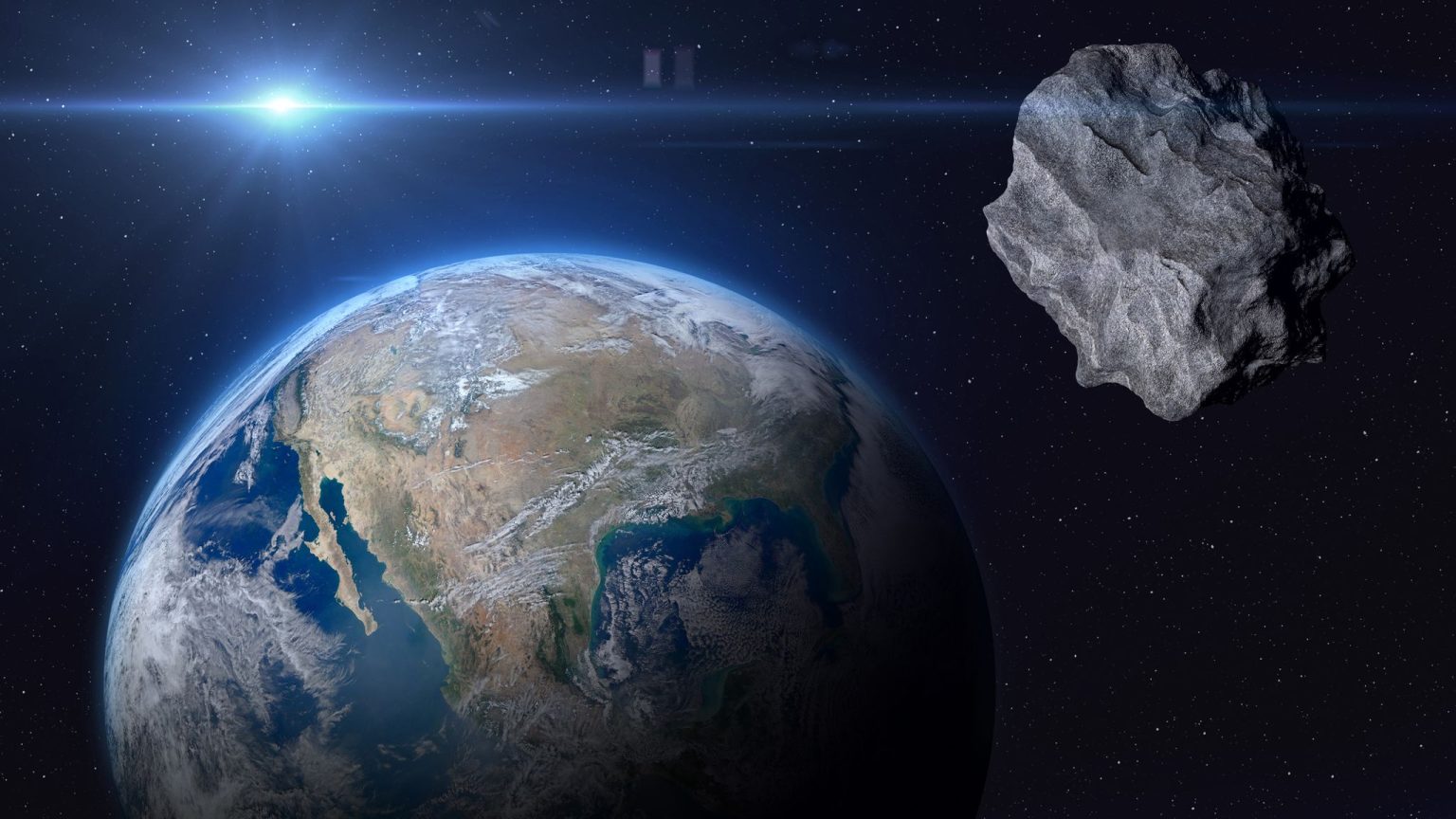
Asteroid 1997 NC1
An asteroid is approaching Earth once more. While such celestial objects nearly pass by our planet on a weekly basis, the anticipated event scheduled for June 27, 2026, really worth attention. The asteroid 1997 NC1, projected to make its closest approach to Earth at 11:16 a.m. UTC (2:16 p.m. Kyiv time), is notably substantial in size. Its estimated average diameter varies between 710 and 1,600 meters, based on different assessments.
Furthermore, it is considerably larger than most of the asteroids frequently mentioned to invoke fear. It was initially identified in 1997 as part of the NEAT project; however, to date, our knowledge is primarily limited to its orbital parameters, with its size remaining largely undefined.
1997 NC1 is classified as part of the Aton family. This designation pertains to asteroids that predominantly orbit nearer to the Sun than Earth. Asteroids of the Aton group have a semi-major axis smaller than Earth’s (a < 1 AU), but their aphelion (the point of their orbit farthest from the sun) exceeds the perihelion (the point of their orbit closest to the Sun) of Earth (Q > 0.983 AU), so they can cross Earth’s orbit.
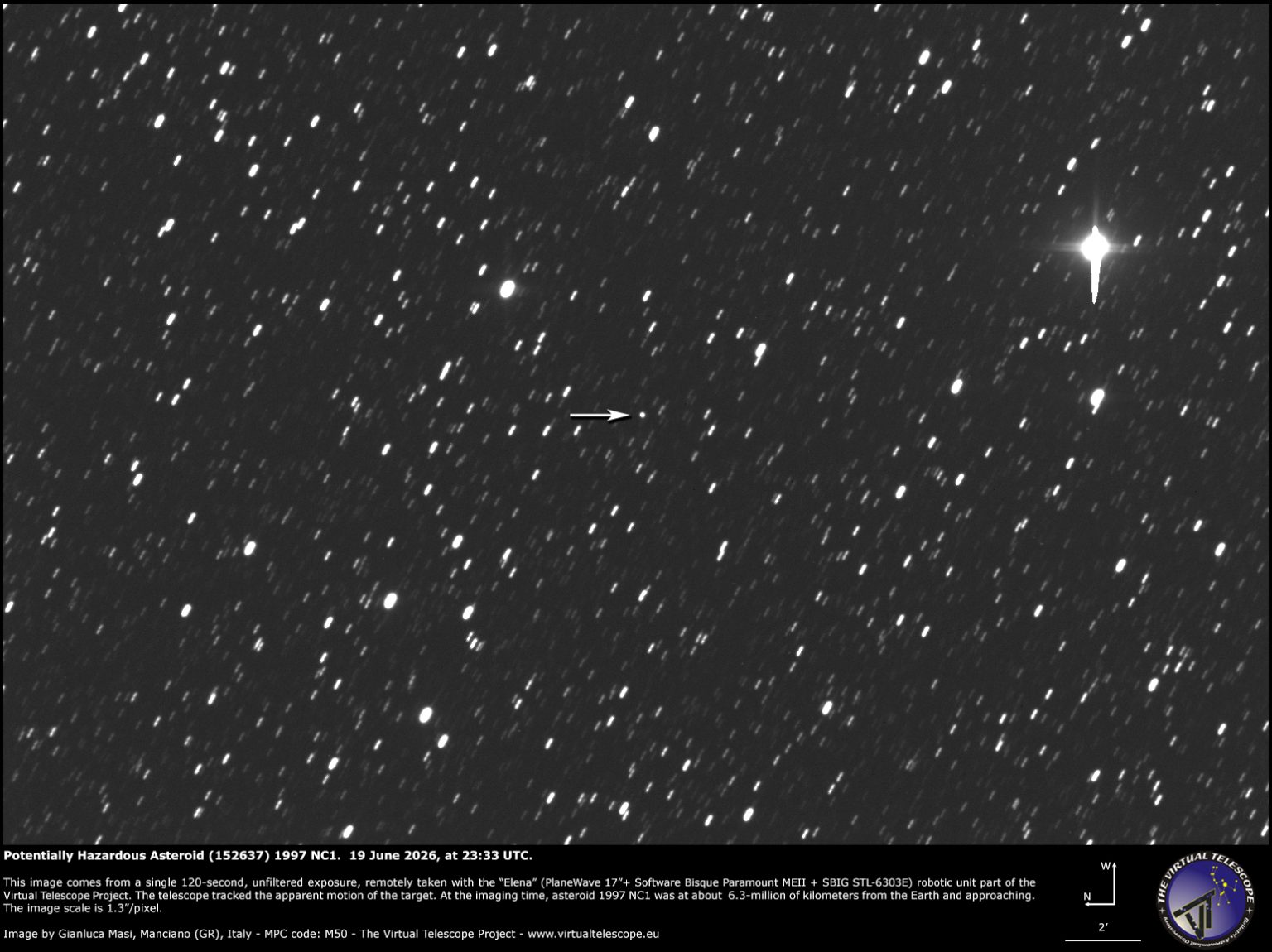
The 1997 NC1 example clearly demonstrates why it is incorrect to state “cross the Earth’s orbit as they approach aphelion.” Despite its aphelion being situated 1.045 AU from the Sun, the orbital plane is inclined at 16.7°. At the point of intersection of the orbital projections, the asteroid is far from the plane of the Earth’s orbit, so the actual intersection of the trajectories does not occur at this point.
Regarding other objects within the Asteroid Belt, their orbital inclinations may be considerably smaller; however, their aphelion distances are also not as extensive in such cases.The Earth moves not in a circle, but in an ellipse, so the distance to the Sun changes throughout the year. During the passage of aphelion, which is scheduled to occur in early July, Earth is approximately 1.017 AU from the Sun. In essence, although the Atons technically have an aphelion exceeding Earth’s perihelion, they do not reach the orbital point where the two paths could intersect.
Referring to 1997 NC1, it is noteworthy that its perihelion is situated 0.685 AU from the Sun, and its orbital eccentricity measures 0.209. The orbit is markedly elongated, and the asteroid completes a single revolution around the Sun in 293.81 days.
What would be the consequences if 1997 NC1 were to collide with Earth?
The primary reason scientists remain uncertain about the size of 1997 NC1 is that, asteroid made about 40 close encounters with Earth over the past 30 years — the duration during which its existence has been documented — Earth has been situated at a considerable distance on each occasion.
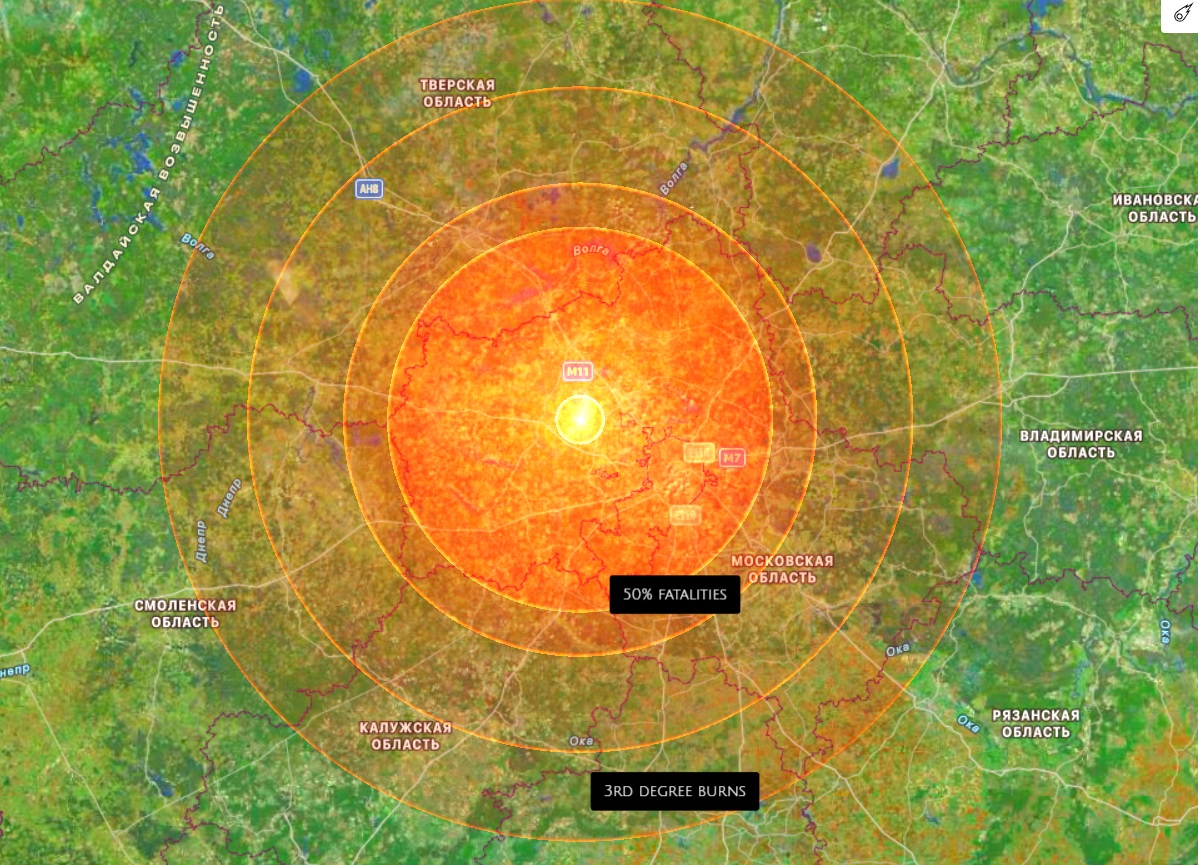
The asteroid persisted as merely a speck, and without understanding the reflectivity (albedo) of its surface, accurately determining its size based solely on its brightness proves to be highly challenging. Nevertheless, even the minimum and average estimates are sufficient that in the event of a hypothetical collision the consequences would be catastrophic
In the event of a crash, the resulting crater is expected to exceed 10-20 kilometers in radius and half a kilometer in depth. The fireball is projected to span 20 to 30 kilometers in diameter, with the potential for burns on the body and spontaneous combustion of trees occurring even at a distance of 200 kilometers from the epicenter.
At approximately the same distance, the shock wave will cause destruction to wooden houses, and it is expected to be perceptible even on the opposite side of the globe. The earthquake will be felt at distances reaching several hundred kilometers.
Should 1997 NC1 collide with Earth, humanity would not be completely eradicated. However, the mortality rate resulting from such an incident would reach into the millions. The repercussions of an impact in a densely populated region would be akin to those observed in the most significant wars of recent centuries.
Reasons why we should not fear asteroids
What is particularly noteworthy about this encounter between Earth and 1997 NC1 is that it will be the proximity record since the year 1600. The subsequent occurrence of a similar event is not expected until the year 2133. The infrequency of these close approaches, despite the fact that it occasionally approaches the Earth’s orbit more than once annually, can be attributed to the specific configuration of its orbit.
This asteroid approaches our planet only on exceptionally rare occasions. Moreover, this “close” proximity is significantly farther than most individuals tend to imagine. On June 27, the minimum distance between 1997 NC1 and Earth will be 2.56 million kilometers. This distance exceeds the average distance to the Moon by approximately 6 to 7 times. Indeed, by Solar System standards, this can be considered relatively close — approximately 1.5% of the distance from Earth to the Sun. If we were to depict its position at that moment on a diagram of our planet’s orbit, it would appear as though a collision had already occurred.
However, in reality, that distance is exceedingly vast. According to modern orbital calculations, the probability of a collision is zero., and there are no qualifications to this statement. Furthermore, the orbit of 1997 NC1 inherently prevents it from approaching our planet any closer. At least, not within a timeframe comparable to the span of recorded history on Earth.
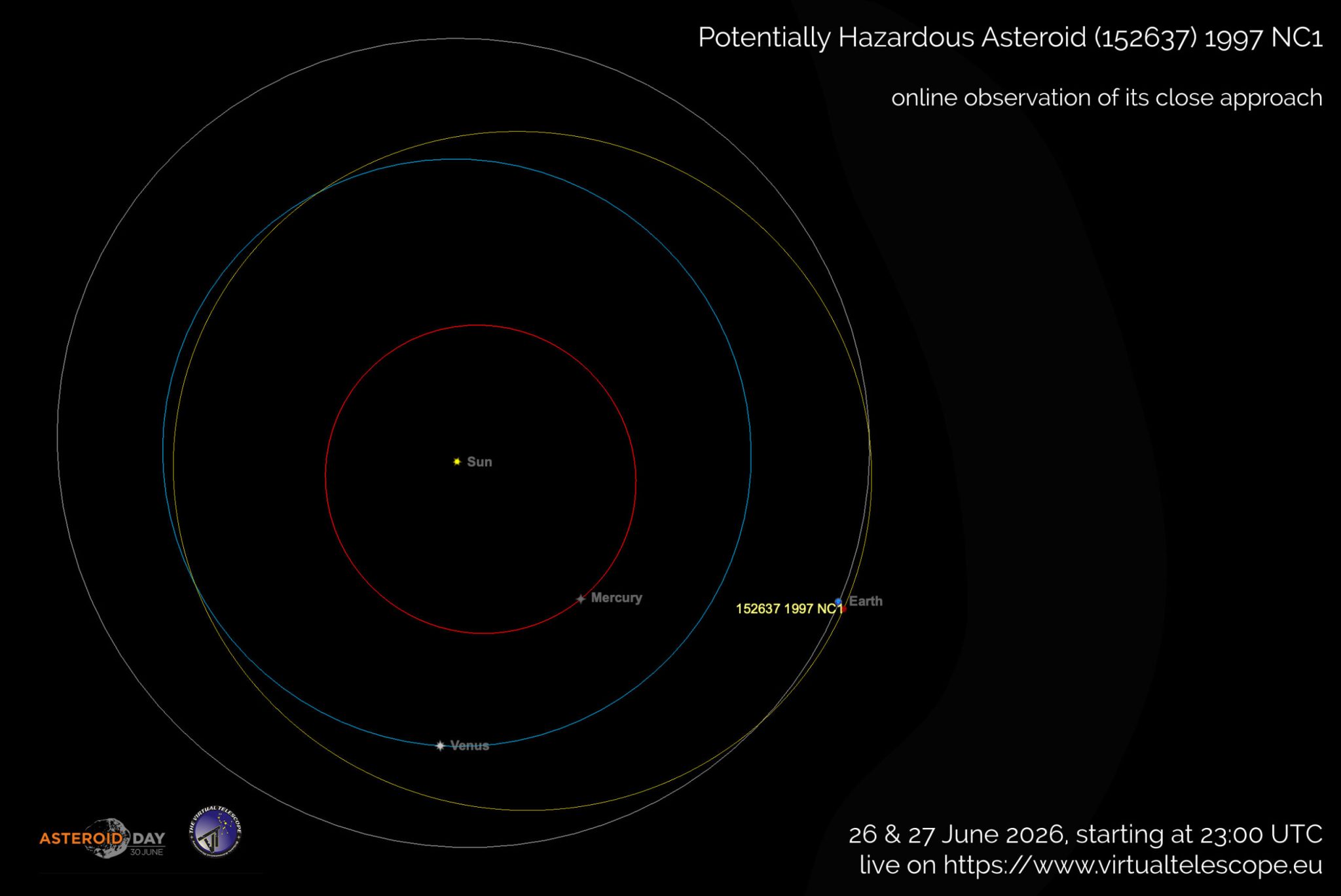
Guidelines for observing asteroid 1997 NC1
Nonetheless, the fact that 1997 NC1 does not pose a threat to humans does not diminish its significance. Primarily, scientists are interested in it. Its trajectory will ultimately enable us to obtain a clearer understanding of this asteroid and to determine its size and composition with greater accuracy. To achieve this, there are even proposals to utilize radar technology.
Other individuals might also find it intriguing to observe such a large asteroid passing nearby. However, as previously stated, the distance to the asteroid remains significantly vast. Its apparent magnitude will only attain 10, rendering it invisible to both the naked eye and binoculars.
A suitable amateur telescope, which is not possessed by everyone, is required. Nevertheless, a solution exists. The virtual telescope project extends an invitation to all individuals to observe the asteroid’s passage by following this link.
