

NASA’s new flagship observatory has been installed inside the rocket fairing — the protective nose cone of the launch vehicle — and transported to the launch complex in Florida. The launch is scheduled for Sunday, August 30, 2026, and the main mission readiness review has already been completed. The spacecraft will operate far beyond the Moon’s orbit. The first scientific images are expected early next year.
Preparations in Florida
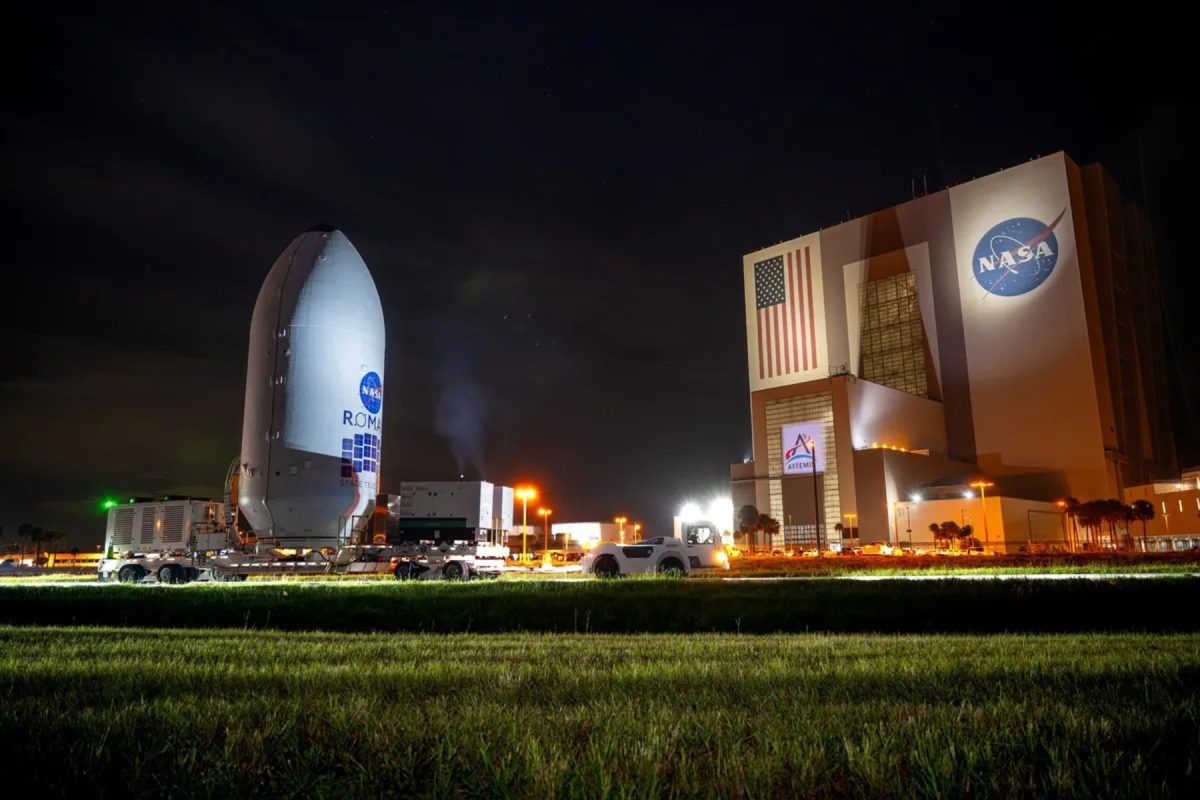
The Nancy Grace Roman Space Telescope was loaded into the payload fairing of a Falcon Heavy rocket, and during the night of August 25 a convoy transported it to the SpaceX hangar near Launch Complex LC-39A. The spacecraft will next be integrated with the launch vehicle and undergo final fit checks, according to the NASA mission blog.
Overview of the design and scientific objectives of the Nancy Grace Roman Space Telescope. Source: NASA Goddard
The tanks were filled with 1,100 liters of hydrazine at the end of July, and a full launch-day rehearsal was conducted on August 20. The flight readiness review was completed on August 21, while the final decision will be made at a separate meeting on August 28. Launch is scheduled for no earlier than 1:26 p.m. CEST. NASA signed the approximately $255 million launch contract with SpaceX back in July 2022.
Wider Field Instead of Greater Depth
The space telescope’s primary mirror is 2.4 meters in diameter and follows the same basic optical design as Hubble. The difference lies elsewhere. The detector area of the Wide Field Instrument is about 100 times larger, so over five years of operation Roman will be able to image an area of the sky 50 times larger than Hubble covered in thirty years.
Planets will be searched for in two ways. The transit method detects the slight dimming of a host star when a planet passes in front of its disk, and this approach is expected to reveal about 100,000 new worlds. Another roughly 1,000 exoplanets are expected to be found through observations of gravitational microlensing.
At present, about 6,000 exoplanets have been confirmed over more than three decades of searches. If the transit program works as intended, the catalog of known extrasolar worlds will increase by more than fifteenfold.
Direct Imaging of Planets
The second instrument aboard the observatory is designed to directly image already known planets. Its coronagraph blocks the bright disk of the host star with special masks, allowing faint points of accompanying planetary bodies to appear nearby.
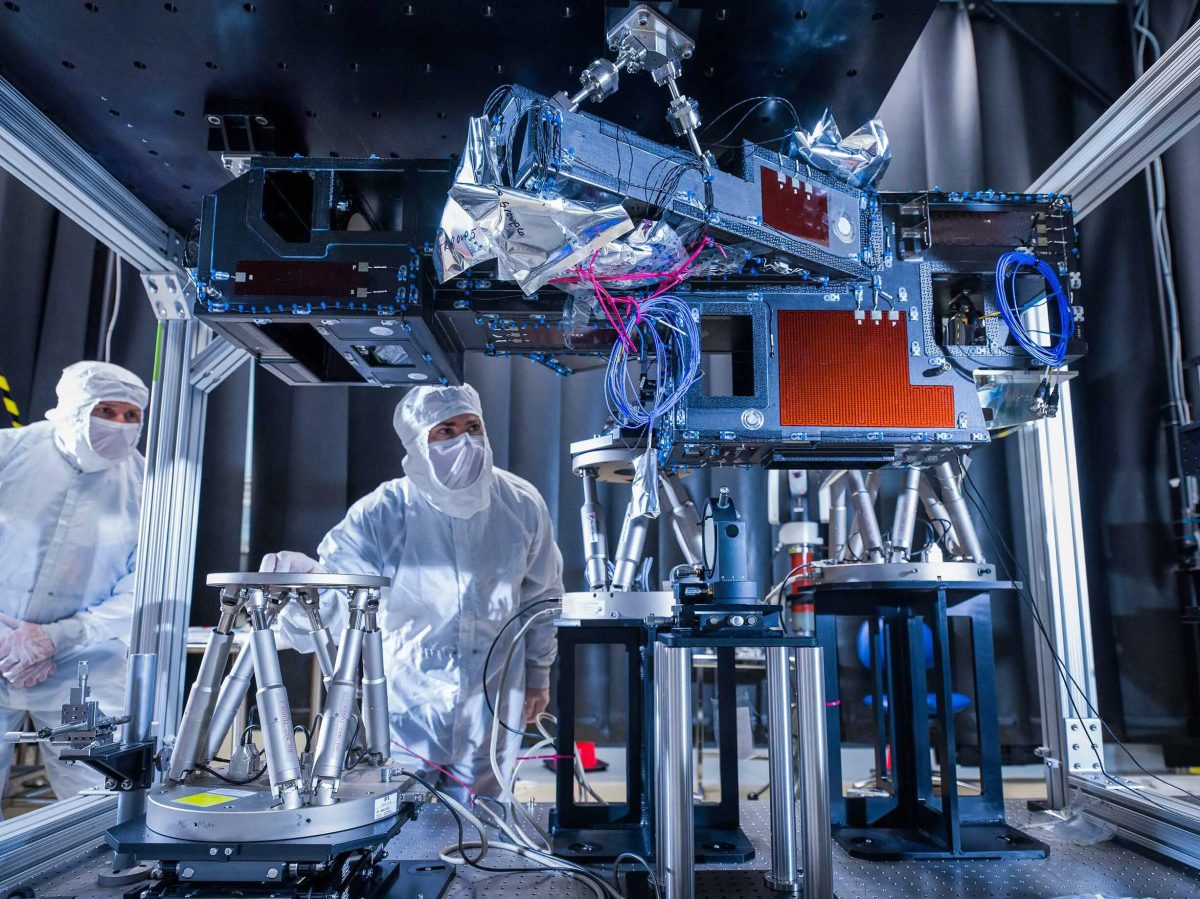
Until now, direct imaging has generally been possible only for hot gas giants located far from their stars because they themselves emit strongly in the infrared. The new instrument is designed for cooler objects similar to Jupiter, which primarily reflect light from their stars. Such planets are about a billion times fainter than their host stars — roughly the same brightness contrast as between Jupiter and the Sun.
The instrument should be sensitive enough to detect objects about 1,000 times fainter than the current observational limit. The optomechanical systems required for this were manufactured at the Max Planck Institute for Astronomy.
Precision Pointing Mechanics
The coronagraph’s optical elements are held in their required positions using precision alignment mechanisms. Six flight units are already installed in the instrument, another six remain on Earth for testing, and a separate lifetime-test model has completed more than 27,000 movements.
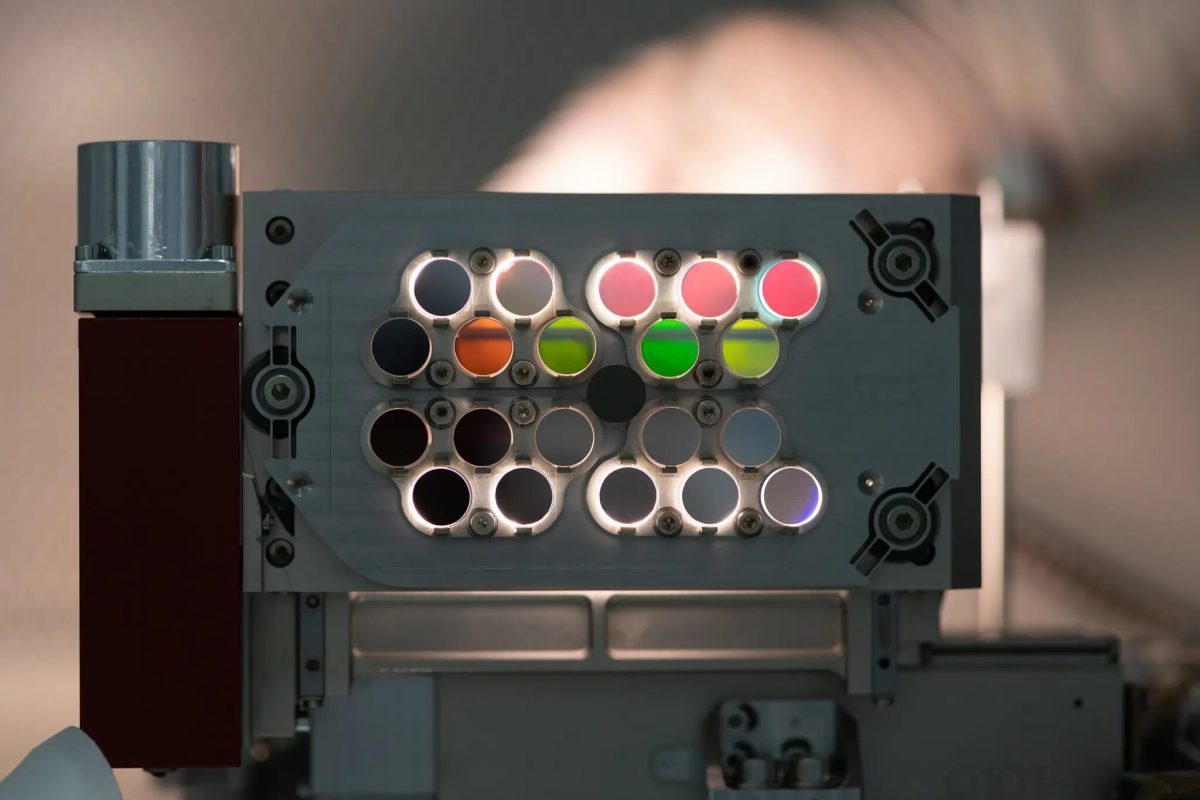
The allowable tilt of the masks, filters, and mirrors is no more than 40 milliarcseconds over eight hours of observations. For comparison, the same angular size would correspond to the figure of a person standing in Lisbon when viewed from Kyiv.
Journey to the Operating Point
The observatory will operate at the L2 Lagrange point, about 1.5 million kilometers from Earth. There, the gravitational forces of the Sun and Earth balance in such a way that the spacecraft can orbit the Sun without continuously expending fuel to maintain its position. Repairs at such a distance will no longer be possible, unlike with Hubble, which was visited by servicing missions.
According to estimates from the Max Planck Society, testing and calibration will take about 90 days, while the journey to L2 will require approximately the same amount of time. The first scientific images are expected in early 2027, while some survey programs will continue for years, including scanning the plane of the Milky Way in search of previously unknown planets and black holes.