

The explosion of a starship in ‘Star Wars’ produces a sound so deafening that it causes your seat in the theater to shake. In reality, one would not perceive any sound. However, this does not imply that the universe is entirely silent.

Why does sound propagate differently?
Sound waves do not propagate through the vacuum of space; consequently, any spacecraft combat would occur in silence. This fact is widely acknowledged. The common misconception, leading to the seemingly straightforward yet ultimately incorrect conclusion that there is no sound in space, originates from this understanding. In actuality, the presence of sound depends entirely on the medium involved.
Sound is a mechanical wave characterized by alternating regions of compression and rarefaction within the medium. The particles of the medium do not traverse significant distances with the wave; rather, they oscillate around their equilibrium positions and transmit the disturbance to adjacent particles.
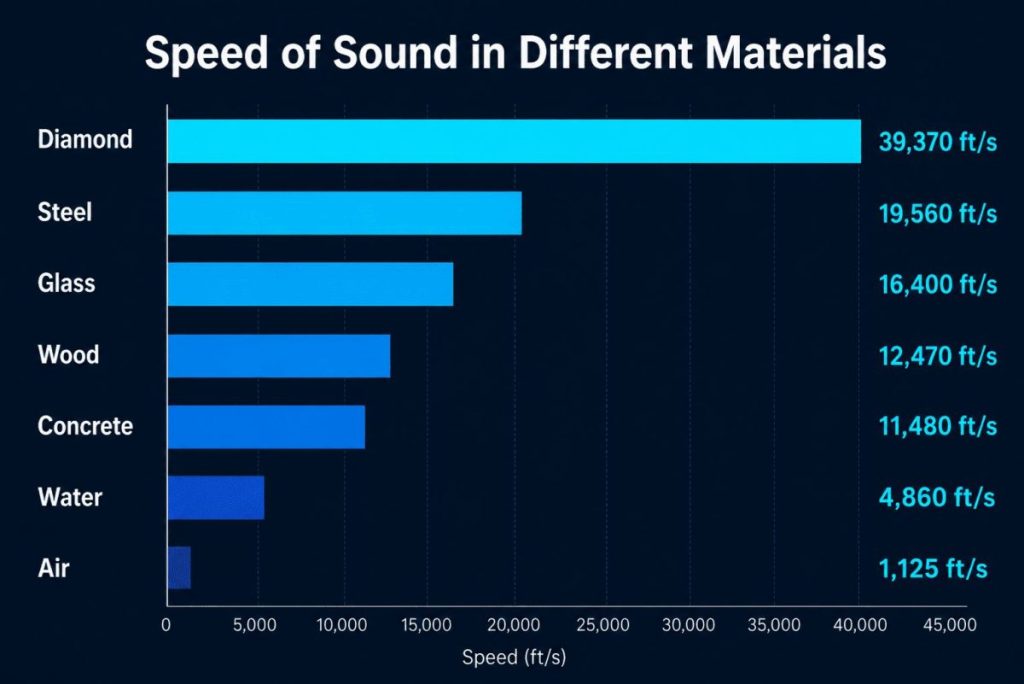
Thus, the velocity of sound is contingent upon the characteristics of the medium — specifically, its density and elasticity. In air at approximately 20 °C, sound propagates at a velocity of roughly 343 m/s. In water, the propagation speed is approximately 1,500 m/s — more than fourfold that in air. Within steel, the velocity of longitudinal sound waves attains approximately 5,900 m/s.
The same phenomenon occurs at three different speeds; only the environment has changed.
Where there is genuinely no sound
Let us now eliminate the medium. In the absence of particles to transmit vibrations, the wave cannot propagate. It does not diminish gradually; instead, it fails to propagate altogether.
This principle is equally applicable in everyday circumstances. For instance, in a thermos, the air has been removed from between the two walls, creating a vacuum that significantly diminishes heat transfer. Additionally, it serves as a sound barrier. However, if the thermos is tapped, the sound will be audible, as vibrations transmit through the metal at the junction points of the walls.
The fundamental principle remains applicable in space, albeit on a different scale. Consider two spacecraft positioned adjacent to each other. Sound waves cannot propagate through the near-vacuum of space separating them. However, vibrations can be transmitted effectively along the hull of one’s own spacecraft. Consequently, when a small space particle impacts the hull, it can produce vibrations that the crew may hear or detect using instruments.
However, one point requires clarification. There is no such entity as a completely vacant void within the universe. The interstellar medium comprises gas, dust, plasma, and magnetic fields. The mean particle density is approximately one particle per cubic centimeter, although this varies considerably depending on the region of space. Due to this scarcity, sound waves resembling those propagating through Earth’s atmosphere would not transmit between starships. Simultaneously, other forms of waves may exist within plasma; it was precisely these that, for example, Voyager 1 detected within the interstellar medium.
Sound on other worlds
However, the void between objects does not constitute the entirety of the cosmos. Planets with atmospheres, moons, gas clouds, and the interiors of solid bodies — each serves as a medium through which sound propagates, varying in accordance with their density and composition. The earliest recording of sound on another planet was made in 1982, when on March 1, the Soviet lander “Venera 13” made contact with the surface of Venus. An onboard acoustic microphone detected the surface wind, enabling an estimation of its velocity at approximately 0.3 to 0.6 meters per second. Venus’s highly dense atmosphere — where surface pressure is nearly ninety times that of Earth’s — provides conditions conducive to sound transmission through a gaseous medium, although the velocity and properties of sound differ from those observed on Earth.

Source: JAXA
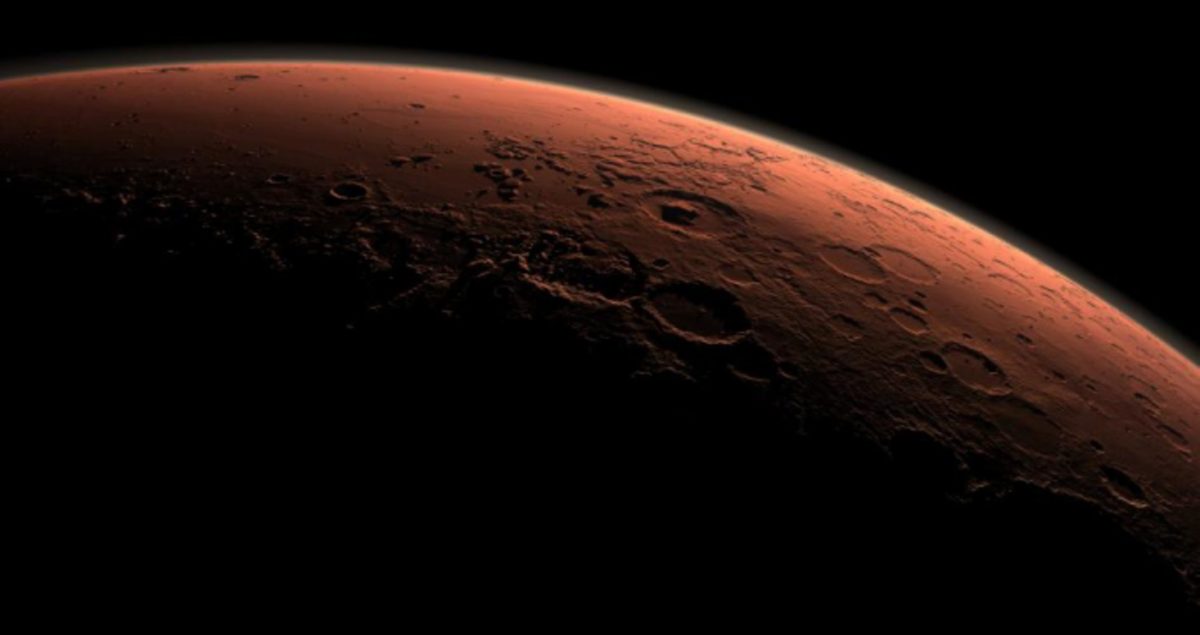
On Mars, the conditions are markedly contrasting. The atmosphere is exceedingly thin; at various altitudes, the atmospheric pressure is between 100 and 160 times lower than Earth’s. Nevertheless, similar to Venus, carbon dioxide overwhelmingly constitutes approximately 95–96 percent of the atmospheric composition. Consequently, sound waves diminish rapidly, particularly at higher frequencies. Utilizing two microphones, the Perseverance rover successfully recorded nearly five hours of Martian sounds — ranging from gusts of wind to the screech of wheels. The research demonstrated that in such an extraterrestrial atmosphere, the propagation speed of sound is frequency-dependent. Low-frequency sounds travel at approximately 240 meters per second, whereas high-frequency sounds reach about 250 meters per second. Moreover, Mars’s atmosphere exhibits a pronounced absorption of high frequencies, resulting in sounds that quickly become faint and muffled with distance. As a result, a dialogue between two individuals positioned a few meters apart would be significantly quieter and less intelligible than it would be on Earth.
Liquid serves as a medium, and ample quantities exist within the Solar System. Europa, a moon of Jupiter, and Enceladus, a moon of Saturn, both possess subsurface oceans of liquid water beneath their icy crusts. Although there are no recordings from these locations yet, due to the absence of spacecraft that have reached them, the physics remains well understood. Sound would propagate there just as effectively as it does in Earth’s oceans, which is why hydrophones — underwater microphones — are already undergoing testing for future missions.
Sound waves are capable of propagating through solid rock, as corroborated by seismometers installed on the Moon during the Apollo missions. In November 1969, subsequent to the completion of the Apollo 12 mission, the lunar module’s ascent stage was intentionally guided toward the lunar surface, resulting in a controlled impact event. The seismometers registered a signal characterized by an amplitude that increased over approximately seven minutes before gradually declining; notably, the vibrations persisted for nearly an hour.

The underlying cause resides in the distinctive features of the lunar environment. Seismic waves experience significantly less absorption there compared to the Earth’s crust, and the highly heterogeneous and fragmented near-surface structure results in scattering and multiple travel paths. This phenomenon historically contributed to the myth of a hollow Moon. However, seismic data obtained from the Apollo missions has, in fact, facilitated the investigation of the Moon’s true internal structure.
Stars, clusters, and the early universe
The same phenomena occur deep within stars. The Sun is composed of dense, superheated plasma, and genuine acoustic waves propagate uninterruptedly within it. These waves are generated by turbulent convective movements of the plasma near the surface: upward and downward currents produce pressure fluctuations that initiate sound waves inside the Sun.
As the wave penetrates deeper into the Sun’s interior, where both temperature and sound velocity increase, its trajectory gradually bends, causing it to refract back toward the surface. Upon reaching the surface, it is reflected and subsequently travels back downward.

The Sun oscillates at a multitude of distinct frequencies concurrently. By analyzing these surface oscillations, researchers can ascertain the properties of the Sun’s internal material. This technique is referred to as helioseismology — analogous to “seismology of the Sun” — enabling the examination of its internal structure in a manner comparable to how seismology facilitates the study of the Earth’s interior.
Sonification of solar oscillations based on 40 days of observations by the MDI instrument at the SOHO observatory; processed by A. Kosovichev. Source: NASA
Humans are unable to perceive these oscillations. The frequencies of solar acoustic waves are approximately a few millihertz, with a period of roughly five minutes. This frequency range is well below the threshold of human auditory perception. To render them audible, data obtained from the SOHO solar observatory, spanning over 40 days of observation, were accelerated by a factor of 42,000.
The Perseus Galaxy Cluster, situated approximately 250 million light-years from Earth, exemplifies an extraordinarily vast cosmic structure. Within this cluster, the intergalactic space among numerous galaxies is permeated by exceedingly hot gas that radiates X-rays. At the core of the cluster’s central galaxy, Perseus A, resides a supermassive black hole. The activity associated with this black hole produces potent jets, which consequently form extensive bubbles within the surrounding gaseous medium. As these bubbles expand, they displace the hot gas and engender pressure waves, known as acoustic waves. Such ripples have been documented through X-ray observations obtained from the Chandra Observatory.
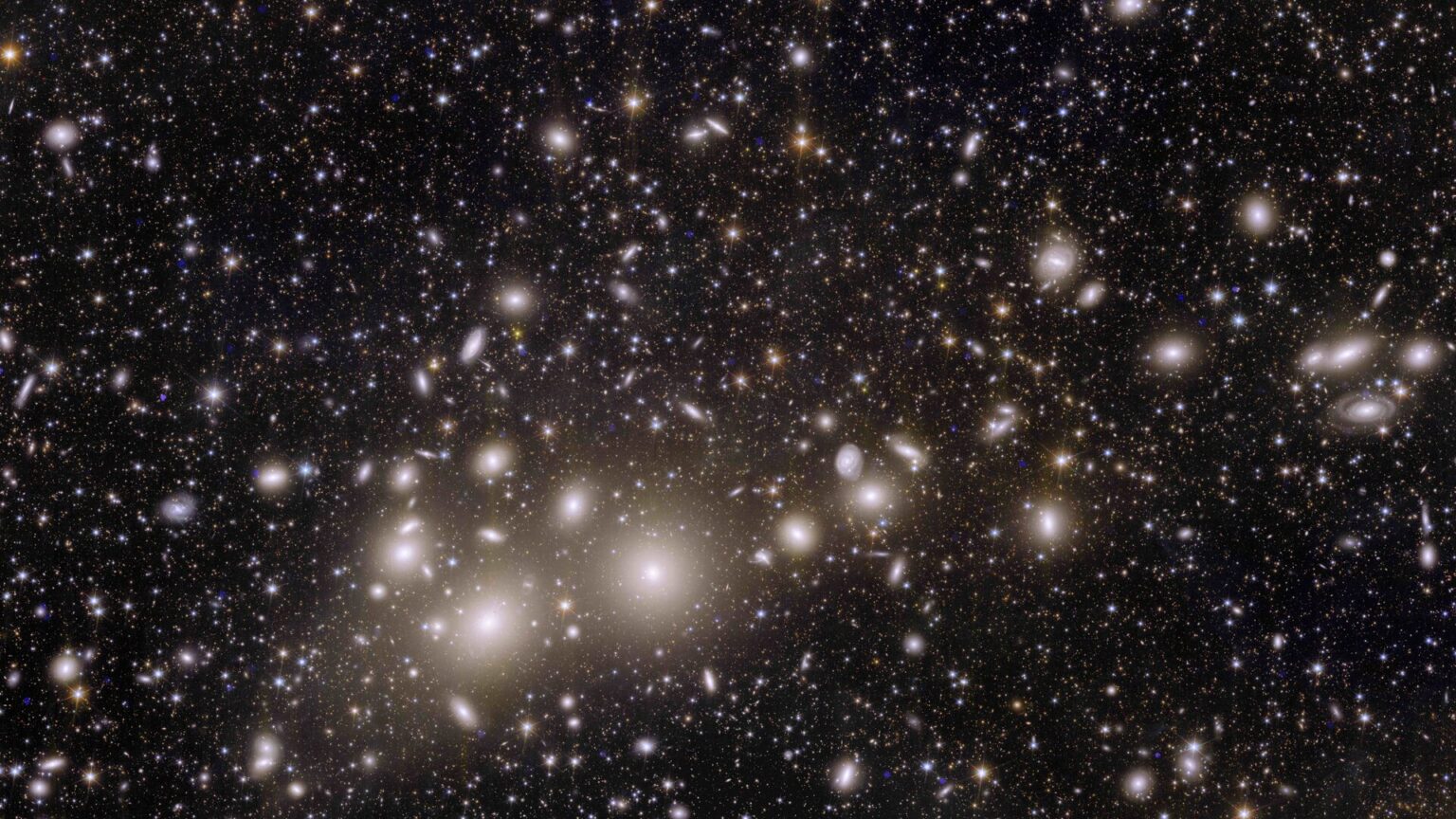
Each oscillation endures for slightly less than 10 million years. This duration correlates with an exceedingly low frequency — roughly 57 octaves below the B-flat near middle C. In comparison, the human auditory range encompasses only approximately ten octaves. Consequently, an individual cannot perceive this cosmic “note” directly.
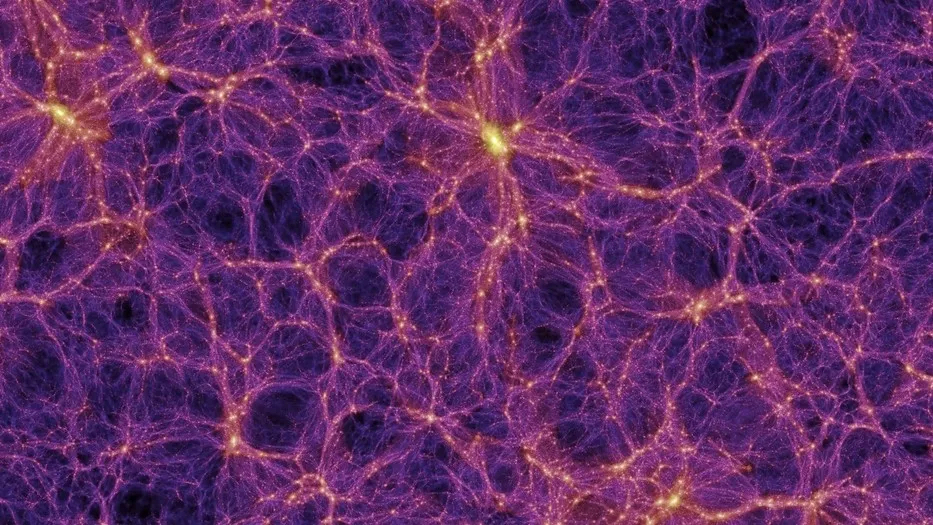
The oldest acoustic waves predate all stars. During the first hundred thousand years, the universe consisted of hot, dense plasma in which photons and ordinary matter were closely bound together. Initial small clumps of matter created gravitational attraction, while the pressure of the photons counteracted their compression. This generated pressure waves — a kind of sound wave — that propagated through the primordial plasma.
Source: ucr.edu
Approximately 380,000 years after the Big Bang, the universe had sufficiently cooled. Radiation pressure no longer sustained these acoustic waves, and their propagation ceased. However, the waves had already traveled a certain maximum distance from their initial density peaks — approximately 150 megaparsecs, or roughly 490 million light-years. This distance is referred to as the acoustic horizon.
Thus, spherical shells with marginally increased density persisted around the initial clumps. Over time, these conglomerates evolved into galaxies, which in the contemporary universe are separated by approximately five hundred million light-years. While it is impossible to perceive the Big Bang audibly, it is entirely feasible to quantify its primordial acoustic signature.
When sound is just a metaphor
In all these instances, the subject pertains to authentic pressure waves. However, there exist recordings that are released under the title “Sounds of Space,” despite having no relation to acoustics.

Utilizing an instrument onboard Voyager 1, scientists detected plasma waves in interstellar space characterized by electron oscillations. Initially observed from October through November 2012, and subsequently in the spring of 2013, the frequency of these oscillations was found to be several times higher than that in the solar wind zone. This change precisely indicated that the spacecraft had already exited the solar wind zone. As the frequency of plasma waves is dependent on the electron concentration, scientists employed this metric to ascertain the density of interstellar plasma. The results revealed that the interstellar plasma density was substantially higher than that of the solar wind at an equivalent distance from the Sun.
Interestingly, the frequencies of these plasma waves approximately fall within the range of human hearing. Consequently, the Voyager 1 signal can be transformed into sound without requiring extensive amplification — unlike solar or cosmological waves — and can be reproduced through a speaker.
However, these are not sound waves in the conventional sense. There is no mechanical compression and rarefaction of matter, as occurs in air. Instead, these are electromagnetic and electrostatic processes within plasma — a charged medium primarily composed of electrons and ions.
Gravitational waves are significantly more distant from acoustic phenomena. In September 2015, scientists utilizing the LIGO laser interferometer observatory successfully detected, for the first time, the merger of two black holes — a brief increase in frequency analogous to birdsong. In English, such a signal is termed a “chirp.” The media portrayed it as the sound of a collision.
However, this notion is not physically sound. A gravitational wave constitutes a disturbance in the geometry of spacetime. It does not necessitate a material medium for propagation, and in a vacuum, it propagates at the speed of light. The LIGO detectors did not “hear” the collision; instead, they measured minute variations in the separation between the interferometer’s mirrors induced by the passage of a gravitational wave.
This process of converting measured data into sound is known as sonification. It does not constitute an audio recording of the phenomenon itself but rather serves as a means to present numerical data in a format perceivable by the auditory system. Among other applications, this method can facilitate the identification of specific changes, rhythms, and patterns within the data that may not be readily apparent in graphical representations.
A sonification of an image of the Cosmic Reef nebula captured by the Hubble Space Telescope to mark the observatory’s 30th anniversary. Source: NASA
Between physics and the movie theater
Therefore, the universe is not entirely silent. Acoustic waves can propagate in any environment where a medium is capable of transmitting pressure variations, ranging from Venus’s dense atmosphere to the hot plasma of the early Universe. However, ordinary sound necessitates a sufficiently dense medium, as particles must interact frequently to transmit disturbances effectively. In most regions of interplanetary and interstellar space, matter is so sparse that the propagation of traditional sound waves is virtually nonexistent. Consequently, space remains nearly silent for humans. Nonetheless, the universe is replete with various other waves and oscillations that can be measured and sometimes even converted into sound.
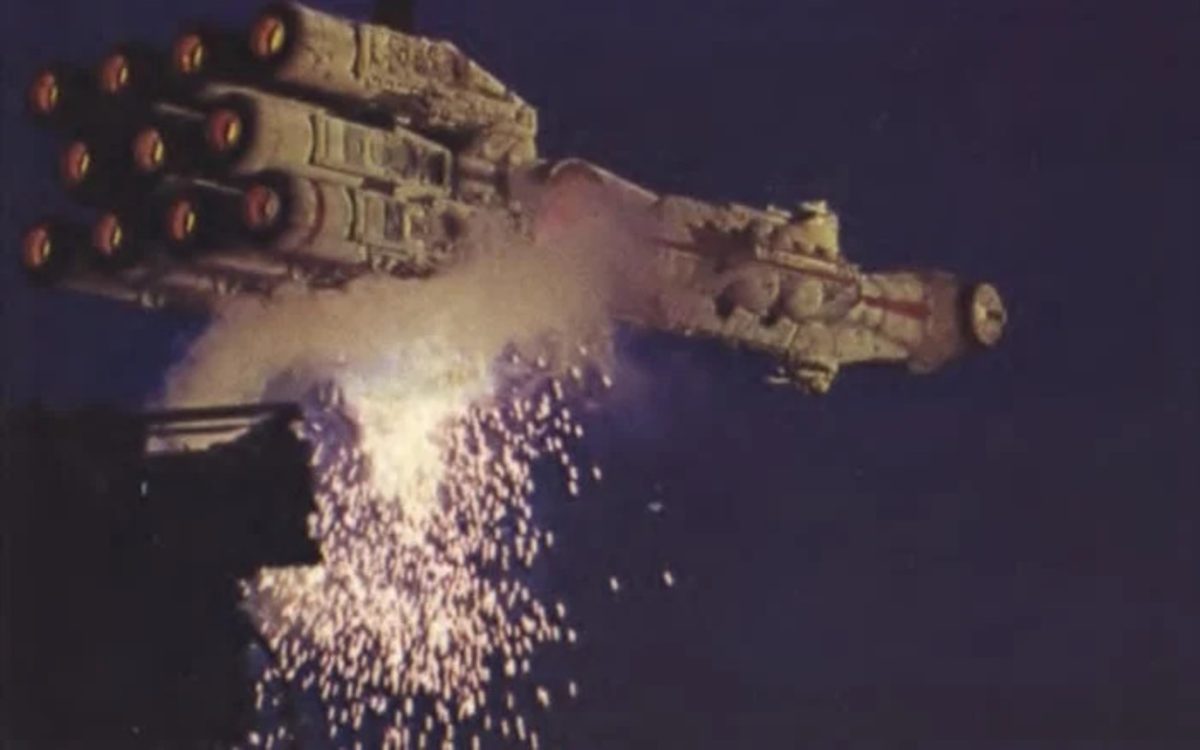
Films intentionally contravene the laws of physics; this is a stylistic choice rather than an error. Sound designer Ben Burtt experimented with the auditory representation of explosions in space scenes during the production of ‘Star Wars: Episode IV — A New Hope’; however, George Lucas dismissed these ideas. Twenty-five years later, these concepts were employed to depict a seismic blast in ‘Star Wars: Episode II — Attack of the Clones’, where the explosion is heralded by a brief interval of absolute silence. Peter Brown, who oversaw sound for the film ‘Star Trek: Beyond ‘, noted that their attempt at a silent version of the space scenes was ultimately rejected due to its perceived dullness.
Silence does occur in films, but it is employed judiciously. In movies such as ‘Gravity’ and ‘Interstellar’, there are sequences where sound is entirely absent or is only audible when a character makes contact with a structure. It is precisely this contrast that heightens the intensity of the most suspenseful scenes.
