

Venus is our closest neighbor in space, located just one step closer to the Sun than Earth. At certain points in its orbit, it approaches us to within only about 40 million kilometers. For modern spacecraft, that is a short journey lasting only a few months. It would seem that humanity has an ideal opportunity to study a world almost identical to our own in size. On paper, Venus and Earth look almost like planetary twins: they formed 4.5 billion years ago in the same region, have nearly the same diameter, and similar gravity. But reality turned out to be radically different. Venus is the true embodiment of hell — a world that does not merely frighten, but physically annihilates any attempt at contact.
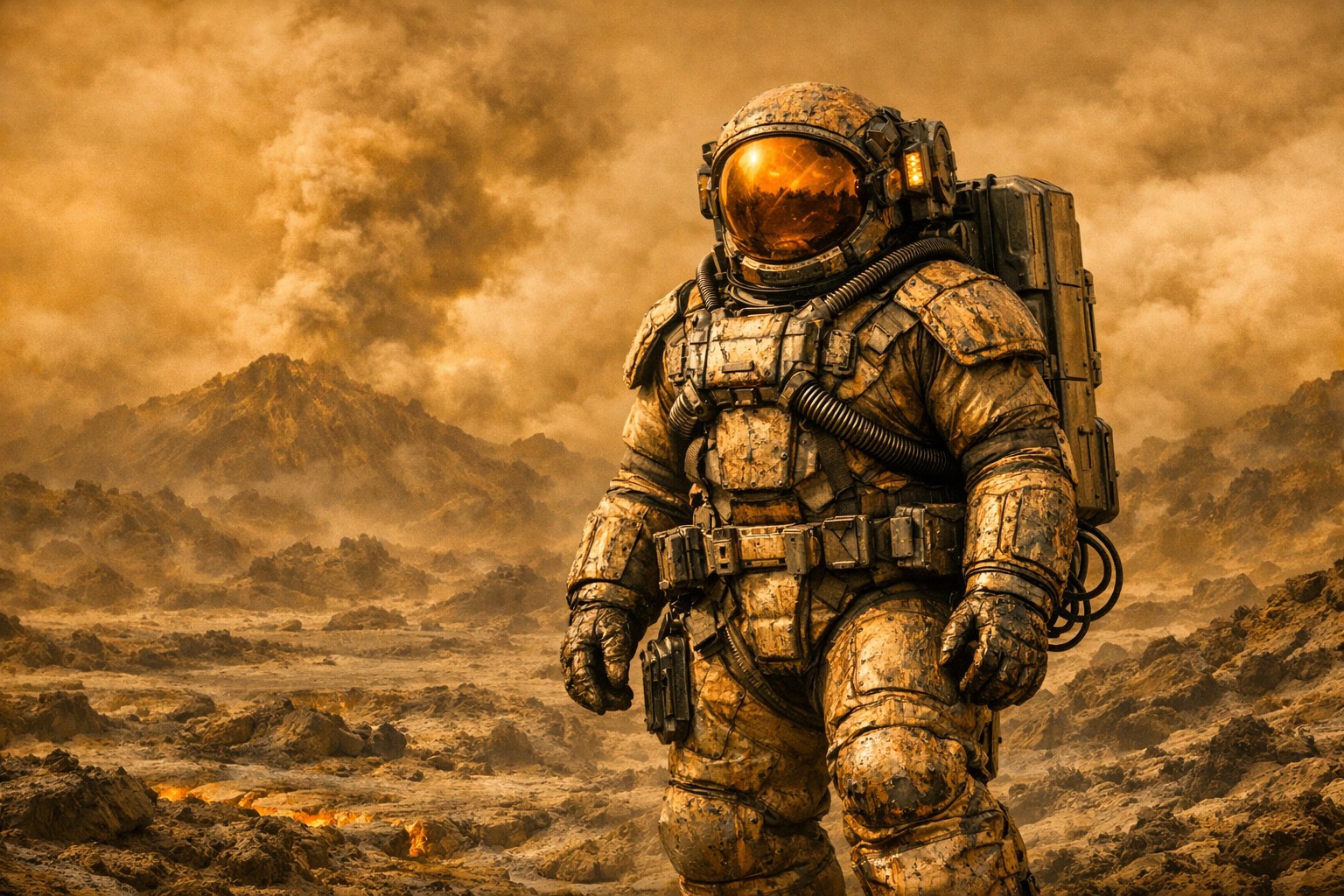
The main nightmare begins during the approach. At an altitude of about 50 km, the spacecraft enters a thick layer of Venusian clouds. They consist of microscopic droplets of concentrated sulfuric acid and sharply reduce visibility. The atmosphere of Venus consists almost entirely of carbon dioxide, which creates one of the most powerful greenhouse effects in the solar system. Sunlight partially penetrates the clouds, but infrared radiation that heats the surface is effectively blocked by the atmosphere. That is why during the further descent, the temperature and pressure increase rapidly, and within a few tens of kilometers the conditions become deadly.

Gloomy Landscapes and Eternal Dawn
Closer to the surface, the atmosphere becomes somewhat clearer, revealing a harsh landscape: a scorching rocky desert, covered with vast plains, mountain ranges and numerous volcanoes. Modern observations indicate that Venus probably remains volcanically active: individual volcanoes may still erupt today, gradually changing the appearance of its surface.
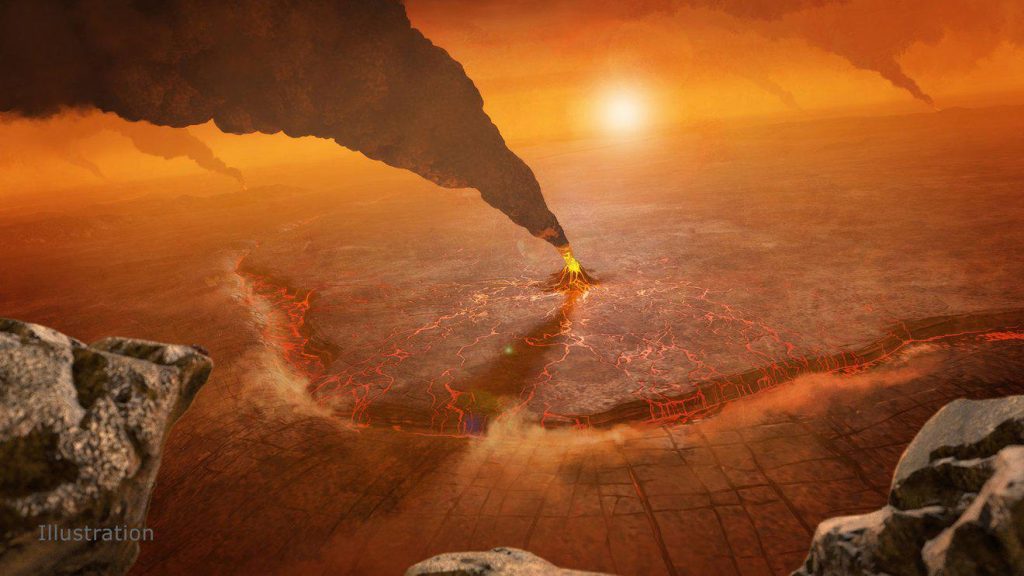
Landing here is a separate challenge: Due to the extremely dense atmosphere, the gas streams from the engines can keep dust and small debris in the air for a long time, significantly reducing visibility. The solar disk is not visible from the surface: only a small part of the light penetrates through the thick clouds to the ground. Despite this, Venus is not immersed in darkness – there is a uniform dim orange light around, which is often compared to an endless cloudy dawn.
Two Hours of Triumph on a Powder Keg
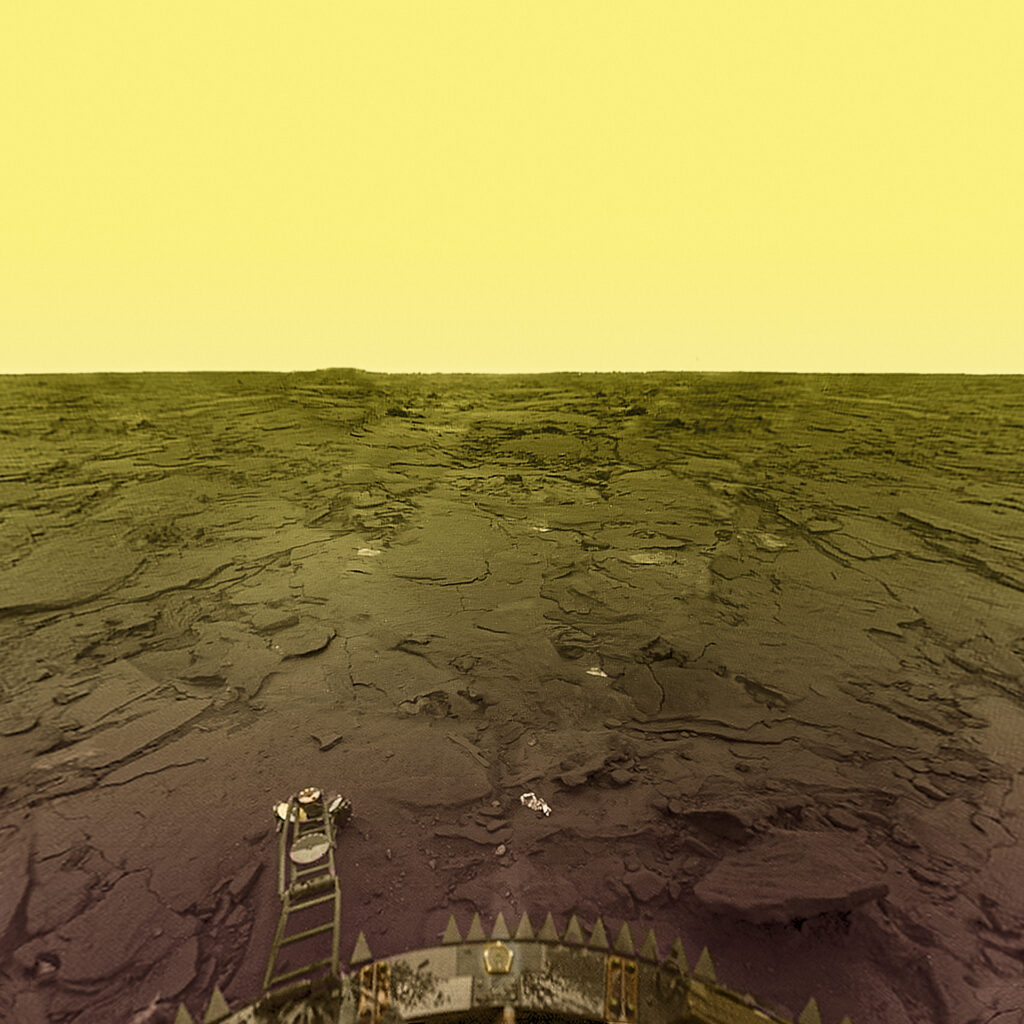
The history of Venus exploration is a chronicle of the rapid deaths of engineering creations. One of humanity’s most impressive achievements was the Soviet Venera 13 mission in 1981. This ultra-durable probe managed to survive on the surface for just over two hours. It transmitted unique color panoramas and soil analysis before the colossal heat and pressure literally crushed and burned out its electronics. Venera 13 still holds the endurance record for this extreme environment.
A Chronicle of Instant Catastrophe
If an astronaut attempted to land on Venus, any time outside the spacecraft would turn into an instant execution. The surface temperature reaches 465°C, enough to melt lead and zinc. At the same time, atmospheric pressure is 92 times greater than on Earth. This is equivalent to being submerged at a depth of one kilometer in Earth’s ocean.
A special spacesuit would be the only barrier between a person and a deadly hostile environment. Any breach of its tightness would have fatal consequences. The atmosphere of Venus would make survival almost instantly impossible, and the unbreathable mixture of hot gases would leave no chance. This inhospitable world is not made for humans — it is a true hell for all living things.
Still, scientists have proposed hypotheses that even in such an extreme world, life could exist, though only in the form of microorganisms adapted to living in the planet’s dense atmosphere.
Earlier, we discussed which exoplanets humans should consider traveling to.
According to MSN
