

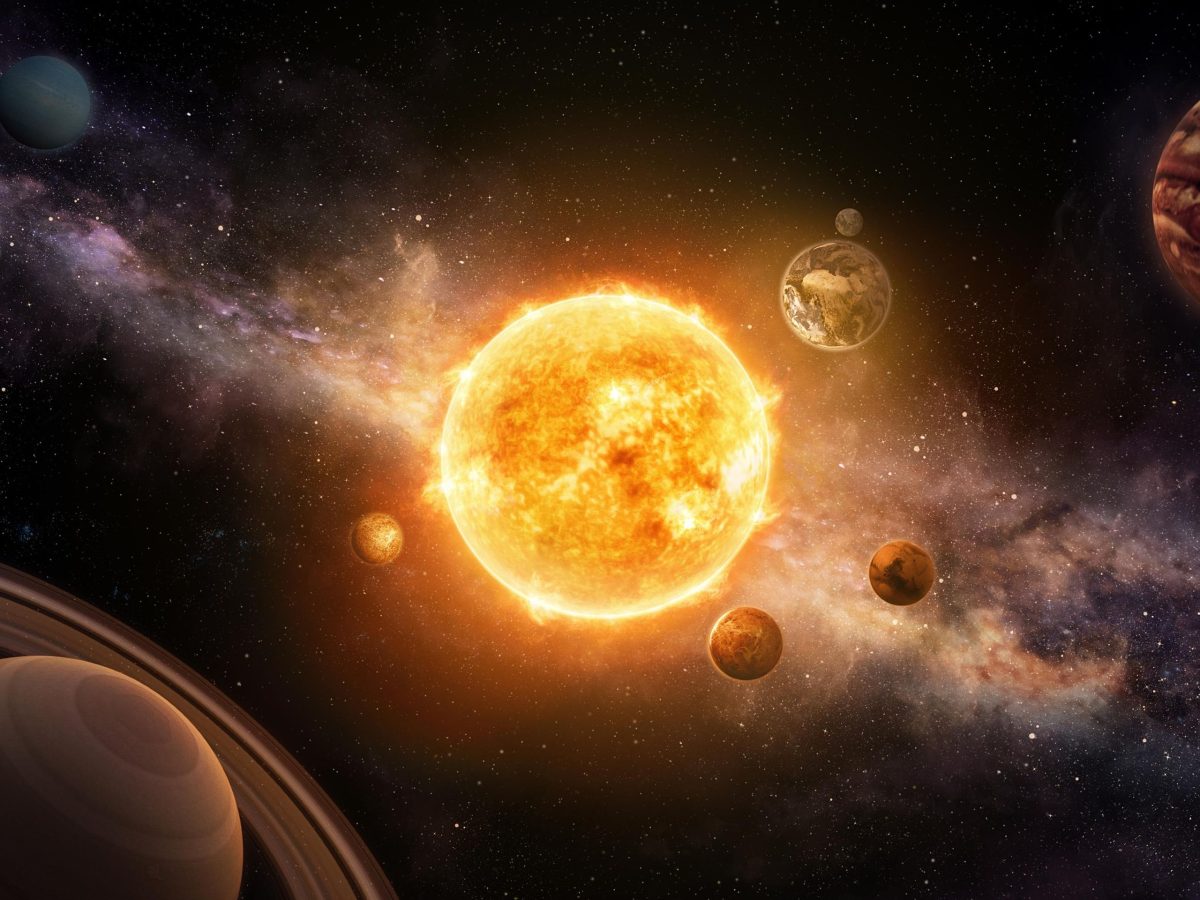
Space tends to instill fear in ordinary individuals. They perceive it as being filled with phenomena beyond scientific comprehension, potentially threatening their safety. However, in fact, space has been extensively researched by scientists and remains, in many respects, highly predictable. Among its most thoroughly examined regions is the Solar System, our place of residence.
The universe we fear
When inquiring about the emotions that space elicits, many individuals frequently express fear. We associate stars with the night, and as diurnal beings, we have evolved accordingly; historically, predators primarily hunted humans during nocturnal hours. This historical context explains why darkness inherently induces fear in us.
Furthermore, space is not only dark but also expansive and entirely unlike any phenomena known on Earth. Consequently, individuals unfamiliar with astronomy might assume that even scientists are unable to forecast potential dangers from its depths, as their knowledge of it remains limited.
To a certain extent, that is correct. Our observations are limited to a minute portion of the universe, and we cannot definitively exclude the existence of potential threats beyond our current knowledge. Furthermore, it is already established that space contains numerous hazards similar to those found on Earth; however, these are predominantly known threats, and we do not harbor a profound fear of them.
The most thoroughly studied process in the world
Indeed, what causes apprehension among individuals is the notion that space is inherently beyond the capacity of our understanding. However, this is not truly the case. Space exemplifies comprehensibility, as it can only be engaged with indirectly — through conscious observation and enumeration.
This is precisely how individuals historically established the length of a year: by documenting the time and location of sunrise until the cycle recommenced. Currently, scientists are able to measure this duration to within millionths and even billionths of a second. The seasonal changes on Earth are attributable to a cosmic phenomenon — this is a result of the combination of our planet’s motion around the Sun and the tilt of its axis of rotation.
The Earth’s rotation around its axis has been measured with exceptional precision. Researchers are continuously monitoring how its period is gradually altering — by milliseconds. Long-term trends in rotational speed can be reconstructed in the past and simulated millions of years into the future, but accurate prediction of the length of a day on such time scales is impossible.
Source: earthsky.org
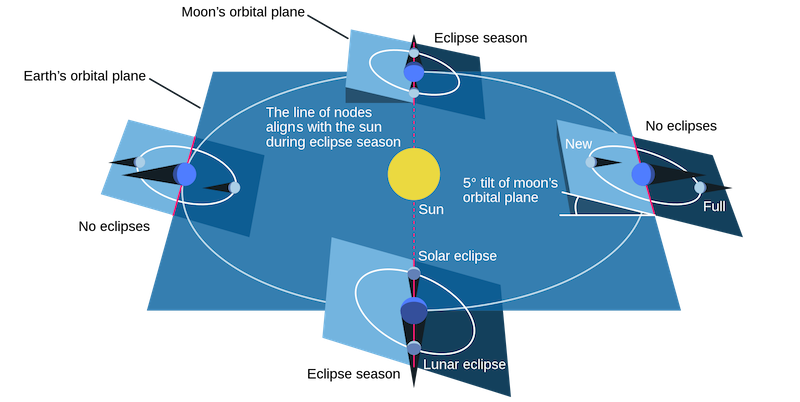
The Earth’s axis is tilted 23.4° degrees relative to the perpendicular to the plane of its orbit. The Moon orbits the Earth; its orbit is also inclined at a certain angle and undergoes precession. All of these parameters have been accurately calculated over time, and it is upon these calculations that scientists rely to predict eclipses with high precision.
The mutual rotation within this complex three-body system (comprising the Sun, Earth, and Moon) is articulated with such meticulous accuracy that numerous terrestrial sciences — such as climatology, biology, and history — may only envy it.
The motion of the planets
The same is true for all eight major planets. Their orbits have been calculated very precisely for many decades, and even the stability of these orbits over time is known. If there is one system we can be certain will remain exactly as we know it even a million years from now, it is the Solar System.
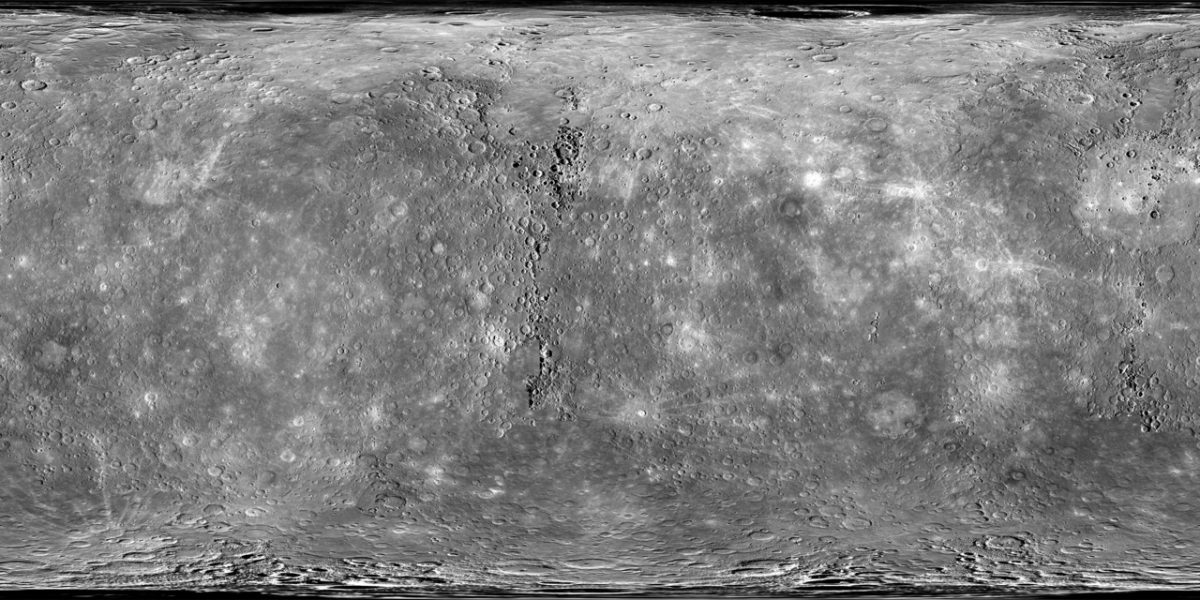
Furthermore, spacecraft have conducted high-resolution explorations of Mercury’s surface, allowing us to confidently assert that, for instance, there is no evil alien base hiding there. Our understanding of Venus is somewhat more limited due to its surface being obscured by a dense cloud cover. However, its landscape is still known to us more or less accurately thanks to radio observations.
However, scientists have not only studied the surface of Mars in detail; spacecraft are constantly monitoring it at a resolution of less than one meter per pixel, which is why our knowledge of this planet is nearly as comprehensive as that of Earth.
Scientists have extensively studied Jupiter and Saturn from various perspectives; however, close-up photographs of Uranus and Neptune have been taken only once. Meanwhile, telescopes continuously observe these planets, making it inaccurate to claim that we possess no knowledge about them.
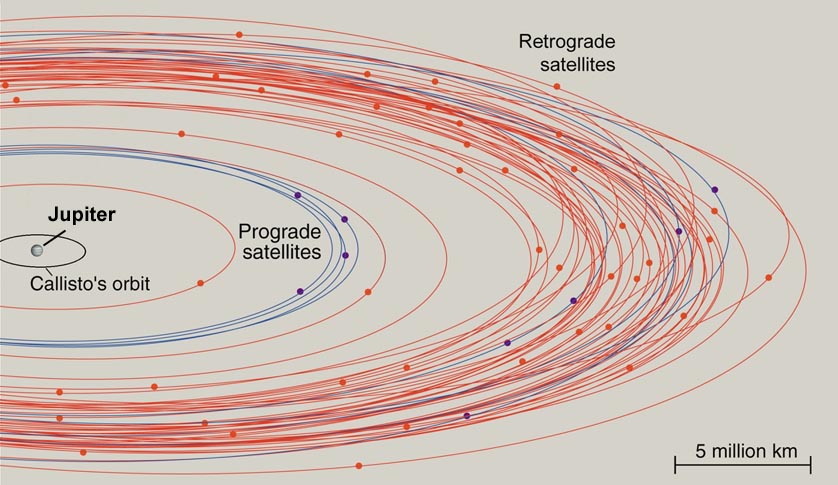
Similarly, the moons of all the planets have been studied extensively. At the very least, their orbits have been calculated for millions of years into the future, and we are aware of several potential future catastrophes, such as the destruction of Phobos by Mars’s gravitational influence, that will occur millions of years from now.
Certainly, one might inquire whether it is excessively presumptuous to assume that no imperceptible process or random event will influence the motion of a satellite or planet. However, this is precisely where space distinguishes itself positively from the world to which we are accustomed. It is essentially void. Although this is often perceived as somewhat disheartening, but at the same time, this rarefaction has an important advantage: there is almost no matter around to create resistance, friction, or numerous random collisions. Therefore, the motion of objects in space depends much less on interactions with the environment than on Earth. The behavior of celestial objects closely aligns with the mathematical abstraction described by the equations utilized by scientists.
Small bodies within the Solar System
The fact that the motion of most bodies in the Solar System is described with high accuracy by the laws of celestial mechanics allows scientists to predict the orbits of observed objects for significant periods of time. For this, they use not only Kepler’s and Newton’s laws, but also numerical models that take into account the gravitational influence of many bodies and, if necessary, other forces. The accuracy of such a forecast depends on the quality of the observations, the initial conditions, and the duration of the forecast period.
Indeed, this is a highly advantageous situation. As the enumeration of all known comets and asteroids amounts to hundreds of thousands, continuous monitoring is unfeasible. However, it remains possible to calculate their trajectories many years in advance, a task routinely undertaken by scientists upon the discovery of new celestial rocks or ice in space.
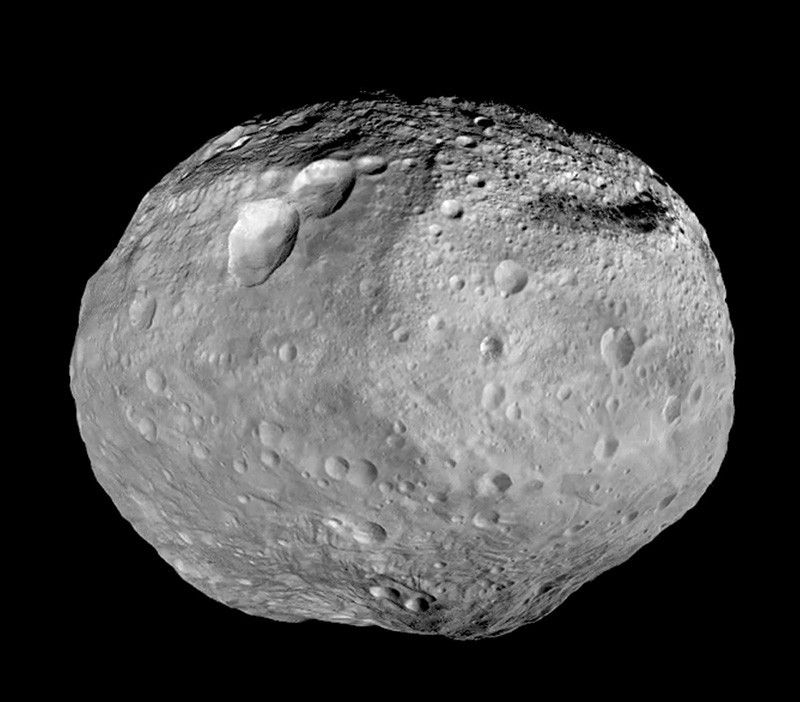
To date, astronomers are not aware of any asteroid or comet that poses a significant threat of collision with Earth within the next hundred years. This does not mean that hazardous objects do not exist at all: their orbits are constantly monitored and refined as observations accumulate.
There are millions of asteroids in the Solar System, including over a million objects larger than a kilometer in diameter in the main asteroid belt between Mars and Jupiter alone. If an asteroid of this size were to collide with Earth, the consequences could be global. However, most of these bodies are in orbits that do not intersect Earth’s orbit. Their trajectories can gradually change under the influence of gravitational perturbations and other effects, but at present no known large near-Earth objects are predicted to pose a significant threat in the next century. Indeed, there are two genuinely concerning issues related to the incomplete scientific understanding of the Solar System.
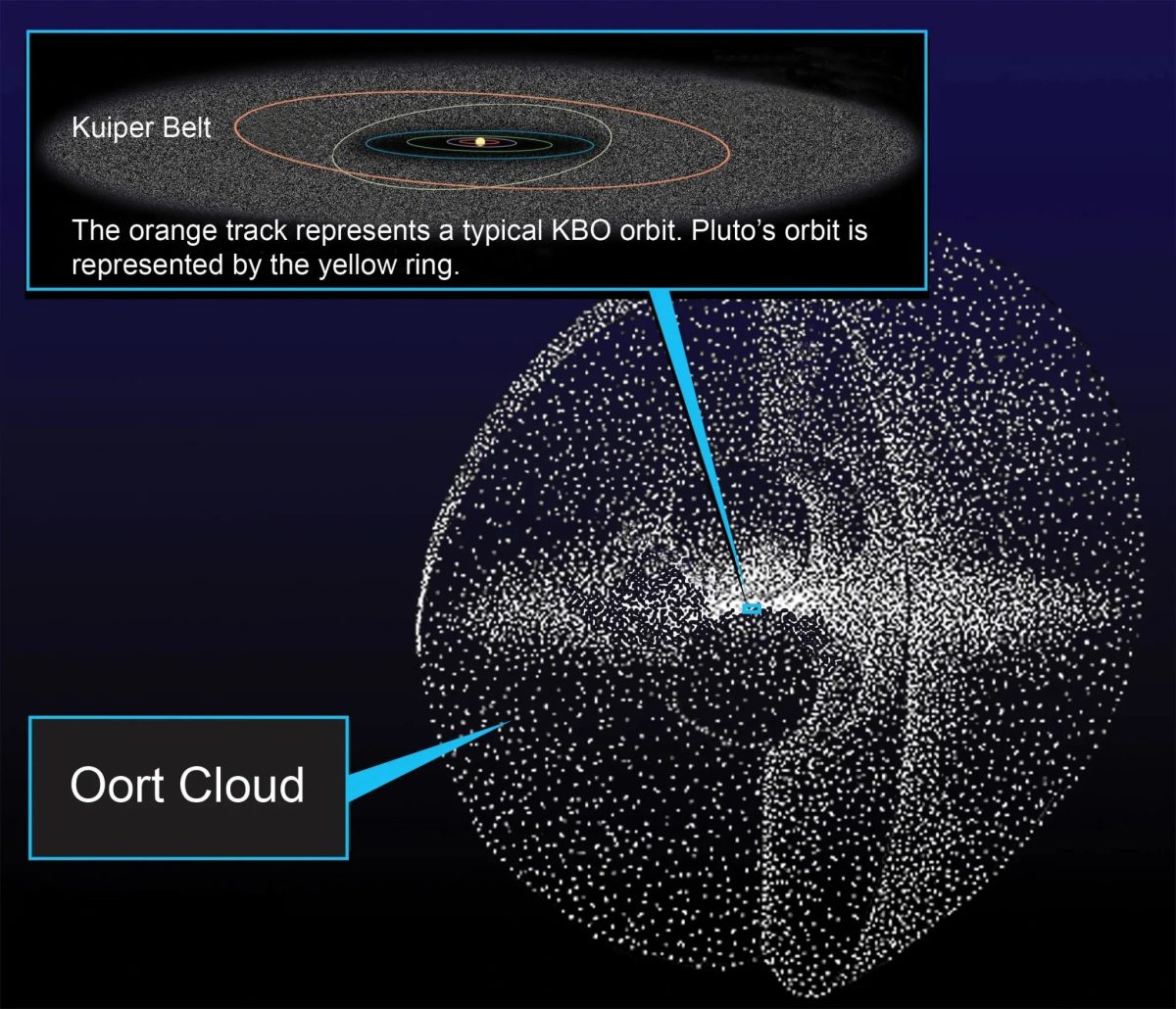
The first is long-period comets, which come from the far reaches of the solar system, probably from the Oort cloud. Most of this vast population is invisible to us at all: they are too small, distant, and dim. Therefore, the appearance of a new comet in the inner solar system is often discovered by astronomers only after it has begun to move towards the sun.
A collision with the Earth by such a comet remains an extremely unlikely event, but for a potentially dangerous object the reaction time may be much shorter than for many asteroids. Some estimates indicate that the warning of a possible collision with a long-period comet could be as little as a few months, rather than years. At the same time, we can estimate the size of comet nuclei from observations, and therefore roughly estimate the potential consequences of an impact. A collision by a large comet could cause a global catastrophe, but would not automatically mean the destruction of all life on Earth.
There is cause for concern in this context; however, statistically, over the span of a lifetime, the probability of death resulting from a bomb dropped on one’s residence surpasses that of an asteroid, even if one does not reside in a country susceptible to authoritarianism and the use of violence to assert power.
The second threat arises from asteroids whose trajectories are situated within Mars’s orbit. Their orbits are also well studied, but we do not have a complete catalog of such bodies. For the largest near-Earth asteroids – those with a diameter of more than a kilometer – more than 90% of the population is already known, but smaller ones, and especially objects in orbits that rarely approach the Earth, are much more difficult to detect. The orbits of known bodies can be calculated with high accuracy, but undiscovered asteroids, of course, remain beyond the scope of such prediction.
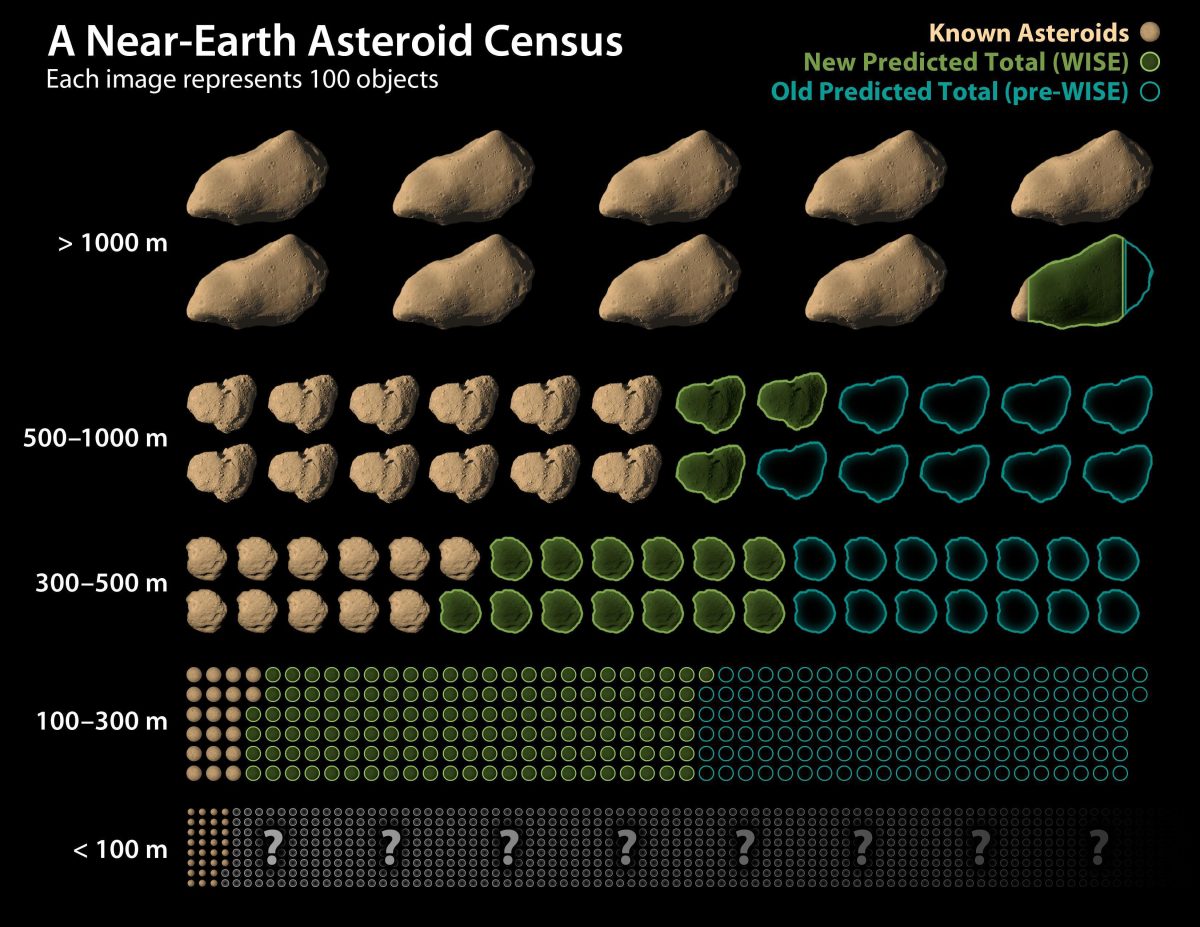
Nonetheless, numerous small asteroids — potentially numbering in the hundreds or thousands — remain insufficiently examined by scientists. In contrast to a comet originating from the Oort Cloud, which is typically identified well beyond Jupiter’s orbit with several months’ notice prior to potential impact, such an asteroid may not be detected until merely a few days before contact. Furthermore, the impact of such an asteroid could possess sufficient force to obliterate an entire city.
It is indeed important to recognize that there exists a potential source of concern: each day, we are confronted with the possibility that an unidentified object could descend from the sky. After all, the Earth is constantly bombarded by small space objects. Most of them burn up or disintegrate in the atmosphere before reaching the surface, and those that do fall to Earth are mostly so small that they pose no danger and remain invisible to humans.
Furthermore, scientists are actively engaged in the effort to minimize the quantity of unidentified near-Earth asteroids to nil, and it is highly probable that this objective will be accomplished within the forthcoming years.
For millennia, humanity has been observing the darkness through which the celestial bodies of the Solar System traverse. These endeavors have proven successful. It is among the most thoroughly researched regions of our environment concerning concealed hazards.