
Astrobiologist Julia DeMarines has published an article devoted to the search for “noosignatures” — traces of the existence of extraterrestrial intelligence that differ from “technosignatures,” which are usually understood as artificial radio signals. She believes that we may well be able to find traces even of those civilizations that never created advanced technologies.
Noosignatures
Ever since scientists began seriously thinking about detecting extraterrestrial civilizations, they have been rationally considering what exactly should be searched for. First came the category of “biosignatures,” or “biomarkers.” This category usually includes various chemical compounds that are either the result of the activity of living beings or necessary conditions for it. We can detect them across many light-years using spectroscopy over a wide range of wavelengths.
Then scientists began talking about “technosignatures.” These are traces of the work of truly advanced technologies, which we can also observe from great distances. They usually include signals of extraterrestrial origin, although exotic objects such as Dyson spheres also fall into this category.
And now, as phys.org reports, the concept of “noosignatures” has appeared. More precisely, it appeared earlier, but it is now that an article by astrobiologist Julia DeMarines devoted to their definition and the prospects for searching for them has appeared on arXiv. So the question arose: what exactly does this concept describe?
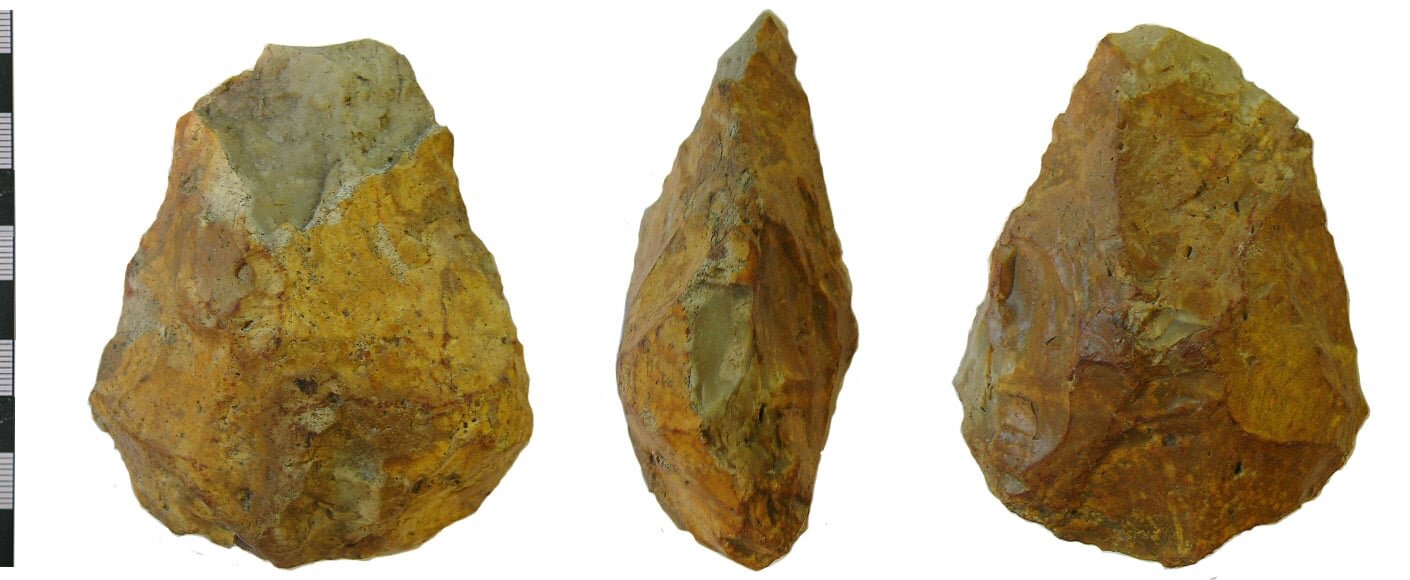
As the name suggests, it refers to traces of the activity of intelligent life, since the Greek word noos means mind. Theoretically, all such things should fall into the category of technomarkers, because formally even the production of stone tools is a technology. However, in recent years, the term has come to be associated with artificial radio signals and traces of technologies more advanced than a radio receiver.
Can we find “noosignatures”?
As a result, a blind spot has appeared in the science of extraterrestrial life, and everything looks as if intelligent beings capable of building a radar emerged directly from bacteria that process oxygen into carbon dioxide. It was precisely to correct this situation that the concept of “noosignatures” appeared.
At its center is the idea that all creations of intelligent, or nearly intelligent, beings possess a certain complexity that is practically not found in nature. Therefore, we can recognize them even if we do not understand what they are or what they were intended for. One example is one of the ancient scripts of the Indus Valley, which has not been deciphered for many decades but is undoubtedly writing and not something else.
In the same way, the oldest tools are very easily recognized specifically as tools. We are actually quite good at distinguishing objects of artificial origin, even when we have never seen them before. Of course, mistakes are possible, but we are more likely to falsely identify something natural as artificial than to fail to recognize an artifact of civilization.
And it would seem that finding stone tools made by intelligent species that never reached space is a matter for the distant future, when we will be able to study planets in other star systems. But in fact, on Earth, agriculture changed the nitrogen cycle as early as 8,000 years ago, so even spectroscopy could potentially detect some “noosignatures.”
