

The German mathematician August Möbius is known for mathematically describing a paper strip with only one side. This was well within his capabilities, given that he devoted his life to studying complex geometric structures. You can make a similar object using nothing more than paper and scissors.

The life of August Möbius
Can you imagine a three-dimensional object with only one side and one edge? Such an object really does exist. It is named after the German mathematician and physicist August Möbius, who was the first to describe it mathematically.
August was born on 17 November 1790 – 236 years ago – at the renowned Schulpfort Gymnasium, associated with the Electorate of Saxony. His father taught dance there but died when August was only three years old. August was educated at home and showed a talent for mathematics from an early age.
After completing his elementary education, August enrolled at Schulpfort in 1803 and studied there until 1809, when he went on to the University of Leipzig. His parents wanted him to become a lawyer, but he was more interested in mathematics and astronomy. After a few years of study, he moved to Göttingen, where he attended lectures on the motion of celestial bodies given by Carl Gauss himself, one of the most outstanding scientists of his time. In 1814, he continued his studies in Halle.
As Möbius was finishing his studies, a professorship in astronomy became available at the University of Leipzig. He therefore hurried to defend his dissertation in the subject. It dealt with calculating planetary occultations – events in which planets pass in front of stars as seen from Earth. Predicting such events is important because they allow us to study bodies in the Solar System.
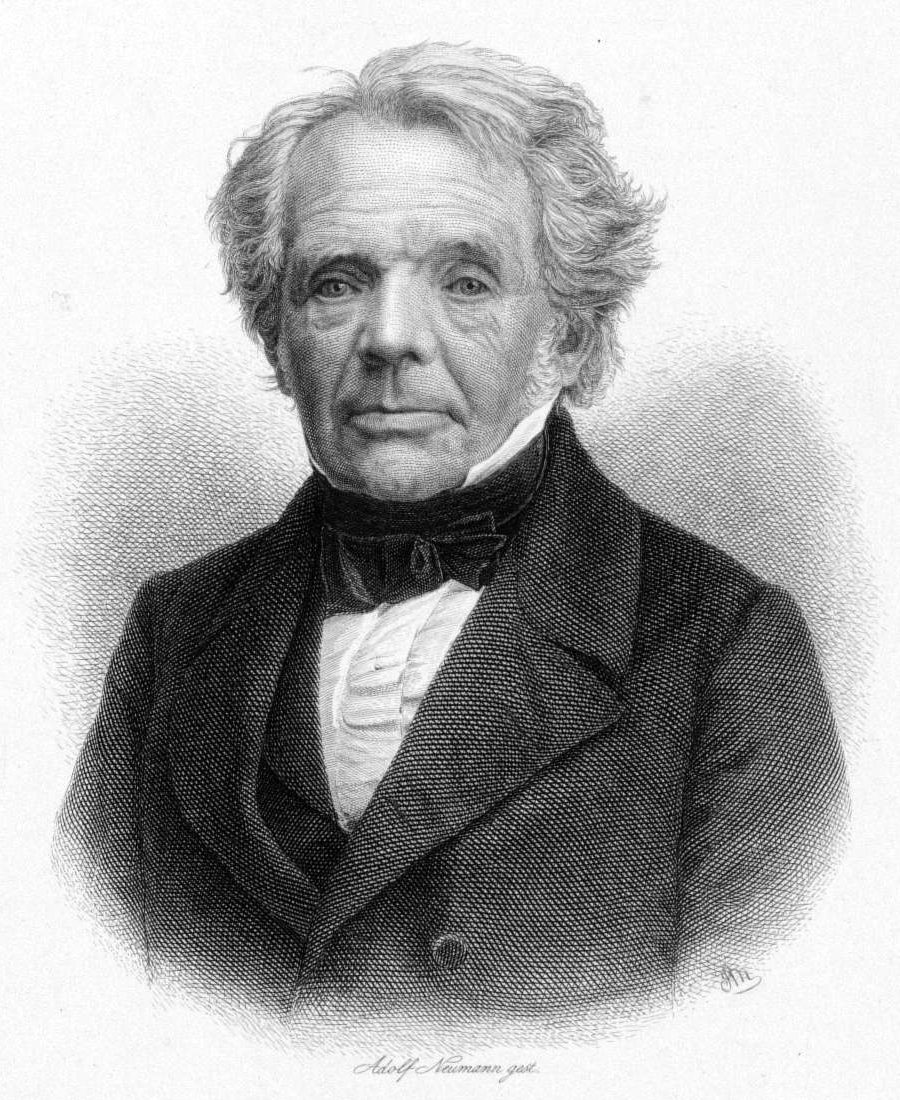
For the rest of his life, Möbius served as a professor of astronomy and a member of staff at the Leipzig Observatory, becoming its director in 1848. However, he did not distinguish himself particularly in astronomy, and his reputation as a teacher was generally modest.
One might even say that he led a rather uneventful life. He had a wife, children and grandchildren, many of whom also became renowned scientists. Yet long before his death in 1868, he had earned recognition among his colleagues for major achievements in fields of science that are difficult for the average person to understand. His achievements were significant enough for a crater on the far side of the Moon to be named in his honour.
Möbius’s research
Möbius devoted his life to work at the intersection of pure mathematics, geometry and physics. As early as 1827, he published a paper on barycentric arithmetic. The essence of the method is that a point can be described relative to the vertices of a triangle using a set of values known as barycentric coordinates.
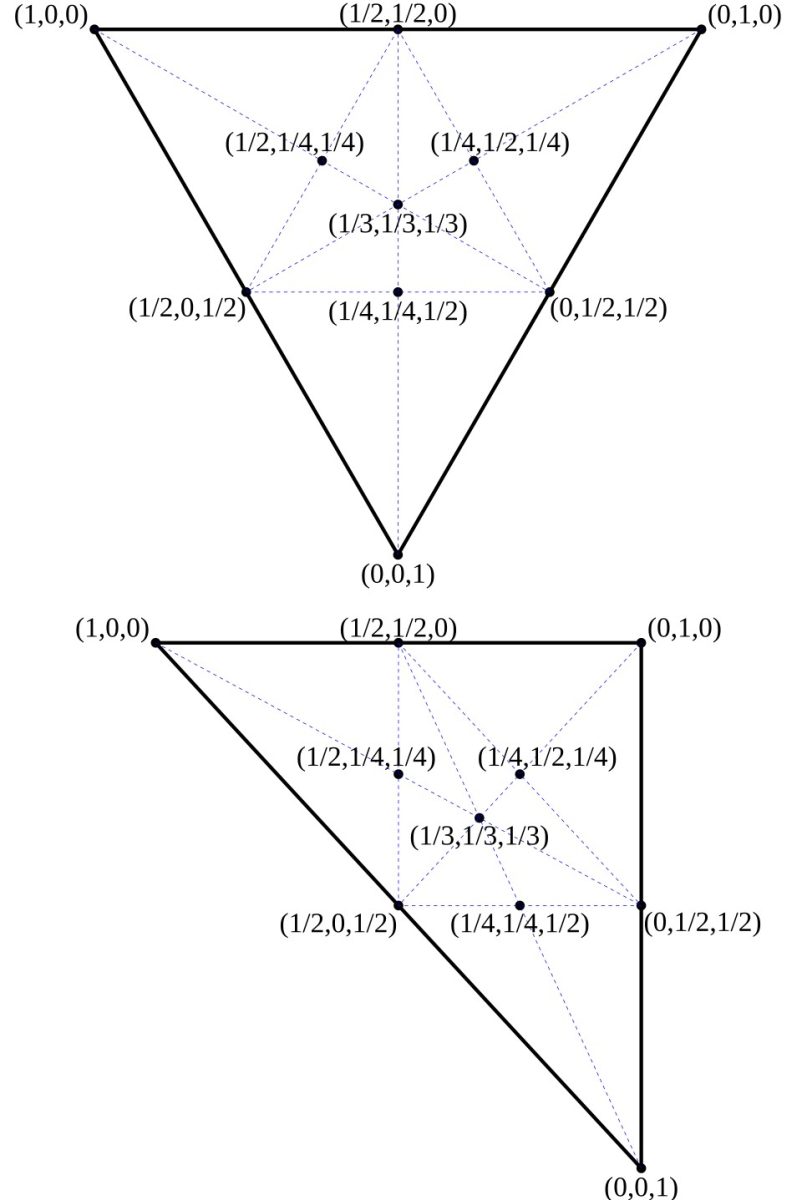
The advantage of this remarkable method is that it makes various geometric parameters easier to calculate using relatively simple algebraic equations.
At first, this approach to geometry was not very popular, but it is now used in the finite element method. In this method, for example, calculations of mechanical strength involve dividing a complex object into simpler geometric shapes described using barycentric coordinates. This makes the calculations much more manageable.
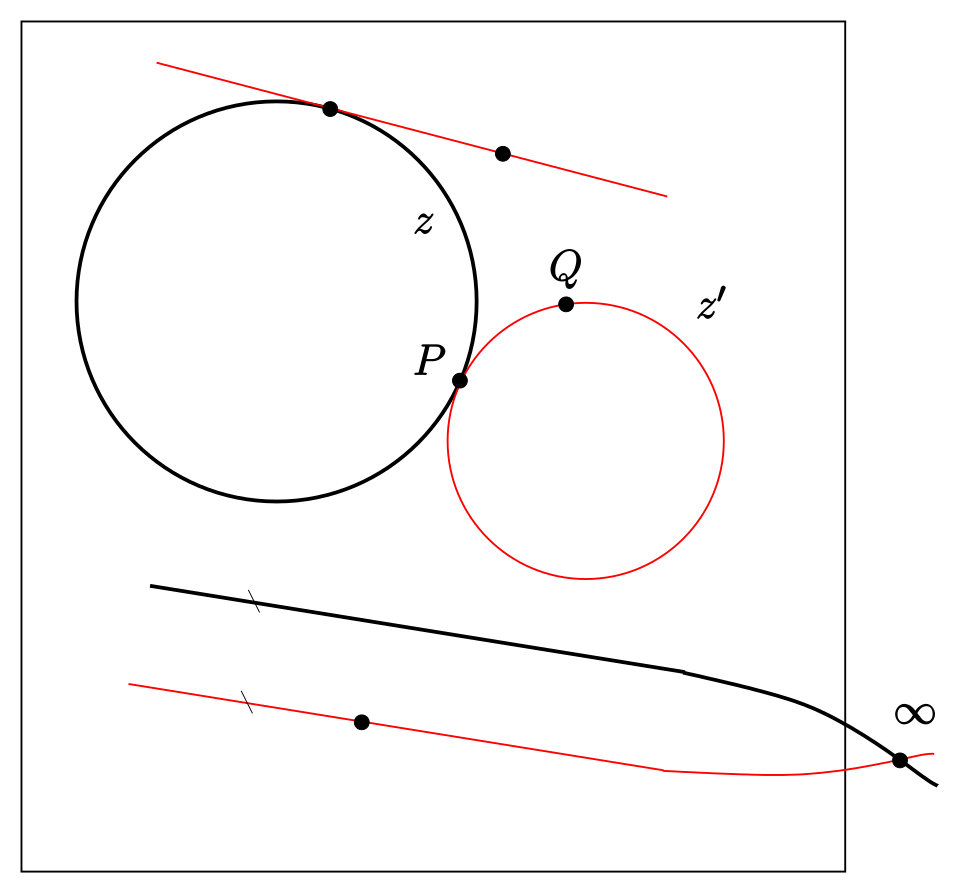
Another example of the counterintuitive nature of Möbius’s work is the plane named after him and the concept of the generalised circle. The idea may sound strange: a straight line on a plane can also be regarded as a special case of a circle.
In fact, the reasoning is quite logical. A plane is infinite. If we imagine a point on it that lies infinitely far away, we can think of a circle passing through that point. The radius of such a circle would tend towards infinity. But what happens if we look at a section of it passing through a finite part of the plane – for example, across our table?
What would we see? As the radius of a circle approaches infinity, its curvature approaches zero. In other words, a small section would look exactly like a straight line. In this sense, a straight line can be described mathematically as a circle of infinite radius.
Möbius also worked on projective geometry – questions such as how two-dimensional images of three-dimensional objects appear on different surfaces, how cross-sections of solids look when intersected by other surfaces, and how to describe all this mathematically. His work helped lay foundations for methods used in modern computer-aided engineering design.
Möbius also contributed to mechanics. In particular, he proved that a system of forces could be reduced to six forces associated with the edges of a tetrahedron. In 1837, he published an important work on statics – the branch of mechanics that studies the equilibrium of structures under the action of forces.
Möbius strip
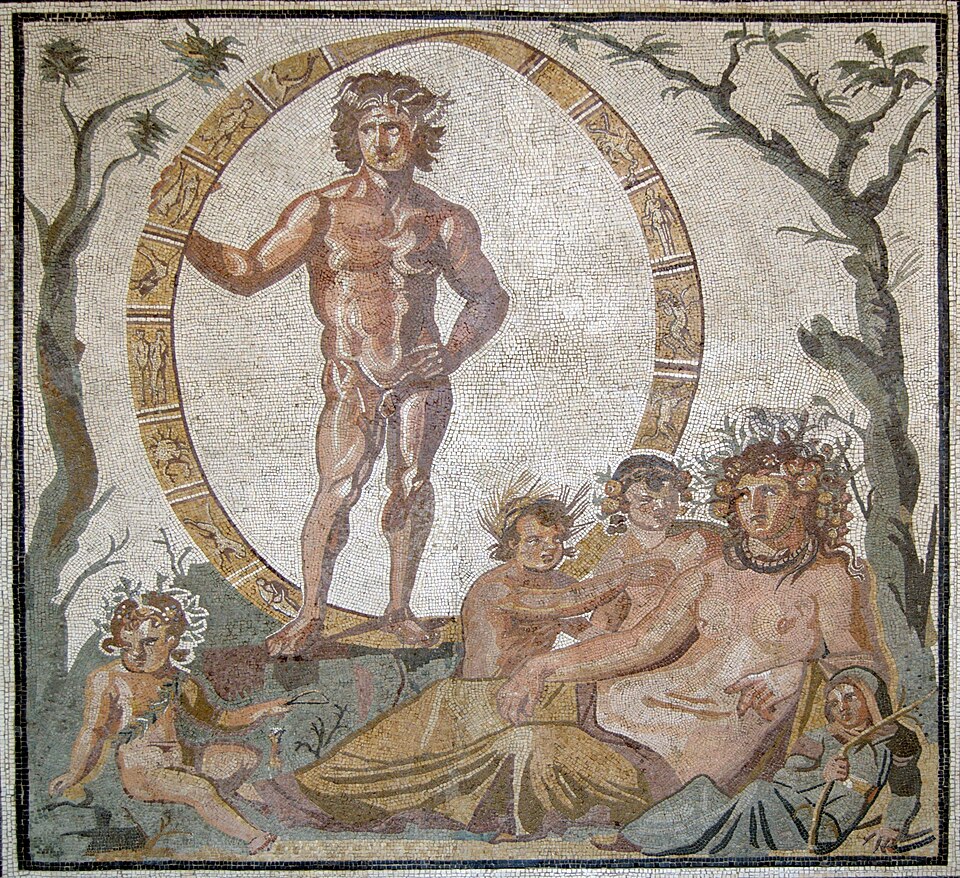
Möbius made his most famous discovery towards the end of his life, independently of another scientist, Johann Listing, although neither published the relevant research until several years later. Depictions resembling what is now called a Möbius strip can be found as early as a third-century CE Roman mosaic. In other words, the shape had apparently been represented long before its mathematical properties were understood.
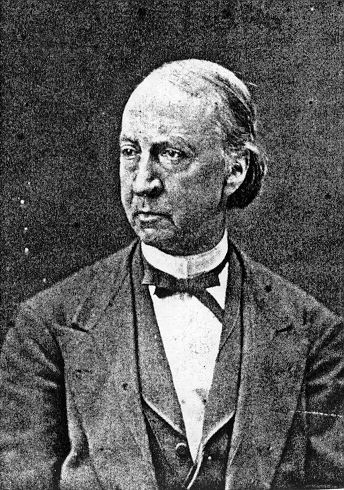
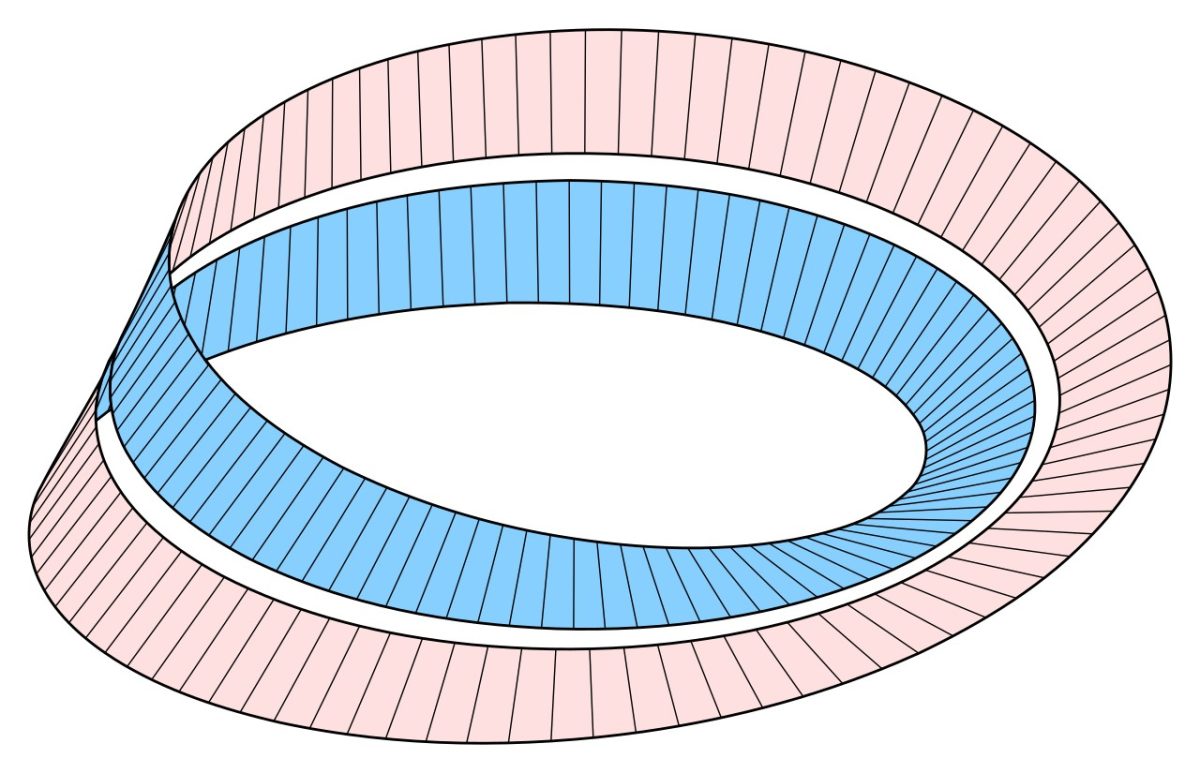
To explore this, you will need some paper and scissors. Cut a strip of paper of uniform width and join its ends to form a ring, but first rotate one end through 180° and glue it in place. You will end up with a strange-looking loop, and you can use a pencil to discover what makes it unusual.
Choose any point halfway between the edges of your paper Möbius strip. Then draw a line along the middle of the strip, continuing in the same direction. Eventually, you will return to your starting point, but the line you have drawn will have travelled over what initially appeared to be both sides of the strip.
This happens because a Möbius strip has no ‘other side’: it has one continuous surface. What is more, you can take a paintbrush, dip it in paint and carefully begin painting along one of the edges of this remarkable object.
Sooner or later, you will return to your starting point, having painted what initially appeared to be both edges. That is because the strip has just one continuous boundary edge, twisted in a clever way. Thus, the Möbius strip is a surface in three-dimensional space with only one side and one boundary edge.
But that is not all. If your paper strip is wide enough, you can take the scissors again and cut it roughly along the middle, following the line you drew with your pencil. You will not end up with two Möbius strips – instead, you will obtain a longer loop. If you cut closer to the edge, however, several other outcomes are possible.
Interestingly, the Möbius strip has a four-dimensional counterpart called the Klein bottle. Imagine an ordinary bottle without a bottom, whose neck narrows into a tube that, through a fourth dimension, curves inward, passes through the place where the bottom would be, and connects back to the body of the bottle – rather like joining the ends of a strip of paper.
A question about the Möbius strip puzzled mathematicians for decades: what is the minimum ratio of its length to its width that still allows it to be folded into a Möbius strip? In 2023, it was finally proved that this ratio is the square root of 3, or approximately 1.732.
August Möbius and topology
When discussing the Möbius strip, it is impossible not to mention Möbius’s work in topology. This branch of mathematics studies properties of spaces and shapes that remain unchanged under continuous deformations – such as stretching, compressing or bending – without tearing or gluing. Another interesting object bears the German scientist’s name: the Möbius ladder.
We are talking about a special type of graph. In such diagrams, what matters is which vertices are connected by edges, rather than the lengths of those edges. Möbius became interested in whether it was possible to divide a country into five regions so that each region shared a boundary segment with every other region.
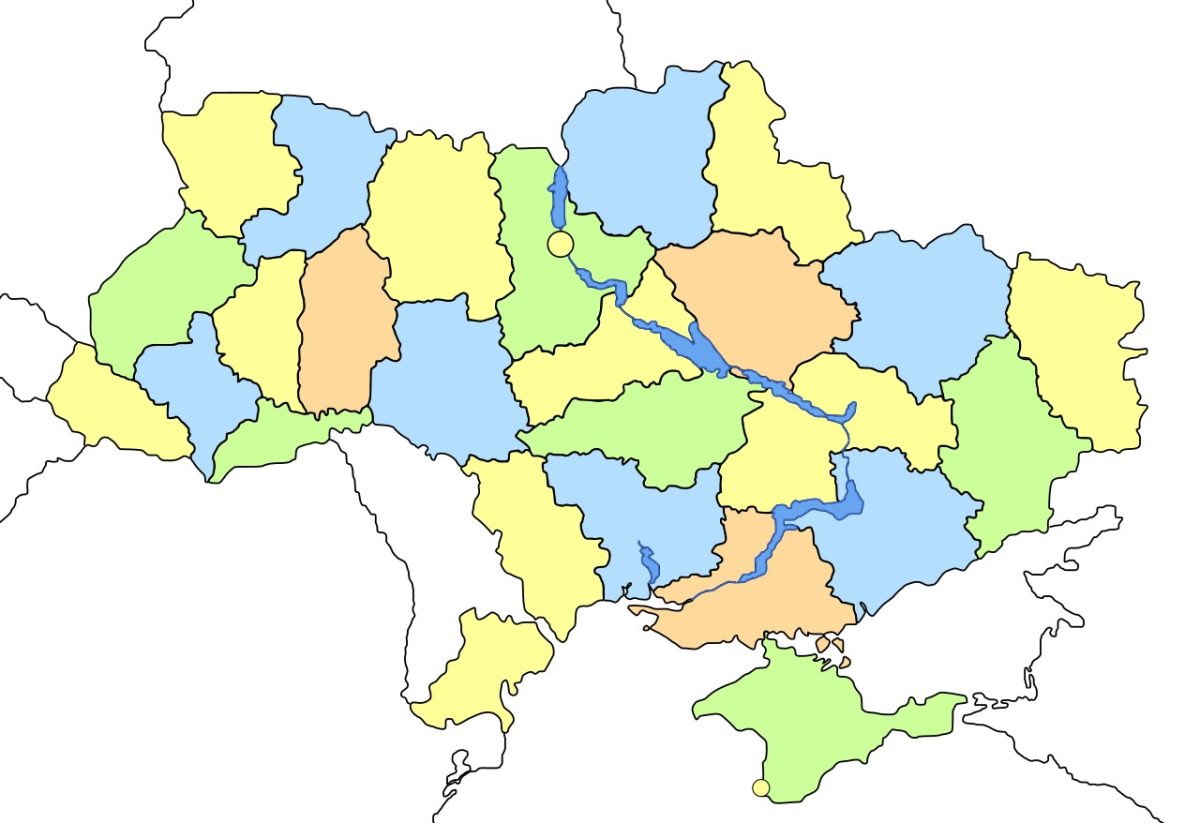
The answer is no. This has been proved mathematically, and the question is related to the four-colour problem: the proposition that the regions of any planar map can be coloured using no more than four colours so that no two regions sharing a boundary segment have the same colour. It took mathematicians about a hundred years to prove this.
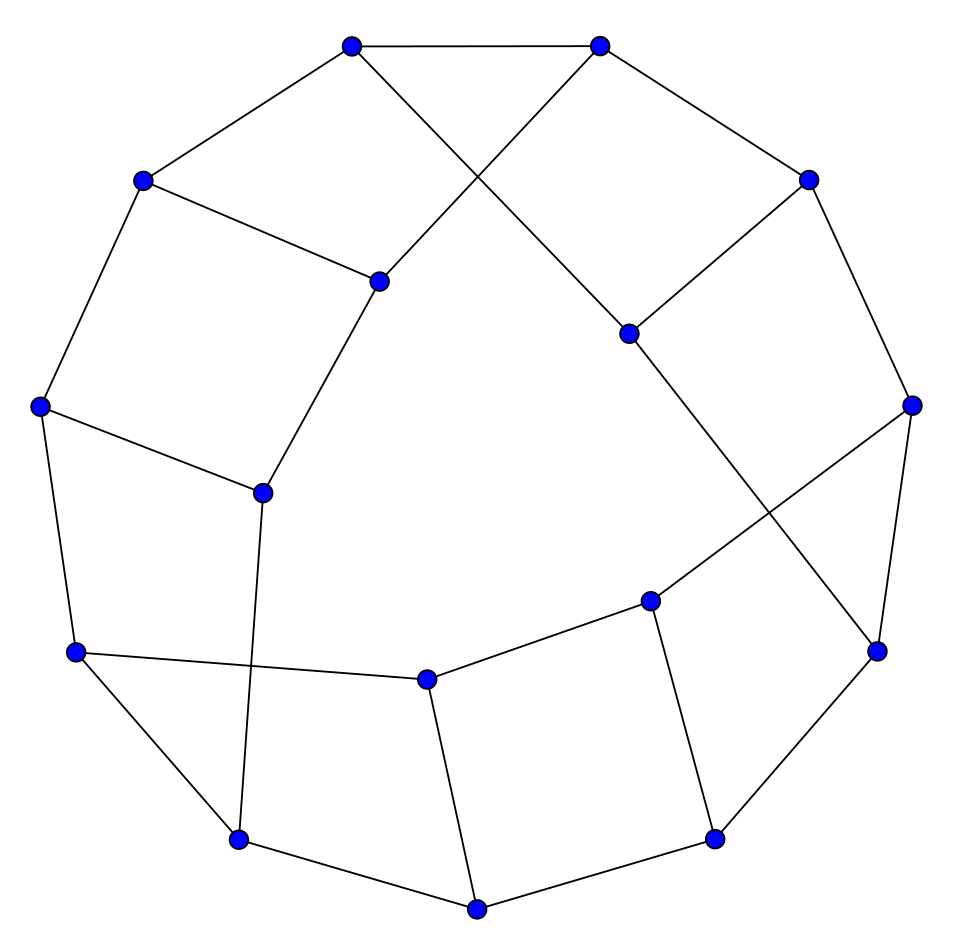
Another interesting object associated with the German scientist is the Möbius ladder. Imagine pairs of points arranged in two rows. Connect neighbouring points along each row, then connect each pair across the rows to form something resembling a ladder. Now join the ends of the ‘ladder’ with a 180° twist, as with a Möbius strip.
It is impossible to draw the resulting graph on a plane without any edges crossing, even though those crossings do not represent actual connections between the edges. At the same time, it is possible to trace a path through all the vertices of a Möbius ladder without visiting the same vertex twice.
Möbius resistor
Given the unusual properties of the Möbius strip, many people might expect components shaped like it to have remarkable characteristics. Such a component does indeed exist: the Möbius resistor, invented in 1966.
Like any resistor, its purpose is to provide electrical resistance in a circuit and thereby regulate the flow of current. A Möbius resistor consists of two conductive sheets separated by a dielectric. They are twisted into a Möbius-strip configuration and soldered together.
Resistors can also exhibit unwanted inductance. In other words, changing currents can produce electromagnetic effects that may cause interference. However, arranging the conductive sheets in a Möbius-strip configuration helps reduce this problem. Such a resistive element is designed to have very low reactance, so the current can respond rapidly when the circuit is opened.
Another challenge, however, is the accumulation of parasitic charge. Moreover, such a resistor is significantly more expensive than a standard one. That is why Möbius resistors are mainly used where their advantages are particularly valuable: in specialised radio equipment and medical devices, where even small amounts of unwanted current or radio interference can cause problems.
