

A communications system built by European companies to connect lunar orbit with the Moon’s surface has been completed and tested. It was developed for the Gateway orbital station, work on which NASA halted this year. The finished hardware will now be placed in storage while ESA searches for a new mission for it.
Three Months from Completion
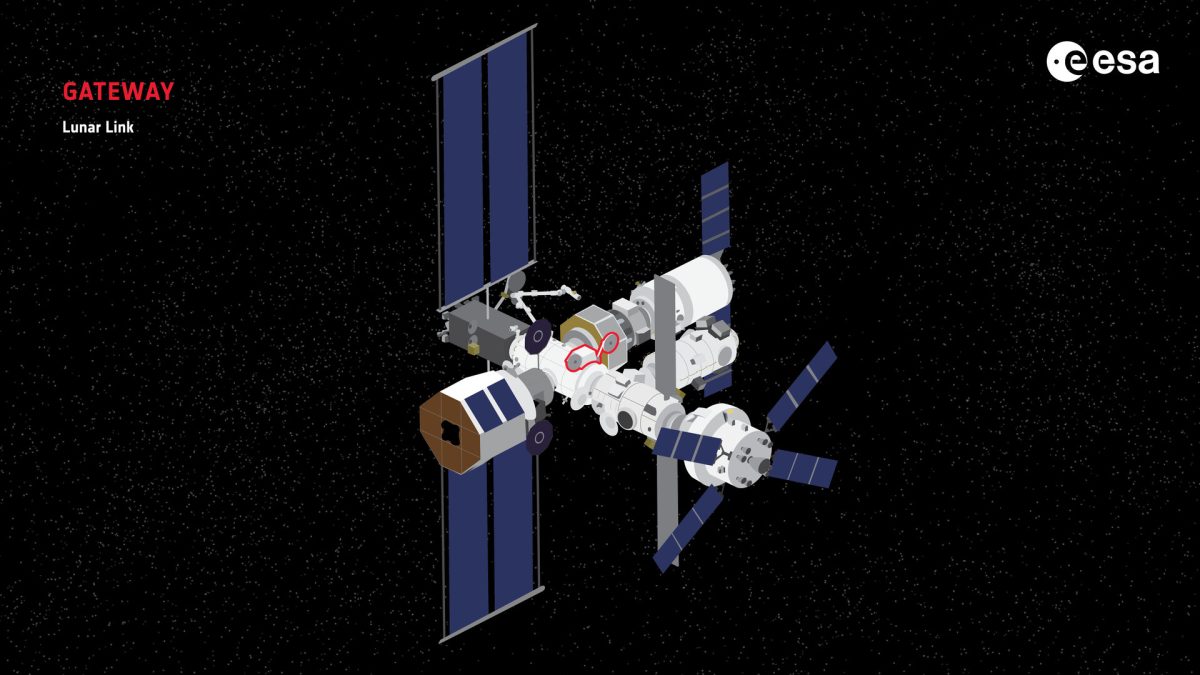
Lunar Link was developed as part of Gateway’s HALO habitation module. The station was intended to orbit the Moon as part of the Artemis program, with Lunar Link providing communications between the station and astronauts on the surface.
Such a relay is needed because Earth is not visible from every part of the lunar surface. It is never visible from the far side, and near the south pole it is often below the horizon. Signals from astronauts would first reach the station and then be relayed to Earth.

In March, plans for Gateway changed, and NASA halted work on the station. According to ESA, Lunar Link was just three months from completion at that point, although the agency does not specify the reasons for the pause. The final testing campaign was already underway, and test facilities had been booked. ESA and the European companies therefore decided to bring the system to flight readiness.
Testing the Complete System
The antennas were tested separately in the spring. Since then, all the electronics, assembled into a single unit at the Thales Alenia Space facility in Cannes, have undergone testing under conditions resembling those expected in flight. The electronics were then connected to the two high-gain antennas for the first time, allowing the entire system to be tested.
Antenna deployment was rehearsed again using balloons, this time with Lunar Link fully assembled. The deployment mechanisms are designed for weightlessness, and under Earth’s gravity the antennas’ own weight would prevent them from unfolding. The balloons offset that weight.
In the summer, engineers from NASA’s Lyndon B. Johnson Space Center joined the European team. They brought equipment racks simulating a user on the lunar surface and tested data transmission through Lunar Link from end to end, including encryption. The system performed exactly as intended.
Finding a New Role
In September, ESA and Thales Alenia Space, the project’s prime contractor, began the qualification and acceptance review. It is expected to be completed by the end of the year. Following a final software update, the hardware will be placed in controlled storage, where it will remain ready for flight.
On its own, Lunar Link transmits data only between lunar orbit and the surface; it has neither its own spacecraft platform nor a communications link to Earth. In July, ESA issued a call for tenders for studies on using the system in another mission. Installed on a separate spacecraft with an additional antenna for Earth communications, it could become a standalone relay for lunar missions operated by ESA and its partners.
The studies will assess spacecraft options, orbits, and schedules, as well as cooperation with the Moonlight program, through which ESA plans to deploy communications and navigation satellites around the Moon. For Europe, this offers an opportunity to obtain its own ready-made component of lunar communications infrastructure, independent of the American station.
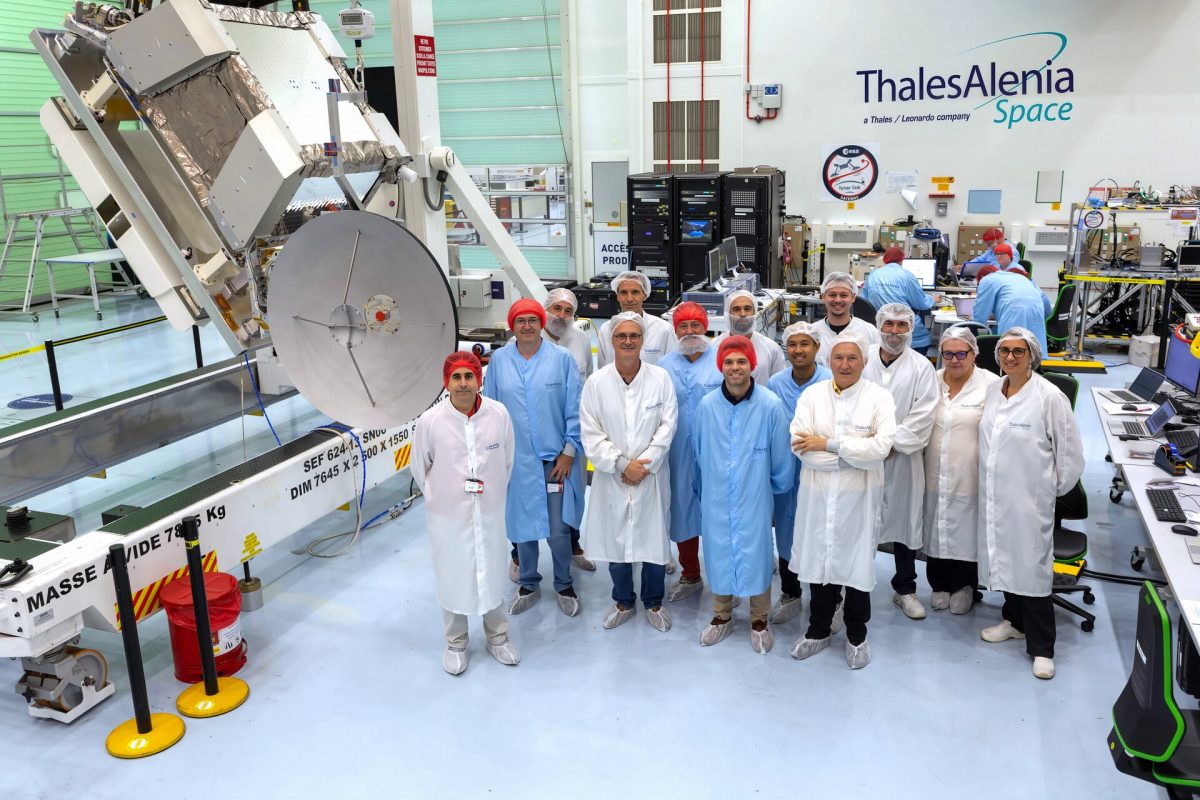
Thales Alenia Space divisions in France, Belgium, Spain, and Italy worked on the system alongside the United Kingdom’s MDA and Spain’s SENER. Lunar Link originated within the ESPRIT program, through which Europe was to supply Gateway with communications and refueling equipment. The hardware’s future will be determined by the results of the studies for which ESA has issued its call for tenders.
